

Quick Answer
Yes, most Chihuahuas can fly in-cabin under the seat in an airline-approved soft-sided carrier. You’ll pay a $95–$150 pet fee, need a health certificate, and must remove your Chihuahua from the carrier at TSA screening. Book your pet spot early, since airlines cap in-cabin pets per flight.
Author Information
Author: Gulnaz Malik Role: Publisher & Pet Care Expert Experience: 5+ Years in Dog Care & Dog Grooming Content Review: Veterinary-reviewed content approach based on trusted canine care resources and practical pet care experience.
Introduction
Flying with a Chihuahua sounds simple until you’re standing at the security line juggling a leash, a carrier, and a nervous 5-pound dog.
Because Chihuahuas are naturally small, they’re one of the easiest toy breeds to bring into the airline cabin, but airport travel still comes with real rules, real fees, and real risks if you show up unprepared.
This guide walks you through everything a Chihuahua owner needs before airport day: which airlines allow small dogs in-cabin, how TSA actually screens pets at the checkpoint, what documents you need, how to pick a carrier your dog will tolerate for hours, and how to keep an anxious Chihuahua calm from curbside to landing.
You’ll also get a full pre-flight checklist and a side-by-side airline comparison table so you can book with confidence instead of guessing. Whether this is your Chihuahua’s first flight or your tenth, these steps will help you avoid the most common mistakes owners make at the gate.
Can You Take a Chihuahua on a Plane?

Yes, a Chihuahua is one of the best-suited breeds for airport travel because of its size. Most major U.S. airlines, including Delta, American, United, Southwest, Alaska, JetBlue, and Frontier, allow small dogs and cats to travel in-cabin, tucked in a carrier under the seat in front of you.
A healthy adult Chihuahua typically weighs 2–6 pounds, well under every airline’s combined pet-and-carrier weight limit, which usually falls between 15 and 20 pounds.
In-cabin travel means your Chihuahua stays with you the entire flight instead of going into the cargo hold, which is strongly recommended for toy breeds.
Chihuahuas are prone to hypoglycemia, temperature sensitivity, and stress-related health issues, so cargo transport is not a safe option for this breed under normal circumstances.
Reputable airlines actually restrict cargo pet shipping to active-duty military and government relocation cases now, which works in your favor since it keeps toy breeds in the cabin where they belong.
The catch is availability. Airlines cap how many pets can travel in the main cabin per flight, usually around four to six total. Once that quota fills, no amount of pleading at the counter will get your Chihuahua a seat. Because of this, pet spots are rarely something you can add the day of travel with confidence.
What this means practically: Call the airline or add your pet during initial booking, not after. Confirm your Chihuahua and carrier meet under-seat sizing, gather your paperwork early, and treat the pet reservation with the same urgency as booking your own seat. Airlines like Delta and Southwest fill pet slots on a first-come, first-served basis, and popular routes can sell out days in advance.
Airline In-Cabin Pet Policies for Chihuahuas
Pet fees and carrier rules vary by airline, and pricing has shifted noticeably in 2026. Below is a snapshot to help you compare before booking.
| Airline | In-Cabin Fee (Each Way) | Max Soft Carrier Size | Notes |
| Delta | $150 domestic / $200 international | 18″ x 11″ x 11″ | Book pet slot by phone, not online; 4 pets max per cabin |
| American Airlines | $150 | 18″ x 11″ x 11″ | Generous carrier allowance; dogs and cats only |
| United Airlines | $150 | 18″ x 11″ x 11″ | No Hawaii, UK, or Ireland routes for pets |
| Southwest | $125 | 18.5″ x 13.5″ x 9.5″ | Most generous carrier size; domestic only, added at check-in |
| Alaska Airlines | ~$100 | 17″ x 11″ x 9.5″ | Smaller carrier limit than most major carriers |
| Frontier | $99 | Varies by aircraft | One of the most affordable and widely available options |
| JetBlue | $150 | Smallest limits industry-wide | No cargo, no Hawaii or UK routes |
Fees apply per pet, per flight segment, so a round trip with a layover can mean paying the fee multiple times. Always confirm current pricing directly with the airline before you fly, since these numbers change without much notice.
Beyond the fee, pay attention to temperature embargoes. Some airlines refuse to transport pets in the cabin or cargo when ground temperatures climb above roughly 85°F or drop below 20°F at any airport on your route.
This mostly affects cargo shipments, but it’s worth checking if you’re flying through an extreme-climate hub during summer or winter.
Since your Chihuahua will fly in-cabin with climate control, this rule rarely affects toy breed owners directly, but delays and gate changes can still expose your dog to hot tarmac or cold jet bridges, so dress your Chihuahua accordingly.
Choosing the Right Chihuahua-Safe Travel Carrier

The carrier is the single most important piece of gear for airport travel. Airlines require it to fit completely under the seat in front of you, and your Chihuahua must be able to stand up, turn around, and lie down without pressing against the sides.
Soft-sided carriers are the industry standard and generally the better choice for Chihuahuas. They compress slightly to fit tighter under-seat spaces, offer mesh ventilation panels on multiple sides, and feel less rigid and stressful for a small, anxious dog.
Look for a carrier with a padded, non-slip base, a zippered top opening for TSA checks, and a leash clip inside to keep your dog secure once the top is open.
Hard-sided carriers are bulkier, and airlines allow smaller dimensions for them, but some owners prefer the extra structural protection. For a Chihuahua’s size, this isn’t usually necessary.
A few practical fitting tips:
- Measure your Chihuahua standing and sitting before you shop; the carrier interior should have a few inches of clearance in every direction, not more.
- Test the carrier at home for several days before the flight. Feed treats inside it, let your dog nap in it, and build positive associations.
- Choose a carrier under 18″ x 11″ x 11″ to stay compatible with the widest range of airlines, in case your flight changes.
- Avoid carriers with hard plastic crate-style tops for in-cabin use; airlines almost universally require soft-sided bags for under-seat storage.
Line the base with a washable pad instead of loose bedding, which can bunch up and create discomfort during turbulence. A familiar-smelling blanket from home also helps reduce anxiety significantly.
TSA Airport Security Screening With Your Chihuahua

Security screening is the part that catches first-time flyers off guard. Here’s exactly what happens, based on official TSA guidance:
- Arrive at the checkpoint with your Chihuahua already leashed inside the carrier, leash accessible.
- Remove your Chihuahua from the carrier just before screening begins. Pets are never allowed to ride through the X-ray tunnel.
- Place the empty carrier on the conveyor belt to be X-rayed like any other bag.
- Carry your Chihuahua through the walk-through metal detector in your arms, or walk them through on a leash if they’re comfortable on the ground.
- A TSA officer will swab your hands for an explosive trace detection check.
- Repack your Chihuahua into the carrier on the other side once your bags clear.
If your Chihuahua is prone to anxiety or might bolt in a crowded checkpoint, you can request a private screening room in advance. TSA officers will escort you and your dog to a quieter space to complete the process.
A few things experienced Chihuahua flyers recommend: keep the leash in your pocket rather than in the carrier that goes through the X-ray, wear slip-on shoes since you’ll be juggling your dog and bins, and bring small treats to reward calm behavior right after screening.
Arrive earlier than you think you need to. A stressed owner makes for a more stressed dog, and rushing through security with a small, wiggly breed increases the risk of an accidental slip out of your arms.
Health Certificates, Vaccinations & Documentation Requirements

Most airlines require a Certificate of Veterinary Inspection (CVI), commonly called a health certificate, issued by a licensed vet within 10 days of your travel date. Even for short domestic hops, don’t skip this requirement, and some destination states may ask to see it at check-in.
Standard documentation to gather before you book:
- Health certificate dated within the airline’s required window (usually 10 days)
- Proof of rabies vaccination, current and not expiring mid-trip
- Recent vet exam confirming your Chihuahua is fit to fly, especially important for older dogs or those with a heart murmur, a condition not uncommon in the breed
- Microchip or ID tag information, in case your Chihuahua slips out of the carrier during a stressful moment
Federal transport regulations also require pets to be at least 8 weeks old and weaned for at least 5 days before flying, so puppy owners need to plan around this minimum. If you’re traveling internationally, check destination-specific import rules well in advance.
Some countries require additional titers, extended waiting periods, or import permits, and these can take weeks to process.
Keep both digital and printed copies of every document. Airline counters and gate agents ask for paperwork more often than owners expect, and a phone battery dying at the worst moment shouldn’t be the reason your Chihuahua misses a flight.
Preparing Your Chihuahua Mentally and Physically Before the Flight

Chihuahuas are alert, reactive little dogs, and airports are loud, crowded, and unfamiliar a combination that can spike anxiety fast. Preparation in the weeks before your trip matters more than anything you do on travel day itself.
Start carrier training at least two weeks out. Leave the carrier open in your living space, toss treats inside, and let your Chihuahua explore on its own schedule. Gradually build up to short car rides in the carrier so the motion and confinement feel normal before the real trip.
Practice being handled by strangers. Airport staff, TSA officers, and fellow travelers will get close to your dog. A Chihuahua that’s only ever socialized with family can become fearful or snappy in that environment, so controlled exposure to new people in the weeks prior helps enormously.
On feeding: offer a light meal 3–4 hours before departure rather than right before boarding, since a full stomach combined with cabin pressure changes can trigger nausea. Keep water available up until security, then offer small sips rather than a full bowl once you’re seated to avoid accidents mid-flight.
Talk to your vet about your dog’s fitness to fly if they have a heart condition, collapsing trachea, or are a senior. Sedatives are generally discouraged for air travel, since they can affect breathing and blood pressure at altitude. Most veterinary organizations, including the American Veterinary Medical Association, advise against sedating pets for flights unless specifically prescribed for that purpose.
Airport Day: Step-by-Step Chihuahua Travel Checklist
Use this checklist in the days and hours before your flight to make sure nothing gets missed.
| Timing | Task |
| 2 weeks before | Confirm pet reservation with the airline; begin carrier desensitization |
| 1 week before | Schedule a vet visit for a health certificate and vaccine records |
| 3 days before | Pack travel documents, spare carrier pad, and collapsible water bowl |
| Day before | Trim nails to avoid snagging carrier mesh; pack a familiar blanket |
| Morning of | Light meal 3–4 hours before departure; short walk for bathroom break |
| At airport | Arrive 2+ hours early; locate the pet relief area before security |
| At security | Leash out of the carrier, empty the carrier through X-ray, hold or walk your dog through the detector |
| At the gate | Keep your Chihuahua in the carrier in a quiet corner away from foot traffic |
| In-flight | Carrier fully under the seat at all times per FAA rules; offer water at cruising altitude |
Do’s and Don’ts:
- Do book your pet’s spot the same day you book your own ticket.
- Do bring a printed copy of the health certificate, even if you also have a digital.
- Don’t sedate your Chihuahua without direct veterinary guidance.
- Don’t open the carrier fully during taxi, takeoff, or landing. A loose small dog in a cabin is a genuine safety hazard.
Following this order reduces the chance of a last-minute scramble and keeps your Chihuahua’s stress lower from curbside through landing.
Common Mistakes Chihuahua Owners Make When Flying

Even experienced dog owners trip up on a few recurring issues specific to small-breed air travel.
Booking the pet spot too late. Airlines fill their four-to-six pet slots per flight quickly, especially around holidays. Waiting until check-in day is the most common way owners get turned away entirely.
Choosing a carrier that’s technically compliant but uncomfortable. A carrier that meets the size chart on paper but leaves no room for your Chihuahua to shift positions over a multi-hour flight leads to a miserable, whining dog and a stressful cabin experience for everyone nearby.
Skipping the health certificate window. Getting the certificate 15 days before travel instead of within the required 10-day window is a surprisingly common and entirely avoidable mistake that can block boarding.
Overfeeding before the flight. A full stomach paired with cabin pressure changes commonly causes vomiting mid-flight, which is unpleasant in a confined carrier.
Assuming TSA will handle a squirmy dog for you. TSA officers screen pets, but you are responsible for physical control at all times. Practicing calm handling at home prevents a bolting incident at the checkpoint.
Ignoring layovers. A tight connection doesn’t leave room for a bathroom break at a pet relief area, which can mean a stressed, uncomfortable dog for the second leg. Build in buffer time whenever your itinerary includes a connection.
Avoiding these six mistakes resolves the vast majority of problems Chihuahua owners run into at the airport.
Keeping Your Chihuahua Comfortable During and After the Flight

Once you’re seated, keep the carrier zipped and tucked fully under the seat. FAA rules require this for takeoff, landing, and anytime the seatbelt sign is on. Slide a hand inside periodically to offer reassurance through touch rather than fully opening the carrier, which helps a nervous Chihuahua settle without creating a safety risk.
Cabin pressure and engine noise can be unsettling for a breed with sensitive hearing. A carrier cover or light blanket over the mesh panels can reduce visual stimulation and help your dog settle into sleep for longer flights. Just make sure ventilation isn’t blocked.
After landing, head straight to the nearest pet relief area. Most major airports have one both before and after security. Your Chihuahua will likely need a bathroom break and a chance to stretch after being confined, even for a short flight. Offer water immediately, since cabin air is notably dry and small dogs dehydrate faster than larger breeds.
Watch for signs of stress in the hours after landing: excessive panting, reluctance to eat, or unusual clinginess are normal short-term reactions to travel. These typically resolve within a day once your Chihuahua is back in a familiar environment. If symptoms persist longer than 24–48 hours, a check-in with your vet is a reasonable precaution.
Frequently Asked Questions
Can a Chihuahua fly in the cabin without a carrier?
No. Every major U.S. airline requires pets to remain inside an approved carrier for the entire flight, including takeoff and landing. Your Chihuahua cannot sit on your lap or the seat, even briefly, outside of TSA screening.
How much does it cost to fly with a Chihuahua?
Expect to pay between $95 and $150 each way, depending on the airline. Delta, American, United, and JetBlue currently charge around $150, while Frontier and Alaska tend to run closer to $99–$100.
Does my Chihuahua need a health certificate to fly domestically?
Most airlines require one, typically issued within 10 days of travel, even for short domestic flights. Check your specific airline’s policy before booking, since requirements can vary slightly by route.
Is it safe to sedate my Chihuahua for a flight?
Veterinary organizations generally advise against sedating pets for air travel, since sedatives can affect breathing and blood pressure at altitude. Talk to your vet about natural calming strategies instead, such as carrier training and a familiar-smelling blanket.
What size carrier does a Chihuahua need for a flight?
A soft-sided carrier around 17–18 inches long that allows your Chihuahua to stand, turn, and lie down comfortably works for most airlines. Confirm the exact under-seat dimensions with your specific airline before purchasing.
Multimedia Placement Suggestions
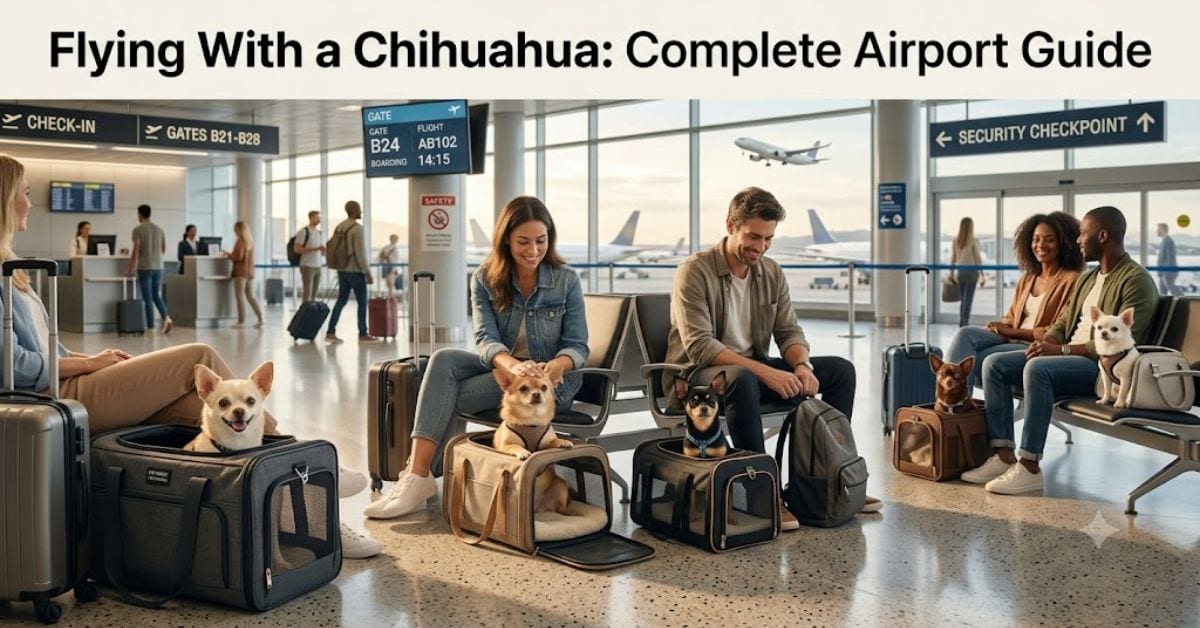
- Featured Image: A Chihuahua peeking out of a soft-sided airline carrier at an airport gate
- Infographic: Step-by-step TSA screening process for pets
- Comparison Graphic: Visual version of the airline fee and carrier size table
- Before & After Image: Chihuahua relaxed in a properly fitted vs. overcrowded carrier
- Pinterest Image: Vertical graphic titled “Flying With a Chihuahua: What to Pack + TSA Steps”
- YouTube Thumbnail: Owner walking a Chihuahua through airport security
- Interactive Calculator: “Is my carrier airline-compliant?” size checker tool
Internal Linking Suggestions
- Best Travel Carriers for Chihuahuas: A Complete Buying Guide
- How to Crate Train a Chihuahua Puppy Step by Step
- Chihuahua Anxiety: Causes, Signs, and Calming Techniques
- Chihuahua Health Conditions Every Owner Should Know
- Road Trip Essentials for Traveling With a Chihuahua
Trusted External References
This guide draws on publicly available guidance from the following sources. Always confirm current requirements directly with your airline and veterinarian before flying, as fees, carrier rules, and documentation windows are updated periodically.
- TSA — Traveling with Pets: Small Pets Screening Rules
- American Kennel Club — Dog Travel Tips
- American Kennel Club — Flying With Dogs: Tips From a Pet-Travel Ace
- ASPCA — Air Travel Tips for Flying With Pets
- American Veterinary Medical Association (AVMA) guidance on sedation risks for pets during air travel
- WSAVA and Merck Veterinary Manual general reference for breed-specific health considerations in toy breeds
Conclusion
Flying with a Chihuahua is genuinely manageable once you understand the moving pieces: book your pet’s cabin spot early, choose a carrier that meets airline sizing without cramping your dog, and get your health certificate within the required window.
TSA screening feels intimidating the first time, but it follows a simple, predictable routine: leash out, carrier through the X-ray, dog in your arms through the detector.
The owners who have the smoothest airport days are the ones who prepare weeks in advance rather than the night before:
Carrier training, vet visits, and a full documentation folder go a long way toward a calm, low-drama trip.
Your Chihuahua’s small size is actually an advantage here, keeping cargo travel off the table entirely and in-cabin comfort well within reach.
With the right prep, airport day becomes just another adventure for your Chihuahua rather than a source of stress for either of you. Safe travels to you both.