

Quick Answer
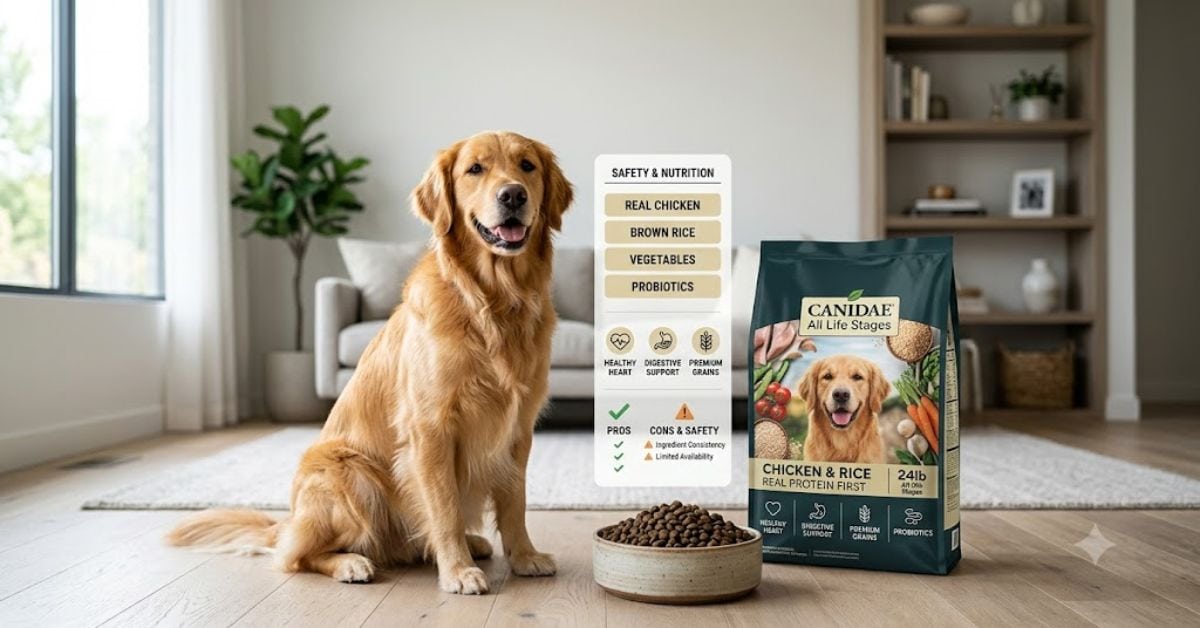
Canidae dog food reviews consistently praise the brand for real meat-first recipes, limited-ingredient formulas, and a clean recall record spanning more than eight years.
Made in Canidae’s own Texas facility, it costs more than mainstream brands but suits dogs with sensitivities. Overall, Canidae ranks among the more trustworthy premium options for small and toy breeds.
Author:
Gulnaz Malik
Role:
Publisher & Pet Care Expert
Experience:
5+ Years in Dog Care & Dog Grooming
Content Review:
Veterinary-reviewed content approach based on trusted canine care resources and practical pet care experience.
Introduction
If you’ve searched for Canidae dog food reviews, you’re likely trying to decide whether this premium brand is worth the higher price tag.
Canidae has built a loyal following since 1996 by focusing on real animal protein, limited-ingredient recipes, and a manufacturing process the company controls from start to finish.
For small dogs and Chihuahuas especially, ingredient quality and digestibility matter far more than flashy packaging.
This guide breaks down what actually goes into Canidae recipes, how the brand’s safety and recall history stacks up, which product lines fit different dogs, and what real owners say after feeding it long-term.
You’ll also find a side-by-side comparison table, a buying checklist, and answers to the most common questions pet parents ask before switching foods. By the end, you’ll know exactly whether Canidae deserves a spot in your dog’s bowl.
What Is Canidae Dog Food? Brand Overview and History
Canidae Pet Food Company was founded in 1996 in Brownwood, Texas, by pet store workers who wanted better nutrition for their own dogs than what mainstream brands offered at the time.
The company remains privately owned and family-run, which is unusual in an industry now dominated by large conglomerates.
This independence shows up in how Canidae markets itself — with less flash and more emphasis on sourcing and formulation.
In 2012, Canidae opened the Ethos Pet Nutrition Center in Brownwood, a dedicated in-house manufacturing facility.
This matters because many “premium” brands outsource production to co-packers, which limits quality control.
Canidae also operates its own farm in Kansas to grow select ingredients and works with regenerative, sustainable farming partners across the U.S. for its animal proteins.
Most Canidae dog food reviews highlight this vertically integrated approach as a genuine trust signal, since the company can trace ingredients back to specific farms rather than relying entirely on third-party suppliers.
For owners comparing manufacturing transparency across brands, the way you might when researching Fromm dog food reviews, Canidae’s in-house production is a meaningful differentiator.
The brand produces both dog and cat food, but its dog recipes are formulated separately with breed-size and life-stage needs in mind, which is relevant for toy breeds that need smaller kibble and calorie-dense formulas.
Canidae Dog Food Ingredients: What’s Really Inside

Canidae recipes typically list a named animal protein first: chicken, lamb, bison, or salmon, rather than a generic “meat” or by-product meal.
Many formulas also include menhaden fish meal, a concentrated source of omega-3 fatty acids that supports skin and coat health, along with garbanzo beans, peas, lentils, and sweet potatoes as carbohydrate sources.
Protein levels vary noticeably between product lines. Some PURE recipes reach around 32% crude protein, while other formulas sit closer to 23–25%, which is still above the industry average of roughly 25% for standard dry dog food.
This range lets owners choose a formula that matches their dog’s activity level and life stage instead of a one-size-fits-all approach.
Canidae avoids artificial colors, flavors, and preservatives across its lines, and several recipes are formulated as limited-ingredient diets for dogs with food sensitivities.
This makes the brand a reasonable option to consider alongside other allergy-conscious formulas, similar to what owners evaluate when researching Whole Earth Farms dog food.
It’s worth noting that grain-free formulas are best reserved for dogs with confirmed grain sensitivities; the FDA has investigated a potential link between grain-free, legume-heavy diets and dilated cardiomyopathy (DCM), so grain-inclusive Canidae recipes are the safer default for most healthy dogs unless a veterinarian recommends otherwise.
Canidae Product Lines and Recipe Comparison
Canidae organizes its dog food into several distinct lines, each targeting different needs. Understanding these differences is essential before you can meaningfully compare Canidae dog food reviews, since owners often rate different lines very differently depending on which one they fed.
Canidae PURE is the flagship limited-ingredient line, built around a short ingredient list (typically eight or fewer main ingredients) and free of grains, corn, wheat, and soy.
It’s designed for dogs with food sensitivities and comes in recipes like Salmon & Sweet Potato or Lamb & Sweet Potato.
Canidae All Life Stages (ALS) formulas work for puppies, adults, and seniors of any breed size using one recipe, which simplifies feeding in multi-dog households.
Canidae PURE Petite is formulated specifically with smaller kibble sizes for toy and small breeds, making it easier for a Chihuahua’s smaller jaw and stomach to manage.
There’s also a wet food line with protein content exceeding 40% in some recipes, useful as a topper or for dogs needing extra hydration.
See the comparison table below for a side-by-side breakdown of these core lines, their target dogs, and typical protein content.
Safety history is one of the most important factors dog owners weigh, and it’s a recurring theme across Canidae dog food reviews. As of 2026, Canidae has not had a new recall in more than eight years, a strong track record in an industry where recalls remain fairly common.
Separately, Canidae was named in a 2018 class-action lawsuit concerning marketing language, specifically the use of “grain-free” and “holistic” on packaging.
As of 2026, there are no open lawsuits or active recalls against the brand. For context on how this compares to other manufacturers, the same Diamond Pet Foods facility connection appears in reviews of Kirkland dog food, another brand that overhauled its safety protocols after 2012.
Canidae Pros and Cons: Is It Worth the Price?

Every honest review has to weigh trade-offs, and Canidae is no exception. On the positive side, the brand uses real, named animal proteins first, avoids artificial preservatives and colors, and manufactures dry food in its own U.S. facility with third-party AAFCO compliance testing.
Its limited-ingredient options genuinely help dogs with food sensitivities, and the clean multi-year recall record builds real confidence.
The main downside is price. Canidae sits in the premium tier, and its cost per pound is noticeably higher than mainstream brands like Pedigree or Ol’ Roy.
For budget-conscious households, this is the biggest barrier, and it’s worth reading a Pedigree dog food review for comparison if cost is the deciding factor.
Some owners also report occasional recipe reformulations, which can cause temporary digestive upset in sensitive dogs during a transition.
Overall, Canidae dog food reviews tend to land in the 4- to 5-star range across major review platforms, with Dog Food Advisor giving its top lines 5-star ratings and Dogster rating the brand 4.8 out of 5. The consensus: strong quality for the price, provided your budget allows for a premium brand.
Canidae for Small Breeds and Chihuahuas: Special Considerations
Small and toy breeds like Chihuahuas have fast metabolisms, tiny stomachs, and a higher risk of hypoglycemia, which means calorie density and kibble size matter more than they do for larger dogs.
Canidae PURE Petite addresses the kibble-size issue directly, using smaller pieces that are easier for a toy breed to chew and digest without choking risk.
Because Chihuahuas are prone to dental crowding, softer or smaller kibble also reduces strain during chewing.
Canidae’s higher protein and fat content in several recipes supports the energy needs of small, active dogs without requiring oversized portions, which helps prevent the rapid weight gain toy breeds are prone to on calorie-dense diets.
Owners researching feeding frameworks for toy breeds may find it useful to also review a best dog food guide for Yorkies, since Yorkies and Chihuahuas share very similar small-breed nutritional needs.
If your Chihuahua has known food sensitivities, Canidae PURE’s limited-ingredient formulas are worth prioritizing over the ALS line, since fewer ingredients make it easier to identify and eliminate a trigger.
As always, introduce any new food gradually and monitor stool quality, energy, and coat condition during the first two to three weeks.
Canidae vs Other Premium Dog Food Brands
Positioned in the premium tier, Canidae competes most directly with brands like Fromm, Taste of the Wild, and Blue Buffalo rather than budget options.
Compared to Taste of the Wild, which leans heavily on novel proteins like bison and venison, Canidae offers a broader mix of familiar and novel proteins, giving owners more flexibility for protein rotation.
Against Fromm, which has built its reputation over more than a century of family ownership, Canidae is a comparatively newer brand but matches it on manufacturing transparency, since both companies control much of their own production.
Compared to Blue Buffalo, which is now owned by a large multinational (General Mills), Canidae’s continued independent, privately-held status appeals to owners who prioritize smaller-company sourcing and accountability.
Price-wise, Canidae sits above Blue Buffalo and Taste of the Wild in many markets but below ultra-premium brands. For owners weighing multiple options, reading several Canidae dog food reviews alongside competitor reviews rather than relying on one source gives the clearest picture of where it fits for your specific dog’s needs and budget.
Real Owner Reviews and Ratings: What Pet Parents Say

Across major retail and review platforms, Canidae dog food reviews skew strongly positive. On Chewy, the PURE Farm to Bowl Wild-Caught Salmon & Sweet Potato recipe holds a 4.4-star average from over 1,300 ratings, with owners frequently mentioning improved coat softness, better digestion, and fewer joint issues after switching.
Several long-term reviewers note they’ve fed Canidae to multiple dogs across different life stages without problems.
Not every review is glowing. A small number of owners on consumer review sites report individual dogs reacting poorly to specific recipes or reformulations, which is common across virtually every pet food brand and usually reflects individual sensitivity rather than a systemic quality issue.
The overall pattern across independent review platforms Dog Food Advisor’s 5-star ratings, Dogster’s 4.8/5 score, and largely positive retailer reviews points to consistent satisfaction, particularly around coat health, digestibility, and the brand’s clean safety record.
How to Transition Your Dog to Canidae Safely
Switching foods too quickly is one of the most common mistakes owners make, and it’s especially risky for small breeds with sensitive digestive systems.
A gradual transition over 7 to 10 days gives your dog’s gut bacteria time to adjust and significantly reduces the risk of vomiting, diarrhea, or appetite loss.
Start by mixing 25% new food with 75% old food for the first two to three days, then move to a 50/50 split, followed by 75% new food, before finishing at 100% Canidae by day seven to ten.
Watch stool consistency, energy levels, and appetite throughout the process. Mild softness in the first few days is normal, but persistent diarrhea or vomiting warrants a call to your veterinarian.
Toy breeds like Chihuahuas may benefit from an even slower transition, closer to 10–14 days, given their smaller digestive margin for error.
Canidae Recipe Lineup at a Glance
| Product Line | Best For | Protein Content | Grain Status | Notable Feature |
| Canidae PURE | Dogs with food sensitivities | ~23–32% | Grain-free | Limited-ingredient (8 or fewer main ingredients) |
| Canidae All Life Stages (ALS) | Multi-dog households | ~24–25% | Grain-inclusive available | One formula for puppies, adults, and seniors |
| Canidae PURE Petite | Toy and small breeds | ~23–28% | Grain-free | Smaller kibble size for tiny mouths |
| Canidae Wet Food | Topper or picky eaters | 40%+ | Varies by recipe | High moisture, high protein |
How Canidae Stacks Up Against Other Brands
| Brand | Avg. Protein | Recall History (last 8 yrs) | Price Tier | Manufacturing |
| Canidae | 23–32% | None | Premium | In-house (Texas) |
| Fromm | 24–33% | None | Premium | In-house (Wisconsin) |
| Taste of the Wild | 25–32% | Limited, historical | Mid-premium | Third-party facilities |
| Blue Buffalo | 24–30% | Limited, historical | Mid-premium | Company-owned + co-manufactured |
Canidae Buying Checklist
- Confirm the recipe matches your dog’s life stage (puppy, adult, senior, or all-life-stages)
- Choose PURE Petite or a small-kibble formula for toy breeds under 15 lbs
- Check the ingredient list for a named protein source in the first position
- Select grain-inclusive formulas unless your vet has confirmed a grain sensitivity
- Verify the bag’s best-by date and production code are current
- Budget for premium pricing before committing to a full bag
- Introduce the food gradually over 7–14 days, especially for small or sensitive dogs
Do’s and Don’ts
Do:
- Transition gradually to avoid digestive upset
- Match kibble size to your dog’s breed and jaw size
- Monitor coat, stool, and energy for the first three weeks
- Consult your vet before switching a dog with existing health conditions
Don’t:
- Switch foods abruptly, even between two high-quality brands
- Assume grain-free is automatically healthier without a confirmed sensitivity
- Overfeed toy breeds using large-breed portion guidelines
- Ignore persistent vomiting, diarrhea, or appetite loss after switching
FAQS
Is Canidae a good dog food brand?
Yes. Canidae dog food reviews consistently rate the brand highly for real-meat recipes, in-house U.S. manufacturing, and a clean recall record spanning more than eight years, making it a trustworthy premium option for most healthy dogs.
Is Canidae dog food good for small breeds like Chihuahuas?
Yes, especially the PURE Petite line, which uses smaller kibble sized for toy breeds. Its higher protein and fat content also supports the fast metabolism and energy needs of small, active dogs.
Has Canidae dog food ever been recalled?
Canidae’s only recall was in 2012 and involved a third-party manufacturing facility; no products tested positive for contamination. The brand has had no new recalls in over eight years as of 2026.
Is Canidae dog food worth the price?
For most owners, yes. Canidae offers real animal protein, transparent U.S. manufacturing, and limited-ingredient options for sensitive dogs, though it costs more than mainstream or budget brands.
How do I transition my dog to Canidae dog food?
Mix Canidae gradually with your dog’s current food over 7 to 10 days, increasing the new food’s ratio every two to three days. Small breeds may benefit from a slightly slower 10–14 day transition.
Conclusion
Canidae dog food reviews point to a brand that has earned its reputation through consistency rather than marketing hype: real named proteins, in-house U.S. manufacturing, and an unblemished safety record for over eight years.
Its PURE and PURE Petite lines make it a particularly strong option for toy and small breeds, including Chihuahuas, that need smaller kibble and sensitive-stomach formulas.
The trade-off is price: Canidae sits firmly in the premium tier so that it won’t fit every budget. But for owners who prioritize ingredient transparency, manufacturing accountability, and a proven track record, Canidae remains a smart, well-reviewed choice heading into 2026.
As always, check with your veterinarian before switching, transition gradually, and monitor your dog’s response during the first few weeks on any new food.
According to the American Kennel Club (AKC), dietary transitions and protein needs should always be evaluated in the context of a dog’s breed, age, and health status. This principle applies directly to any Canidae recipe you’re considering.
Multimedia Placement Suggestions
- Featured Image: Bag of Canidae PURE dog food next to a small dog bowl
- Infographic: Canidae product line comparison (visual version of Table 1)
- Comparison Graphic: Canidae vs Fromm vs Taste of the Wild
- Before & After Image: Coat condition improvement after switching (if UGC available)
- Pinterest Image: “Is Canidae Dog Food Right for Your Dog? 2026 Review” vertical graphic
- YouTube Thumbnail: Unboxing/taste-test thumbnail for embedded video review
Schema Markup Recommendations
- Article schema with author (Gulnaz Malik), datePublished, and dateModified
- FAQPage schema covering all 5 FAQ questions and answers above
- BreadcrumbList schema: Home > Dog Food Reviews > Canidae Dog Food Reviews
Social Media Caption
🐾 Is Canidae dog food worth the premium price tag? We break down the ingredients, recall history, and real owner reviews so you can decide with confidence, plus which formula is best for small breeds like Chihuahuas! 🦴 #CanidaeDogFood #DogFoodReviews #ChihuahuaCare #SmallBreedNutrition #PetParents #DogFoodGuide