

Quick Answer
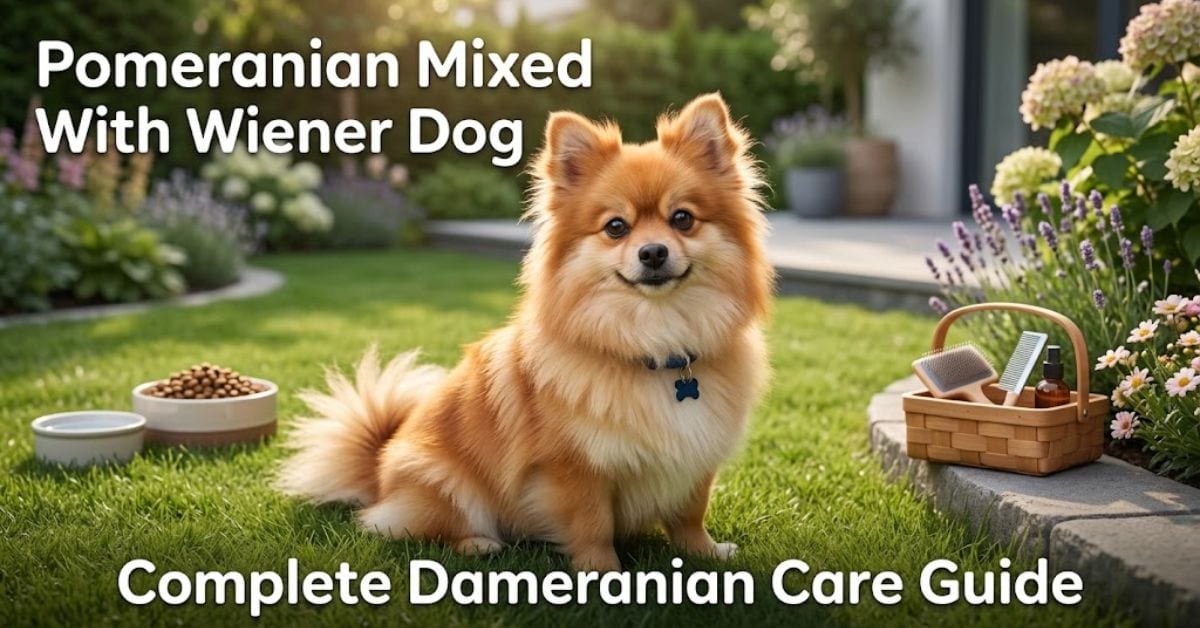
A Pomeranian mixed with a Wiener dog is a cross between a Pomeranian and a Dachshund. This mix is often called a Dameranian, Pomweenie, or Doxie Pom. It usually stays small but can inherit the Dachshund’s long body, the Pomeranian’s fluffy coat, and a lively, affectionate, alert personality. Its exact appearance, size, and temperament can vary.
Author Box
Author: Gulnaz Malik
Role: Publisher & Pet Care Expert
Experience: 5+ Years in Dog Care & Dog Grooming
Content Review: Veterinary-reviewed content approach based on trusted canine care resources and practical pet care experience.
Introduction
A Pomeranian mixed with a Wiener dog combines two very different small breeds into one charming companion. The Pomeranian brings a fluffy coat, lively personality, confidence, and strong attachment to its family. The Dachshund, commonly called a Wiener dog, contributes its long body, short legs, courage, curiosity, and determined nature.
This mix is commonly known as the Dameranian or Pomweenie. However, it is not a standardized breed, so puppies can look and behave differently even within the same litter.
Some Dameranians have a thick Pomeranian-like coat. Others have a smoother or shorter Dachshund-type coat. Some develop a noticeably long back and short legs, while others have a more compact body.
That variation makes it important to understand the needs of both parent breeds before bringing one home.
This guide covers everything you need to know about a Pomeranian-Dachshund mix, including its appearance, adult size, temperament, grooming, exercise, training, nutrition, health concerns, puppy care, and common ownership mistakes.
What Is a Pomeranian Mixed With a Wiener Dog?
A Pomeranian mixed with a Wiener dog is a designer cross created from a Pomeranian and a Dachshund. The Dachshund is the breed commonly known as the Wiener dog or sausage dog because of its distinctive long body and short legs.
You may see this cross-marketed under several names, including Dameranian, Pomweenie, Pom-A-Weenie, Pomdach, Pom-Dach, and Doxie Pom. These names generally describe the same basic Pomeranian-Dachshund cross, although individual dogs can differ significantly.
The Pomeranian is a small spitz-type companion dog recognized for its dense double coat, alert nature, lively personality, and confident attitude. The Dachshund was developed as a hunting dog, with its long body and short legs helping it work in underground burrows.
Because their backgrounds are different, their offspring can inherit a fascinating mixture of characteristics.
A puppy might inherit the Pomeranian’s fluffy coat but the Dachshund’s elongated body. Another might have a shorter coat and a more compact shape. Ear position, facial structure, coat color, and tail carriage can also vary.
This genetic variation means owners should avoid promises about exactly how a puppy will look as an adult.
The mix can also inherit behavioral traits from both sides. Pomeranians tend to be alert and expressive, while Dachshunds can be independent, courageous, curious, and persistent.
That combination can create a small dog with a surprisingly large personality.
Common Dameranian traits
- Small companion-dog size
- Long or moderately elongated body
- Short legs
- Fluffy, medium, or short coat
- Alert expression
- Playful personality
- Strong attachment to family
- Potential for frequent barking
- Curious and confident behavior
- Intelligent but sometimes stubborn temperament
If you enjoy learning about other Pomeranian crosses, our Pomeranian Chihuahua Mix guide provides another example of how Pomeranian traits can combine with those of another small breed.
Pomeranian Mixed With Wiener Dog Size and Appearance

The adult size of a Pomeranian mixed with a Wiener dog can vary because neither parent contributes traits in a perfectly predictable way. The Dachshund itself comes in different sizes, while Pomeranians are small toy dogs.
For that reason, there is no official adult size standard for the Dameranian.
Many dogs remain small enough for apartment living and easy indoor handling. However, a puppy with stronger Dachshund genetics may develop a longer body and sturdier frame than a puppy that takes after the Pomeranian.
Body proportions deserve special attention. A long-backed Dameranian needs careful handling because its spine can experience greater mechanical stress than that of a compact-bodied dog.
Coat appearance is equally unpredictable.
A puppy may inherit a dense, fluffy double coat from the Pomeranian. Another may have a smooth Dachshund-type coat. A longhaired Dachshund parent can contribute additional feathering around the ears, chest, legs, and tail.
Common colors may include black, brown, tan, cream, red, sable, and combinations of these shades.
| Feature | Pomeranian Parent | Dachshund Parent | Possible Dameranian |
| Body | Compact | Long and low | Compact to elongated |
| Legs | Short | Short | Usually short |
| Coat | Dense double coat | Smooth, wire, or long | Short, medium, or fluffy |
| Ears | Usually upright | Often floppy | Upright, semi-erect, or floppy |
| Tail | Plumed | Long | Often feathered |
| Personality | Lively and alert | Bold and curious | Playful, alert, and confident |
Never choose a puppy solely because it has a particular coat color or an unusually tiny body.
A healthy body structure, sound movement, good temperament, responsible breeding, and appropriate veterinary care matter much more.
If you want to understand Pomeranian characteristics more closely, our Black and White Pomeranian guide explains the breed’s coat, behavior, grooming, and everyday care.
Pomeranian Mixed With Wiener Dog Temperament and Personality
A Pomeranian mixed with a Wiener dog can be affectionate, entertaining, energetic, and very expressive.
Both parent breeds can be highly alert. Your Dameranian may quickly notice a person walking outside, a sound at the door, another animal in the yard, or an unfamiliar noise inside the house.
The Pomeranian side may contribute confidence and a strong desire for attention. The Dachshund side can add determination and independence.
Together, these traits can produce a dog that loves its family but does not always agree with every request.
Early socialization can make a major difference.
Introduce a puppy gradually to friendly people, safe dogs, household sounds, grooming equipment, car rides, different surfaces, and gentle handling. Reward calm behavior so the puppy learns that new experiences are safe.
Dameranians can also become very attached to their owners. This is lovely when balanced, but excessive dependence can contribute to distress when the owner leaves.
Teach alone-time skills gradually. Give the dog a comfortable resting area and reward calm, independent behavior instead of constantly responding to attention-seeking.
A small dog should not be treated like a stuffed toy. It still needs boundaries, training, exercise, and mental stimulation.
The Pomeranian Chihuahua Mix-2 guide also discusses how a Pomeranian cross can develop strong attachment, alertness, barking tendencies, and a need for early socialization.
Dameranians may do well with families, couples, singles, and older adults when their needs are understood.
However, young children should always interact with a small dog under supervision. A child can accidentally drop, step on, squeeze, or frighten a small dog.
What personality should you expect?
- Affectionate with familiar people
- Alert to environmental sounds
- Playful and curious
- Intelligent and trainable
- Sometimes stubborn
- Potentially vocal
- Protective of its home
- Interested in chasing moving objects
- Sensitive to harsh correction
The individual dog’s genetics and early experiences matter more than its label.
Pomeranian Mixed With Wiener Dog Grooming Needs

Grooming requirements depend heavily on the coat your Pomeranian mixed with a Wiener dog inherits.
A short-coated Dameranian may need only light weekly brushing. A fluffy dog with a dense Pomeranian-style double coat may require brushing several times per week or even daily during heavy shedding.
Use a slicker brush and a metal comb for longer coats. Brush carefully enough to reach through the coat rather than simply smoothing the top layer.
Pay particular attention to:
- Behind the ears
- Around the collar
- Under the front legs
- Around the hind legs
- Under the tail
- Chest feathering
- Areas where harnesses rub
Mats can pull on the skin and hide irritation, parasites, or wounds.
Do not automatically shave a fluffy Dameranian during hot weather. If the dog inherits a Pomeranian-style double coat, removing too much hair can interfere with the coat’s protective function.
Our Shaved Pomeranian Puppy safety guide explains why owners should think carefully before using close clipping on a Pomeranian-type double coat.
Regular brushing is usually a better first step for controlling loose hair and preventing mats.
Nail care matters too. Overgrown nails can affect the dog’s footing and make walking uncomfortable.
Check the ears weekly. Look for unusual odor, redness, excessive wax, swelling, or repeated scratching.
| Grooming Task | Practical Schedule | Why It Matters |
| Coat brushing | 3–7 times weekly | Controls shedding and prevents mats |
| Ear check | Weekly | Helps identify irritation early |
| Nail check | Weekly | Prevents overgrown nails |
| Tooth brushing | Ideally daily | Helps control plaque |
| Bathing | As needed | Keeps skin and coat clean |
| Professional grooming | As needed | Helps manage difficult coats |
Start grooming routines when the puppy is young. Touch the paws gently, examine the ears, brush for short periods, and reward calm behavior.
This teaches the puppy that grooming is a normal part of life rather than something frightening.
Pomeranian Mixed With Wiener Dog Exercise and Training
A Pomeranian mixed with a Wiener dog may be small, but it still needs daily physical and mental activity.
Short walks, indoor games, sniffing activities, and brief training sessions can provide plenty of stimulation. The exact amount depends on the dog’s age, health, fitness, and personality.
A healthy adult may benefit from roughly 30–60 minutes of combined daily activity, divided into manageable sessions rather than one exhausting workout.
If your Dameranian has a noticeably long back, avoid encouraging repeated jumping from sofas, beds, or other high furniture. You can also use ramps or pet steps to reduce unnecessary jumping.
Training works best when sessions remain short and rewarding. A Dameranian may be clever enough to learn quickly but independent enough to decide that your command is optional.
Use positive reinforcement.
Reward the behavior you want with a small treat, praise, a toy, or play. Avoid yelling or physical punishment.
Start with:
- Name recognition
- Sit
- Stay
- Come
- Leave it
- Loose-leash walking
- Calm greeting
- Recall
- Handling tolerance
- Place or mat training
Barking can become one of the biggest challenges.
If your dog barks at every sound outside, avoid rewarding the barking with immediate attention. Instead, teach an alternative behavior, such as looking at you or going to a mat.
Mental stimulation can be just as important as physical exercise.
Use puzzle feeders, scent games, hide-and-seek, trick training, toy rotation, and short obedience exercises.
A bored Dameranian may find its own entertainment through barking, digging, chewing, or escaping.
Consistent daily training prevents these habits from becoming established.
Pomeranian Mixed With Wiener Dog Food and Nutrition

Nutrition has a direct effect on a Dameranian’s weight, energy, coat, digestion, and overall health.
Choose a complete and balanced dog food that matches the dog’s life stage. Puppies need growth nutrition, adults need maintenance nutrition, and senior dogs may require adjustments based on their health and activity.
Do not rely solely on the words “premium,” “natural,” or “small breed” on a package. Consider the food’s complete nutritional profile, calorie density, feeding instructions, ingredient list, and suitability for your individual dog.
Small dogs can gain weight surprisingly quickly.
A few extra treats may seem insignificant, but repeated overfeeding can gradually create obesity. Measure meals instead of filling the bowl randomly.
Your veterinarian can help determine an appropriate body condition and feeding plan.
Fresh water should always be available unless a veterinarian gives different instructions.
When changing foods, make the transition gradually. Sudden diet changes can cause loose stools or digestive upset.
For owners researching dog food quality, our Fromm Dog Food Reviews can provide additional background on evaluating a commercial dog food formula.
Do not assume that a high-protein food automatically suits every dog. Nutritional needs depend on age, activity, health status, body condition, and individual tolerance.
Avoid giving table scraps as a regular habit. Some human foods are unsafe for dogs, while others can add unnecessary calories.
Watch for:
- Sudden appetite changes
- Repeated vomiting
- Persistent diarrhea
- Unexplained weight loss
- Rapid weight gain
- Excessive thirst
- Unusual lethargy
These signs deserve veterinary attention rather than an internet-based diet experiment.
A good feeding routine is simple: measure the food, monitor body condition, limit unnecessary treats, provide fresh water, and adjust the plan when your dog’s needs change.
Pomeranian Mixed With Wiener Dog Health Problems and Lifespan
A healthy Pomeranian mixed with a Wiener dog may enjoy a long life, but no responsible owner should promise an exact lifespan.
Because this mix combines two breeds with different inherited risks, owners should understand potential problems from both sides.
The Dachshund’s long-backed structure makes spinal health particularly important. A dog with a long body can experience significant stress on the back, especially if it becomes overweight or repeatedly jumps from high furniture.
Pomeranians can also experience health concerns involving the teeth, kneecaps, eyes, skin, and other systems.
Potential health concerns in a Dameranian may include:
- Patellar luxation
- Dental disease
- Obesity
- Back or spinal problems
- Eye disorders
- Skin allergies
- Joint problems
- Cataracts
- Seizure disorders
- Other inherited conditions
These are possibilities, not predictions. A Dameranian does not automatically develop every condition associated with its parents.
Preventive care can make a meaningful difference.
Schedule routine veterinary examinations, keep vaccinations current, use appropriate parasite prevention, maintain dental hygiene, and monitor body weight.
Dameranian Health Monitoring Scale
Green — Normal
Your dog eats normally, moves comfortably, maintains a stable weight, has normal stools, and remains bright and active.
Yellow — Monitor
You notice increased scratching, mild limping, bad breath, gradual weight gain, reduced activity, recurring ear irritation, or a small appetite change.
Red — Veterinary Attention
Your dog has severe pain, sudden inability to walk, repeated vomiting, breathing difficulty, collapse, seizures, major appetite changes, or unexplained weight loss.
This framework is not a diagnosis. It simply helps owners decide when a change deserves closer attention.
For a long-backed dog, maintaining a healthy body condition is especially important. Extra weight increases mechanical stress on joints and the spine.
Do not give human pain medication unless a veterinarian specifically tells you to do so. Some common human medicines can be dangerous or even fatal to dogs.
The best health strategy is prevention: good nutrition, sensible exercise, safe handling, regular veterinary care, and early action when something changes.
How to Choose and Care for a Dameranian Puppy

If you plan to bring home a Pomeranian mixed with a Wiener dog puppy, look beyond the puppy’s face, color, and price.
Health and temperament should come first.
Ask the breeder about both parents. Request available veterinary records and health-testing information. Observe where the puppies live and, when possible, meet the mother.
A healthy puppy should appear alert, responsive, clean, and appropriately social.
Be cautious when sellers advertise extremely tiny puppies as “teacup,” “micro,” or guaranteed to remain a specific weight. Adult size cannot be perfectly predicted from marketing labels.
A responsible seller should be willing to answer questions rather than pressure you into an immediate payment.
Puppy Care Checklist
- Review vaccination and veterinary records.
- Ask about the health history of both parents.
- Meet the mother when possible.
- Observe the puppy’s behavior around people.
- Check eyes, ears, coat, and general condition.
- Avoid sellers focused only on unusual colors or extreme size.
- Prepare a safe sleeping area before arrival.
- Puppy-proof stairs and high furniture.
- Begin gentle grooming practice early.
- Introduce a harness gradually.
- Establish a measured feeding routine.
- Schedule a veterinary examination.
- Start positive socialization.
- Keep identification information updated.
The first weeks at home should focus on routine and confidence.
Do not overwhelm a puppy with too many new experiences at once. Introduce new sounds, people, environments, and handling gradually.
Teach children how to interact safely with the puppy. Never allow a young child to carry a small dog around without supervision.
A puppy also needs plenty of sleep. Excessive stimulation can make a young dog irritable and difficult to manage.
The best puppy is not necessarily the smallest or most expensive one. Look for good health, stable temperament, responsible breeding, and transparent records.
Common Pomeranian Mixed With Wiener Dog Care Mistakes
Small dogs often receive less structure than larger dogs because owners assume they do not need much training.
That is a mistake.
A Dameranian still needs boundaries, exercise, mental stimulation, socialization, and consistent expectations.
One common problem is overfeeding. Owners may use treats to show affection, but those calories can quickly become unnecessary weight.
Grooming mistakes are also common. Brushing only the surface of a fluffy coat can leave hidden mats underneath.
Owners should also avoid shaving a Pomeranian-type double coat simply because the weather is warm. Proper brushing, shade, water, controlled exercise, and appropriate trimming can often provide better management.
Other common mistakes include:
- Using harsh punishment
- Ignoring excessive barking
- Skipping dental care
- Letting the dog become overweight
- Delaying veterinary attention
- Skipping puppy socialization
- Allowing rough play with larger dogs
- Choosing a puppy based only on appearance
- Making sudden food changes
- Giving human medication without veterinary advice
Consistency solves many behavior problems before they become serious.
The goal is not to control every movement. The goal is to teach the dog which behaviors work well in your household.
Is a Pomeranian Mixed With Wiener Dog Right for You?

A Pomeranian mixed with a Wiener dog can be an excellent companion for the right household.
It may suit someone who wants a small dog with a lively personality and enjoys regular interaction. The mix can adapt to apartment living when its exercise and mental needs are met.
A fluffy Dameranian may require frequent brushing. A long-backed dog needs sensible handling. An alert dog may require dedicated barking training. A strongly attached dog may need gradual independence training.
This mix may not be ideal for someone who wants a completely quiet dog or a pet that can be ignored for most of the day.
It may also be a poor match for a household that cannot provide consistent grooming, training, exercise, and veterinary care.
Before bringing one home, ask yourself:
- Can I provide daily interaction?
- Can I maintain a regular grooming routine?
- Can I manage barking with positive training?
- Can I protect a long back from unnecessary jumping?
- Can I afford routine and emergency veterinary care?
- Can I maintain a healthy feeding routine?
- Can I supervise interactions with children and larger pets?
Frequently Asked Questions
What is a Pomeranian mixed with a Wiener dog called?
A Pomeranian mixed with a Wiener dog is commonly called a Dameranian or Pomweenie. Other names include Pom-A-Weenie, Pomdach, Pom-Dach, and Doxie Pom. Because this is a mixed breed rather than a standardized breed, the dog’s appearance, size, coat, and personality can vary considerably.
How big does a Pomeranian-Dachshund mix get?
A Pomeranian-Dachshund mix usually remains a small dog, but its adult size can vary according to genetics and the size of the Dachshund parent. Some dogs have a compact frame, while others develop a noticeably longer body and sturdier build.
Is a Dameranian good with children?
A Dameranian can live successfully with children when the children understand how to handle a small dog gently. Because the mix can have a fragile body and may inherit a long back, rough play, carrying, chasing, or jumping should be avoided. Young children should always interact under adult supervision.
How often should a Dameranian be groomed?
The grooming schedule depends on coat type. A short-coated Dameranian may need weekly brushing, while a fluffy Pomeranian-type coat may require brushing several times per week or daily during heavy shedding. Owners should also maintain nails, ears, and teeth and bathe the dog when necessary.
Are Pomeranian-Wiener dog mixes healthy?
Pomeranian-Wiener dog mixes can be healthy, but they may inherit health concerns from either parent. Potential problems include dental disease, patellar luxation, obesity, eye conditions, skin issues, and back problems. Healthy weight, sensible exercise, safe handling, preventive veterinary care, and early attention to symptoms are important.
Conclusion
A Pomeranian mixed with a Wiener dog can combine the best qualities of two fascinating small breeds. The Pomeranian contributes fluffiness, confidence, alertness, and affection, while the Dachshund contributes courage, curiosity, determination, and its distinctive long-bodied shape.
The result is a small dog with a personality that can be much bigger than its size.
Because this is a mixed breed, expect variation. One Dameranian may have a thick, fluffy coat, while another may have shorter hair. Body length, ear shape, coloring, adult weight, and temperament can also differ.
Good ownership starts with understanding those differences rather than expecting every dog to follow a fixed breed standard.
Give your Dameranian measured nutrition, regular grooming, daily activity, positive training, dental care, socialization, and routine veterinary attention. If your dog inherits a long back, take extra care to prevent unnecessary jumping and keep its body weight healthy.
Most importantly, choose health and temperament over fashionable colors or extremely small size when selecting a puppy.
With responsible care, a safe home environment, consistent training, and plenty of companionship, a Dameranian can become a loyal, playful, affectionate member of the family.
Tags
Pomeranian mixed with Wiener dog, Pomeranian Dachshund mix, Dameranian, Pomweenie, Pom-A-Weenie, Pomdach, Doxie Pom, Pomeranian mix, Dachshund mix, Wiener dog mix, small dog breeds, Dameranian puppy, Dameranian grooming, Dameranian health, Pomeranian Dachshund puppy.
Social Media Caption
Meet the adorable Dameranian, the Pomeranian mixed with a Wia ener dog! 🐶❤️ Learn about its size, temperament, grooming, food, training, health risks, and everyday care in this complete guide.
#Dameranian #Pomweenie #PomeranianMix #DachshundMix #WienerDog #DogCare #SmallDogs #ChihuahuaNest
Primary Keywords: Pomeranian mixed with Wiener dog, Pomeranian Dachshund mix, Dameranian
Secondary Keywords: Pomweenie, Pomeranian Wiener dog mix, Dachshund Pomeranian mix, Doxie Pom, Pomeranian Dachshund puppy
Authority Sources
For breed characteristics and responsible ownership considerations, consult the American Kennel Club (AKC).
For veterinary guidance on healthy weight, exercise, and preventive pet care, consult the American Veterinary Medical Association (AVMA).