


Quick Answer
A Chocolate Pomeranian is a purebred Pomeranian with rich brown pigmentation in its coat. Chocolate is one of the colors listed by the American Kennel Club.
Like other Pomeranians, this small dog needs frequent grooming, balanced nutrition, early training, daily activity, dental care, and regular veterinary attention.
Author Box
Author: Gulnaz Malik
Role: Publisher & Pet Care Expert
Experience: 5+ Years in Dog Care & Dog Grooming Content
Content Review: Veterinary-reviewed content approach based on trusted canine care resources and practical pet care experience.
Introduction
A Chocolate Pomeranian stands out because of its rich brown coat, fluffy appearance, tiny size, and lively personality. However, caring for this beautiful dog involves much more than choosing a favorite coat color.
Many future owners want to know whether a chocolate-colored Pom is rare, how its color develops, whether the coat changes as the dog grows, and whether the color affects health or temperament.
These are important questions because misleading information can lead people to choose a puppy based only on appearance.
A Chocolate Pomeranian is still a Pomeranian first. The breed is known for its compact size, abundant double coat, alert expression, intelligence, and confident personality. The American Kennel Club lists Chocolate among the recognized colors and also describes the breed as a small, active companion with a bold attitude.
This complete guide explains the Chocolate Pomeranian’s appearance, genetics, grooming needs, feeding habits, health concerns, exercise requirements, and training needs. You will also learn how to choose a healthy puppy and avoid common mistakes.
Most importantly, you will discover why responsible care matters more than a fashionable or unusual coat color.
Whether you already own a brown Pomeranian or plan to bring one home, this guide gives you practical information that can help you care for your small companion with confidence.
What Is a Chocolate Pomeranian?
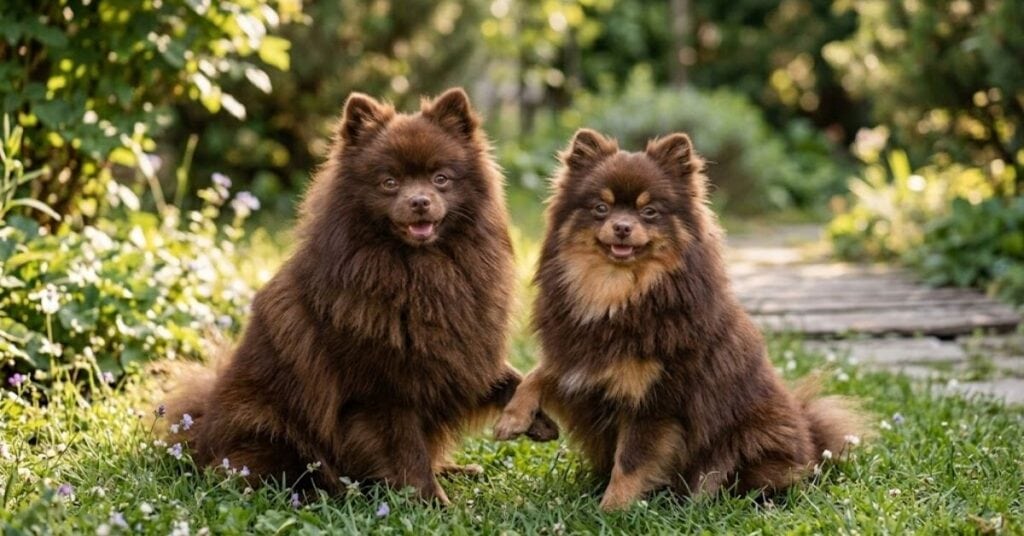
A Chocolate Pomeranian is not a separate breed. It is a Pomeranian with a genetically inherited brown or chocolate-colored coat.
The dog has the same basic breed characteristics, grooming requirements, activity needs, and training needs as Pomeranians with orange, cream, black, white, or other coat colors.
The American Kennel Club lists Chocolate as a Pomeranian color. Other listed colors include Chocolate and Tan, Chocolate Merle, Chocolate Sable, Black, Blue, Cream, Orange, Red, White, and several other variations.
The word “chocolate” describes pigmentation. Depending on the individual dog’s genetics and coat development, the brown shade may look deep, warm, dark, or light.
Photos can also make coat identification difficult. Lighting, camera filters, sunlight, and editing can make an orange, red, brown, or chocolate-colored dog look different from its true shade.
A Chocolate Pomeranian usually has the familiar features people expect from the breed. These include a compact body, erect ears, fox-like face, plumed tail, and thick double coat.
The AKC describes Pomeranians as tiny dogs with a big-dog attitude. They are alert and intelligent and can adapt well to indoor living when they receive suitable exercise and mental stimulation.
If you are interested in comparing other striking Pomeranian color patterns, our Blue Merle Pomeranian guide explains another visually distinctive coat pattern and its care considerations.
However, never assume that coat color tells you everything about a dog. A brown Pomeranian’s health, temperament, and quality of life depend on many factors, including genetics, responsible breeding, nutrition, socialization, training, and preventive veterinary care.
Chocolate Pomeranian or Another Brown-Looking Color?
A chocolate coat can sometimes be confused with other brown-looking shades.
- Chocolate: A genetically inherited brown pigmentation.
- Chocolate sable: A chocolate base combined with sable patterning.
- Chocolate and tan: A chocolate-colored dog with visible tan markings.
- Beaver: A different recognized color that may appear lighter.
- Orange or red: These shades can sometimes look brown in photographs.
This is why a single picture cannot always confirm a dog’s exact genetic color.
Chocolate Pomeranian Genetics and Coat Color
The Chocolate Pomeranian gets its coat color through inherited genetic traits. Genes influence how pigments develop in the coat and in other pigmented areas of the body.
A puppy receives genetic information from both parents. This means visible color alone cannot explain every genetic trait a puppy carries.
For example, two dogs may look different but carry some of the same genetic variations. Likewise, two similar-looking parents may produce puppies with different coat shades or patterns depending on the genes they pass on.
Responsible breeding, therefore, involves much more than pairing two attractive dogs together.
Breeders should consider health, temperament, structure, family history, and appropriate testing. Color can be interesting, but it should never become more important than the overall welfare of the dogs.
The AKC’s Pomeranian information lists several colors and markings for the breed, including Chocolate and related chocolate patterns.
A puppy’s appearance may also change during development. Young Pomeranians go through coat changes as their puppy coat is replaced and the mature double coat develops.
The adult coat may look fuller, and the exact shade can appear somewhat different as the dog’s hair changes.
Do not buy a puppy based on a promise that its coat will look exactly the same forever.
Ask the breeder about the parents, previous litters when available, and how the puppy’s coat may develop.
You can also compare the way different color combinations appear by reading our Black and White Pomeranian guide, which explores another popular Pomeranian color pattern.
Smart Genetics and Breeding Checklist
When considering a Chocolate Pomeranian puppy, remember:
- Beautiful color does not guarantee good health.
- “Rare” marketing does not prove quality.
- Pedigree information can help explain lineage.
- Health screening matters more than coat fashion.
- Temperament should be considered before appearance.
- Puppies need proper early socialization.
- Breeders should answer reasonable questions honestly.
Never feel pressured to pay immediately because a seller says a puppy is “extremely rare.”
Take time to examine the dog’s background and care history.
A healthy, well-raised puppy is more important than finding the darkest or most unusual brown coat.
Chocolate Pomeranian Appearance, Size, and Temperament
A Chocolate Pomeranian has the same basic physical characteristics as other members of the breed. The biggest visible difference is the brown pigmentation that gives the coat its chocolate appearance.
Pomeranians belong to the toy group and are very small dogs. The AKC states that they weigh no more than seven pounds. Despite this tiny body, the breed often shows remarkable confidence and alertness.
The breed’s double coat is one of its most famous features. A dense undercoat provides fullness, while the longer outer coat creates the fluffy appearance that makes the Pomeranian easy to recognize.
The ears stand upright, the face often has a fox-like expression, and the heavily coated tail is carried over the back.
Temperament can vary between individual dogs. However, Pomeranians are generally known for being lively, intelligent, curious, and devoted to their families.
A Chocolate Pomeranian may enjoy sitting with its owner, but that does not mean it wants to sleep all day. Most Poms also enjoy playing, short walks, learning tricks, and exploring their surroundings.
The breed benefits from consistent rules. Because Pomeranians are intelligent, they can quickly learn both good and unwanted habits.
If barking always gets attention, the dog may learn to bark more. If jumping earns a reward, it may continue jumping.
Use positive reinforcement to reward the behavior you want.
| Feature | Chocolate Pomeranian |
| Breed | Pomeranian |
| Coat color | Chocolate or rich brown |
| Size | Toy breed |
| Typical adult weight | No more than 7 pounds according to AKC |
| Coat type | Thick double coat |
| Personality | Alert, lively, intelligent |
| Exercise | Daily short walks and play |
| Training | Best with patience and positive reinforcement |
| Grooming | Frequent brushing required |
Early socialization also matters.
Introduce a puppy safely to everyday sounds, people, handling, and suitable environments. Keep these experiences positive and avoid forcing a frightened puppy into overwhelming situations.
A Chocolate Pomeranian may look like a toy, but it should never be treated like one. Teach children to handle the dog gently and supervise interactions with larger dogs.
The Pom’s small body can make rough play dangerous.
Chocolate Pomeranian Grooming and Coat Care
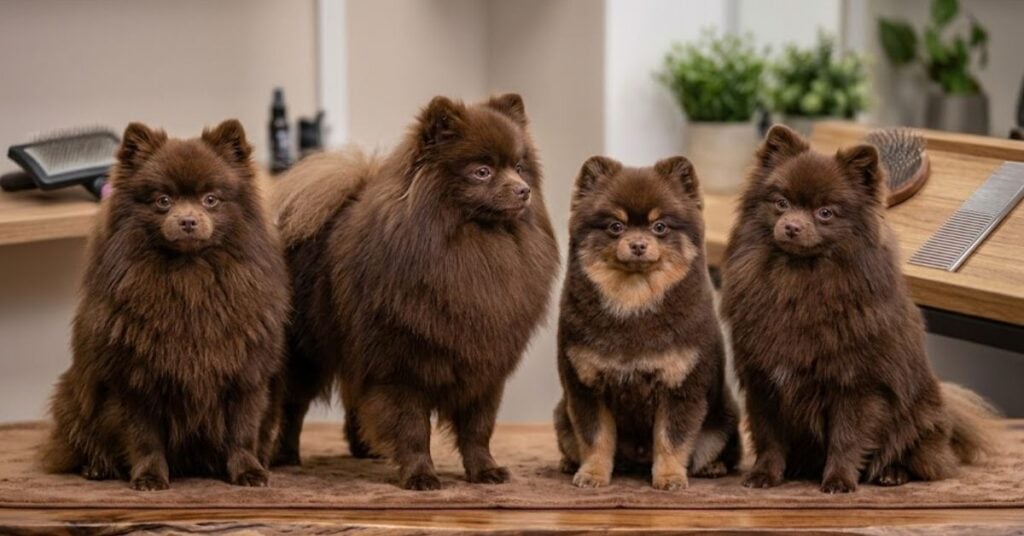
A Chocolate Pomeranian needs regular grooming because its thick double coat can trap loose hair and develop tangles.
The American Kennel Club recommends frequent brushing for Pomeranians and specifically notes that owners should brush through the coat down to the skin to help prevent matting.
AKC guidance also recommends keeping the nails short and suggests professional grooming every four to six weeks for owners who do not feel comfortable doing the full grooming routine at home.
Surface brushing alone may not reach the dense undercoat.
Instead, work through small sections carefully. A suitable pin brush and slicker brush can help with routine coat maintenance.
Always be gentle. Pulling hard on a tangle can cause discomfort and make the dog dislike grooming sessions.
For deeper mats, ask a qualified groomer for help rather than aggressively cutting near the skin.
Pomeranian owners should also be cautious about shaving the coat. The double coat plays an important role in the breed’s appearance and protection.
For detailed guidance on this subject, read our Shaved Pomeranian Puppy: Double-Coat Safety Guide, especially before deciding on a major shave-down.
The Chocolate Pom Coat Care Framework
Brush regularly
Brush in sections and reach through the coat carefully.
Check the skin
Look for redness, flakes, irritation, parasites, sores, or unusual lumps.
Watch for mats
Deal with small tangles early before they become tight mats.
Check nails
Overgrown nails can affect comfort and movement.
Monitor ears and teeth
Notice unusual odor, discharge, redness, or other changes.
Use dog-safe products
Choose products made for dogs and avoid using unsuitable human grooming products.
A simple care schedule makes grooming easier.
| Care Task | Suggested Routine | Main Purpose |
| Brushing | Several times each week as needed | Remove loose hair and prevent tangles |
| Skin check | During brushing | Notice changes early |
| Eye-area check | Daily | Remove visible debris gently |
| Teeth care | Regular routine | Support oral health |
| Nail check | Weekly | Prevent overgrowth |
| Ear check | Weekly | Notice unusual changes |
| Professional grooming | Every 4–6 weeks if needed | Support full coat maintenance |
Grooming is also a useful health-monitoring opportunity.
You may notice changes that would otherwise stay hidden beneath the fluffy coat. Persistent skin problems, severe itching, wounds, sudden hair loss, or unusual lumps deserve professional veterinary attention.
Feeding a Chocolate Pomeranian for Healthy Growth
A Chocolate Pomeranian does not need a special food simply because of its brown coat.
Its diet should instead match its age, size, body condition, activity level, and individual health needs.
Puppies need food formulated for growth. Healthy adults need an appropriate maintenance diet, while senior dogs may need changes based on age and veterinary advice.
Small dogs can gain excess weight quickly when portions are too large.
This makes measuring meals especially important.
Treats also count as part of the dog’s total food intake. Small treats may seem harmless, but repeated extras can add significant calories to a tiny dog’s daily diet.
The World Small Animal Veterinary Association recommends individualized nutritional assessment rather than a one-size-fits-all feeding plan. Its nutrition resources include body-condition tools, muscle-condition assessment, calorie guidance, and information about choosing pet food.
Do not judge a food only by an attractive package or marketing words such as “premium” or “holistic.”
WSAVA guidance explains that the ingredient list alone can be misleading and does not provide enough information to judge the overall quality of a pet food.
Instead, look for food appropriate for your dog’s life stage and discuss individual concerns with your veterinarian.
Monitor your Pom’s body shape and weight trend regularly.
Sudden weight loss, weight gain, reduced appetite, or unusual hunger may need attention.
Keep clean, fresh water available at all times.
Chocolate Pomeranian Feeding Checklist
- Choose food suitable for your dog’s life stage.
- Measure meals instead of guessing.
- Keep treats under control.
- Provide fresh water.
- Monitor body condition regularly.
- Make major diet changes gradually when appropriate.
- Discuss unexplained appetite changes with a veterinarian.
- Avoid unsafe human foods.
A shiny coat alone does not prove that a dog’s diet is perfect.
Good nutrition supports the entire body, including healthy growth, muscle condition, energy, skin, and coat.
If you are planning your budget before buying a Pom, our Pomeranian Dog Price guide also discusses ownership expenses that go beyond the initial purchase price.
Chocolate Pomeranian Health Concerns to Watch
A Chocolate Pomeranian can experience the same general health concerns associated with the Pomeranian breed.
The coat color itself should not distract owners from regular preventive care.
The AKC notes that responsible breeders screen Pomeranians for conditions including luxating patellas, hypothyroidism, collapsing tracheas, congestive heart failure, seizures, and alopecia X. Recommended health tests listed through the breed information include patella evaluation, cardiac examination, and ophthalmologist evaluation.
This does not mean every Chocolate Pomeranian will develop these problems.
It means owners should understand the breed and choose puppies from responsible sources that take health screening seriously.
Routine veterinary visits, dental care, healthy weight management, suitable exercise, and early attention to changes can all support better long-term care.
Small dogs can hide discomfort surprisingly well.
For this reason, daily observation matters.
Learn what is normal for your dog so you can recognize unusual changes.
The 5-Point Chocolate Pom Health Check
1. Appetite
Is your dog suddenly eating much less or much more than normal?
2. Energy
Has a normally lively dog become unusually tired or uninterested in activity?
3. Movement
Does your Pom limp, appear stiff, or avoid normal movement?
4. Breathing
Has breathing become difficult, noisy, or noticeably different?
5. Skin and coat
Do you see sudden hair loss, severe itching, sores, swelling, or major changes?
This checklist cannot diagnose a disease.
Its purpose is to help owners notice changes and seek professional advice when needed.
Do not try to diagnose serious symptoms from coat color or online photos.
Prompt veterinary care is especially important if your dog has severe breathing difficulty, collapses, experiences a seizure, or shows other emergency signs.
Responsible ownership focuses on prevention rather than waiting for obvious problems.
Exercise, Training, and Daily Care for a Chocolate Pomeranian
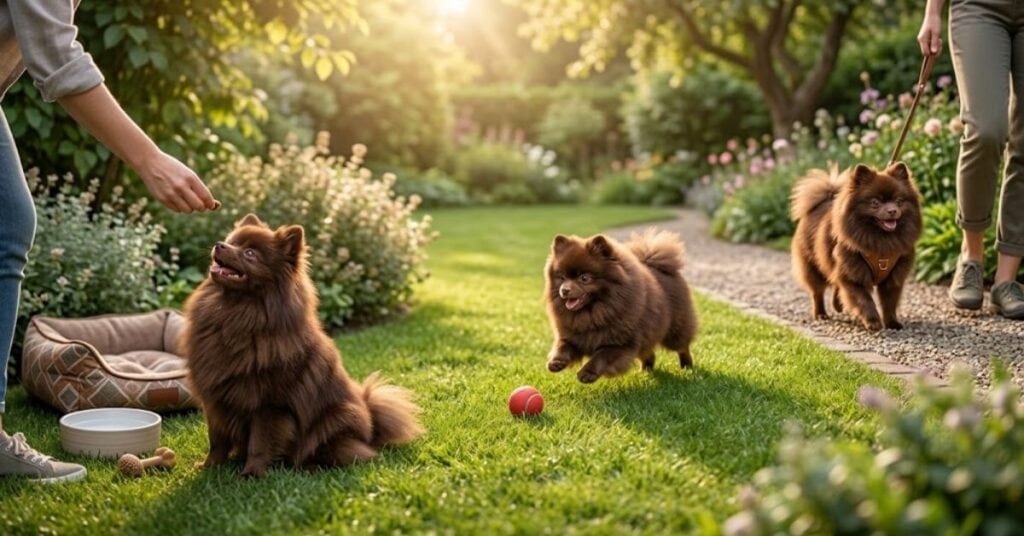
A Chocolate Pomeranian may be small, but it still needs physical activity and mental stimulation.
The AKC describes Pomeranians as active dogs that benefit from exercise, play, and walks. Their small size also means indoor play can contribute to their activity needs.
A practical routine can include short walks, gentle play, basic training, and safe opportunities to explore.
The exact amount depends on the dog’s age, health, and energy level.
Puppies should not follow the same exercise routine as healthy adults. Older dogs may also need activity adjusted to their physical condition.
Training should start early.
Teach simple cues such as sit, come, stay, wait, leave it, and quiet. Short sessions can work better than long sessions because small dogs may lose focus.
Use rewards and praise for correct behavior.
The AKC recommends early socialization and notes that positive reinforcement works well for the intelligent Pomeranian.
Avoid harsh punishment.
Fear-based training can damage trust and may not teach the dog what behavior you actually want.
House training also requires patience.
Create a regular schedule for meals, toilet breaks, sleep, and outdoor trips. Reward the puppy immediately after successful toileting in the correct location.
Do not punish an accident discovered later.
The puppy will not understand why it is being punished.
Because Pomeranians are small, safety should remain part of every activity.
Use a secure harness when appropriate, supervise outdoor time, and check fences carefully. The AKC warns that Pomeranians can escape through small gaps or climb over short fencing.
For readers comparing the Pomeranian with another tiny companion dog, our Pomeranian Chihuahua Mix guide explains how Pom traits can combine with Chihuahua characteristics.
A predictable daily routine helps most dogs feel secure.
Choosing a Healthy Chocolate Pomeranian Puppy
Choosing a Chocolate Pomeranian puppy should involve more than falling in love with the first beautiful brown face you see.
Start by researching the breeder or source.
Ask about the parents, health history, health testing, veterinary care, early socialization, and the environment where the puppies are raised.
Be cautious when sellers use “rare” as their main selling point.
A rare-looking coat does not automatically justify an extremely high price.
Likewise, a cheap puppy is not always a bargain if important health care and responsible breeding practices are missing.
Ask clear questions and expect clear answers.
You should also ask what information comes with the puppy, such as available veterinary records, vaccination information, registration documents where applicable, and details about the parents.
Observe the puppy’s behavior.
A puppy does not need to be perfectly calm or perfectly outgoing. However, you should be concerned if a puppy appears extremely ill, weak, severely distressed, or poorly cared for.
Clean surroundings and appropriate social interaction also matter.
Avoid making a rushed decision because someone says, “Pay the deposit today or the puppy will be gone.”
A responsible decision deserves time.
Before Bringing Your Puppy Home
- Prepare a secure sleeping area.
- Remove small choking hazards.
- Buy suitable food.
- Choose appropriate grooming tools.
- Plan a veterinary checkup.
- Create a toilet-training routine.
- Begin gentle socialization.
- Keep the puppy safe around larger dogs.
- Learn basic positive training methods.
Remember that no coat color can guarantee a perfect dog. WSAVA Global Nutrition Guidelines
Every Chocolate Pomeranian is an individual with its own personality and needs.
The best choice is a puppy whose health, temperament, and background have been considered carefully.
Common Chocolate Pomeranian Mistakes to Avoid
One of the biggest mistakes is choosing a Chocolate Pomeranian only because of its appearance.
A beautiful brown coat may attract attention, but health, temperament, and responsible breeding should guide your decision.
Another common mistake is ignoring the undercoat during grooming.
Brushing only the visible top layer may leave tangles closer to the skin.
Regular, careful coat care is far easier than trying to remove severe mats later.
Some owners also believe that shaving a Pomeranian is the easiest answer during warm weather.
Instead of making major coat changes without advice, learn how the double coat works and use safer grooming and heat-management practices.
Overfeeding is another frequent problem.
A few extra treats can make a bigger difference for a seven-pound dog than for a large breed.
Measure food and monitor body condition.
Skipping training is also a mistake.
Small dogs still need boundaries, socialization, and basic obedience. Do not laugh at unwanted barking or guarding behavior when the puppy is young and then expect it to disappear later.
Chocolate Pomeranian Do’s and Don’ts
Do:
- Brush the coat regularly.
- Check the skin during grooming.
- Measure meals.
- Use positive reinforcement.
- Prioritize health over color.
- Schedule routine veterinary care.
- Socialize your dog safely.
- Watch for changes in behavior.
Don’t:
- Buy a puppy only because it is called “rare.”
- Ignore mats beneath the topcoat.
- Use unsuitable human grooming products.
- Overfeed treats.
- Allow rough handling.
- Skip training because the dog is tiny.
- Assume coat color determines personality.
Simple, consistent care usually provides more value than expensive accessories or fashionable trends.
Frequently Asked Questions
Is a Chocolate Pomeranian rare?
A Chocolate Pomeranian may be less commonly seen than some popular colors, but Chocolate is listed among Pomeranian colors by the American Kennel Club. Availability depends on breeding lines and location. The word “rare” should never be used as the only reason to pay more or ignore health concerns.
Does a Chocolate Pomeranian change color?
Yes, the appearance of a Pomeranian’s coat can change as the puppy coat develops into the adult double coat. The shade may also appear different under different lighting. A puppy’s early appearance does not always show exactly how its mature coat will look.
Are Chocolate Pomeranians healthy?
Chocolate coat color alone cannot determine health. A dog’s well-being depends on genetics, responsible breeding, nutrition, lifestyle, preventive care, and veterinary attention. Choose a puppy based on its complete health background rather than coat color alone. Responsible Pomeranian breeders should prioritize recommended health screening.
How often should I groom a Chocolate Pomeranian?
Pomeranians need frequent brushing because of their thick double coat. The AKC recommends brushing down to the skin to help prevent mats and suggests professional full grooming every four to six weeks for owners who cannot comfortably manage the complete routine at home.
Do Chocolate Pomeranians need special food?
No. A Chocolate Pomeranian does not need special food because of its coat color. Choose a nutritionally appropriate diet based on age, body condition, activity, and health needs. WSAVA recommends individualized nutritional assessment and provides tools for evaluating nutrition and body condition.
Conclusion
A Chocolate Pomeranian is a beautiful usulskluc of the popular Pomeranian breed, but responsible ownership should involve much more than admiring its rich brown coat.
Chocolate is one of the colors listed for Pomeranians by the AKC, while the breed itself remains known for its tiny size, thick double coat, lively personality, and confident attitude.
The best care plan starts with understanding the whole dog.
Brush the coat regularly, check the skin, provide measured meals, encourage safe daily activity, and use patient, positive training. Pay attention to dental care, weight changes, and unusual behavior.
If you plan to buy a puppy, do not let “rare color” marketing make the decision for you. Ask about health testing, parents, veterinary care, and early socialization. American Kennel Club Pomeranian Breed Guide
A healthy, well-raised Pomeranian with a suitable temperament is a better choice than a fashionable coat color without a responsible background.
Your Chocolate Pomeranian will depend on you for daily care throughout its life. Small actions, repeated consistently, can make a major difference.
Focus on health, safety, nutrition, grooming, training, and companionship. With patient and responsible care, your fluffy brown companion can enjoy a happy, active, and comfortable life as an important member of your family.
Multimedia Placement Suggestions
Featured Image: Place below the title. Show a healthy adult Chocolate Pomeranian with the full brown double coat clearly visible.
Grooming Flowchart: Place after the Chocolate Pomeranian Grooming and Coat Care section. Show brushing, skin checks, nail care, dental care, and professional grooming.
Comparison Graphic: Place after the genetics section. Compare Chocolate, Chocolate Sable, Chocolate and Tan, and other brown-looking colors.
Before-and-After Grooming Image: Place in the grooming section to show a properly brushed double coat.
YouTube Video/Thumbnail: Place before the FAQ section. Suggested topic: “How to Safely Brush a Pomeranian Double Coat.”
Pinterest Image: Place near the conclusion with the title “Chocolate Pomeranian Care Checklist.”
Tags
Chocolate Pomeranian, Brown Pomeranian, Pomeranian Colors, Pomeranian Care, Pomeranian Grooming, Pomeranian Genetics, Toy Dog Breeds, Small Dog Care, Dog Grooming
Social Media Caption
Thinking about getting a Chocolate Pomeranian? 🐶🍫 Learn about coat color, genetics, grooming, feeding, health, training, and the biggest mistakes every new Pom owner should avoid.
#ChocolatePomeranian #Pomeranian #PomeranianCare #DogGrooming #SmallDogs #DogHealth #DogLovers #ChihuahuaNest