About the Author
Dr. Gulnaz Malik, DVM, MSc | Veterinarian & Animal Nutrition Specialist
Dr. Gulnaz Malik is a veterinarian and animal nutrition specialist with over 10 years of clinical experience. Holding an MSc in Animal Nutrition, she specializes in the unique metabolic needs of toy breeds. As the founder of YorkieWellness.com, Dr. Malik combines her medical expertise with hands-on experience in canine wellness to help owners navigate complex dietary choices. Her work focuses on evidence-based nutrition to prevent common breed-specific issues like hypoglycemia and dental disease.
Introduction
Yorkie dog food plays a crucial role in supporting the health, energy, and overall well-being of Yorkshire Terriers. These small dogs have unique nutritional needs because of their fast metabolism, sensitive digestion, and long, silky coats. Therefore, selecting the right Yorkie dog food becomes essential to maintain daily energy levels and promote overall health. A well-balanced diet also helps support a healthy coat, improve digestion, and reduce the risk of common breed-specific issues. In fact, proper nutrition impacts not only appearance but also a Yorkie’s overall quality of life.
Additionally, Yorkies are prone to digestive sensitivities, so ingredient quality plays an important role in their diet. Choosing the right Yorkie dog food involves more than picking any commercial brand; instead, it requires an understanding of breed-specific nutritional requirements. As a result, making informed food choices can significantly improve a Yorkie’s long-term health and happiness.
“A Yorkie that eats right lives longer, looks better, and behaves with more energy and stability.” Dr. Gulnaz Malik, DVM, MSc
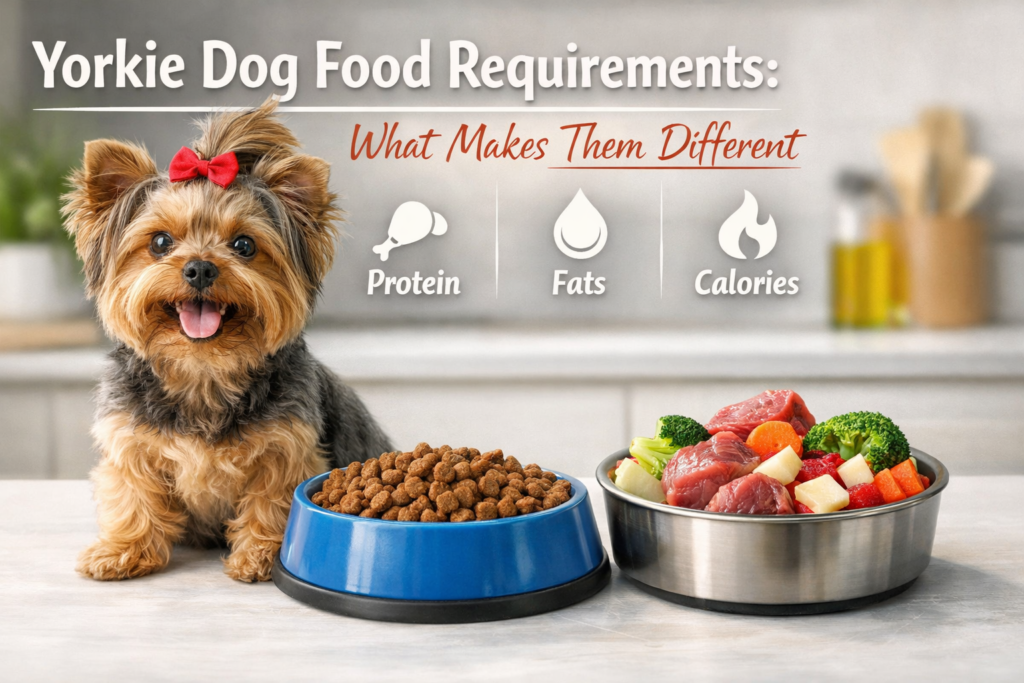
Yorkie Dog Food Requirements: What Makes Them Different
Metabolic Rate and Caloric Density in Yorkie Dog Food
Yorkies weigh between 2 and 3.6 kg (4–7 lbs), yet they burn calories at a rate far exceeding larger breeds. A toy breed’s resting metabolic rate demands more calories per kilogram of body weight. This means their food must deliver high caloric density in very small portion sizes. Skimping on quality results in nutrient gaps that show up quickly as dull coat, low energy, and weight loss.
AAFCO Nutrient Profiles in Yorkie Dog Food
The Association of American Feed Control Officials (AAFCO) sets minimum nutrient standards for complete and balanced dog food. When you see an AAFCO statement on a small breed formula, it confirms the food meets the following key benchmarks for Yorkies: Minimum 18% protein for adult maintenance (22% for growth/reproduction)
- Minimum 5% fat for adults (8% for puppies)
- Calcium-to-phosphorus ratio between 1:1 and 2:1 for skeletal health
- Omega-6 to omega-3 ratio ideally 5:1 to 10:1 for coat and skin
Always choose formulas that carry the AAFCO statement: ‘formulated to meet the nutritional levels established by the AAFCO Dog Food Nutrient Profiles, ‘ not simply ‘for intermittent or supplemental feeding only.’
Protein-to-Fat Ratios in Yorkie Dog Food
For an active, playful Yorkie, a protein range of 28–35% and fat range of 14–18% on a dry matter basis provides the energy density needed without tipping into obesity. Less active or senior Yorkies do well at slightly lower fat levels (12–15%) to support weight management, especially important given the breed’s risk for collapsing trachea, where excess weight adds dangerous pressure to the airway.
Puppy vs Adult Yorkie Dog Food Guide

Yorkie Dog Food: Why Puppy Formulas Are Better for Growth
Yorkie dog food for puppies and adult formulas serve very different biological purposes.Puppy formulas contain higher levels of DHA (docosahexaenoic acid) for brain and vision development, more calcium and phosphorus for rapid bone formation, and extra calories to sustain growth spurts. Adult formulas, on the other hand, maintain body condition without driving excess growth.
Puppies should eat food labeled for ‘growth’ or ‘all life stages’ (which meets AAFCO growth standards) until approximately 12 months of age, at which point you transition them gradually to an adult formula over 7–10 days.
High-Calorie Gel in Yorkie Dog Food for Puppies
Toy breed puppies face a higher risk of hypoglycemia between meals than larger breeds. High-calorie nutritional gels (such as Nutri-Cal or Tomlyn High Calorie Gel) act as emergency supplements and between-meal boosters. Veterinarians recommend keeping a tube on hand for puppies under 16 weeks, offering a pea-sized amount every 4–6 hours if you notice lethargy, trembling, or glassy eyes.
| Life Stage | Age | Meals / Day | Interval | Portion Size (approx.) |
|---|---|---|---|---|
| Newborn–Weaning | 0–4 weeks | Free-choice nursing / 8–10× | Every 2 hrs | Nurse or 1–2 ml formula |
| Puppy | 8–12 weeks | 4–5× | Every 3–4 hrs | ¼ cup small-breed puppy kibble |
| Puppy | 3–6 months | 4× | Every 4 hrs | ¼ – ⅓ cup |
| Puppy | 6–12 months | 3× | Every 5–6 hrs | ⅓ cup |
| Adult | 1–7 years | 2–3× | Every 6–8 hrs | ¼ – ½ cup (weight-adjusted) |
| Senior | 7+ years | 3× | Every 5–6 hrs | ¼ cup (lower calorie) |
| Pregnant / Nursing | Variable | 4–5× | Every 4–5 hrs | Increase by 25–50% |
Table 1: Yorkie Feeding Schedule Across Life Stages
Kibble Size & Dental Stress| The Yorkie Jaw Analysis

Why Kibble Size Matters for Yorkshire Terriers
Yorkies have brachycephalic-leaning muzzles with crowded teeth packed into tiny jaws — a combination that creates three specific problems: plaque accumulates faster between crowded teeth, large kibble can cause choking, and standard-sized kibble pieces do not fit comfortably in the mouth for proper chewing.
Dental kibble for Yorkies should measure no larger than 10mm on the longest edge and have a flat or elongated shape (almond, leaf, or patty) rather than a sphere. Spherical kibble rolls around without generating the shearing action needed to scrape plaque from the tooth surface.
Brand Kibble Dimension Comparison
The following analysis compares leading small-breed formulas on kibble geometry and dental performance:
| Brand | Kibble Shape | Approx. Size (mm) | Plaque Control | Choke Risk |
|---|---|---|---|---|
| Royal Canin Yorkshire Terrier | Almond / Leaf | 8 × 4 | High | Low |
| Hill’s Science Diet Small Paws | Round Pebble | 6 × 6 | Moderate | Low |
| Purina Pro Plan Toy Breed | Mini Square | 7 × 5 | Moderate | Low |
| Blue Buffalo Small Breed | Small Nugget | 7 × 7 | Moderate | Medium |
| Wellness Complete Small Breed | Irregular Pebble | 6 × 5 | Moderate | Low |
| Orijen Small & Puppy | Mini Patty | 9 × 4 | High | Very Low |
| Merrick Lil’ Plates | Mini Oval | 7 × 4 | Moderate–High | Low |
The 30-Second Kibble Soak Test for Senior Yorkies
Senior Yorkies, especially those missing teeth after dental extractions, often struggle to chew standard kibble. The 30-second soak test helps you identify whether dry food is safe for your dog:
- Place 10 pieces of dry kibble in a small bowl of room-temperature water.
- Set a timer for 30 seconds.
- Remove and squeeze a piece between two fingers.
- Safe result: the kibble breaks apart with light finger pressure.
- Fail result: the kibble remains hard or rubbery. Switch to wet food or add warm water to soften before serving.
Kibbles that soften in 30 seconds are appropriate for senior Yorkies with missing teeth or sensitive gums. Those that resist softening pose a swallowing hazard.
Dry vs. Wet Food for Yorkshire Terriers| Which Option Wins?

The dry versus wet food debate for Yorkshire Terriers does not have a single winner; it depends on life stage, dental health, and hydration needs. Review the comparison below to determine the best strategy for your dog:
| Factor | Dry Kibble | Wet / Canned | Mixed Feeding |
|---|---|---|---|
| Dental Health | Excellent — scrapes plaque | Poor — soft texture | Good |
| Hydration | Low — 10% moisture | High — 70–80% moisture | Moderate–High |
| Calorie Density | High — easy to overfeed | Lower — helps weight control | Adjustable |
| Convenience | High — stores easily | Moderate —refrigerate after opening | Moderate |
| Cost | Lower per serving | Higher per serving | Moderate |
| Palatability | Moderate | Highly good for picky Yorkies | High |
| Best For | Active adults, dental health | Seniors, post-dental surgery | Most life stages |
Mixed Feeding Strategy
Most veterinary nutritionists recommend a mixed feeding approach for adult Yorkies: serve dry kibble as the primary food source (for dental health and caloric control) and top with a tablespoon of wet food for palatability and hydration. This strategy works particularly well for picky Yorkies who refuse to eat dry food on their own.
Nutritional Comparison Table| Best Food for Yorkies by the Numbers
Use this table to compare leading brands across the metrics that matter most for Yorkshire Terrier health: protein percentage, fat percentage, calories per cup, probiotic support, and omega-3 source.
| Brand | Protein % | Fat % | Calories (kcal/cup) | Probiotics | Omega-3 Source |
|---|---|---|---|---|---|
| Royal Canin Yorkshire Terrier | 26% | 16% | 333 | Yes | Fish Oil |
| Hill’s Science Diet Small Paws | 25.2% | 15.6% | 350 | No | Flaxseed |
| Purina Pro Plan Toy Breed | 30% | 17% | 363 | Yes | Fish Oil |
| Blue Buffalo Small Breed | 28% | 15% | 337 | Yes | Flaxseed + Fish Oil |
| Orijen Small & Puppy | 38% | 18% | 449 | No | Whole Fish |
| Merrick Lil’ Plates | 34% | 15% | 345 | Yes | Salmon Oil |
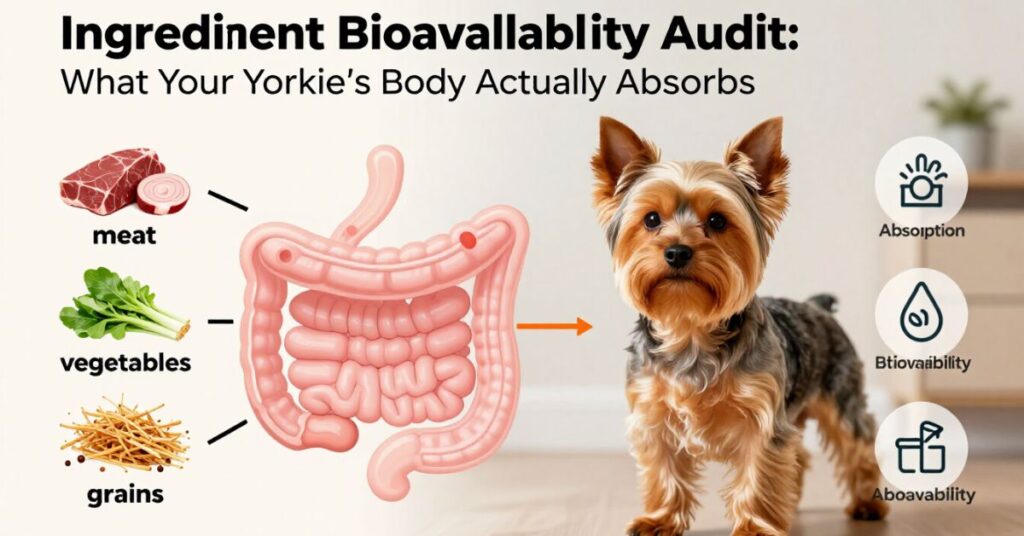
Ingredient Bioavailability Audit|What Your Yorkie’s Body Actually Absorbs
Deboned Chicken vs. Chicken Meal|Which Protein Wins?
Pet food marketing focuses heavily on ‘real chicken’ versus ‘chicken meal,’ but bioavailability tells the fuller story. Deboned chicken is roughly 80% water; after cooking, it delivers less concentrated protein than it appears. Chicken meal is rendered and dried, making it a more protein-dense ingredient by weight, but it scores lower on digestibility than fresh chicken.
For a Yorkie’s rapid metabolism, the ideal formula uses a combination: fresh deboned chicken or turkey as the first ingredient for high digestibility and palatability, followed by a named meat meal (chicken meal, salmon meal) for sustained amino acid availability across the 4–6 hour window between meals.
Protein Bioavailability and Omega-3 Fatty Acids for Silky Coats
The Yorkshire Terrier’s signature silky coat depends directly on dietary amino acids and omega-3 fatty acids. The amino acid tyrosine maintains coat pigmentation and hair shaft integrity. Cysteine and methionine (sulfur amino acids) form keratin, the structural protein of hair. These are found in high concentrations in eggs, fish, and deboned chicken.
Omega-3 fatty acids for silky coats, specifically EPA and DHA from marine sources, reduce inflammation in hair follicles, increase shine, and decrease shedding. Plant-sourced omega-3 (ALA from flaxseed) converts poorly to EPA/DHA in dogs. Prioritize fish oil or whole-fish ingredients for the best coat results.
| Protein Source | Digestibility | Amino Acid Completeness | Coat Benefit | Best For |
|---|---|---|---|---|
| Deboned Chicken | 87–92% | High | High (Tyrosine for pigment) | Active adult Yorkies |
| Chicken Meal | 75–80% | Moderate–High | Moderate | Cost-effective maintenance |
| Salmon / Fish Meal | 88–92% | High | Very High (Omega-3, EPA/DHA) | Coat shine & skin health |
| Turkey | 85–90% | High | High | Chicken-free diets for Terriers |
| Lamb Meal | 72–78% | Moderate | Moderate | Sensitive stomach diet |
| Egg | 91–95% | Highest (all EAAs) | Very High | Puppies & seniors |
| Pea Protein | 62–68% | Incomplete | Low | Supplement only, not primary |
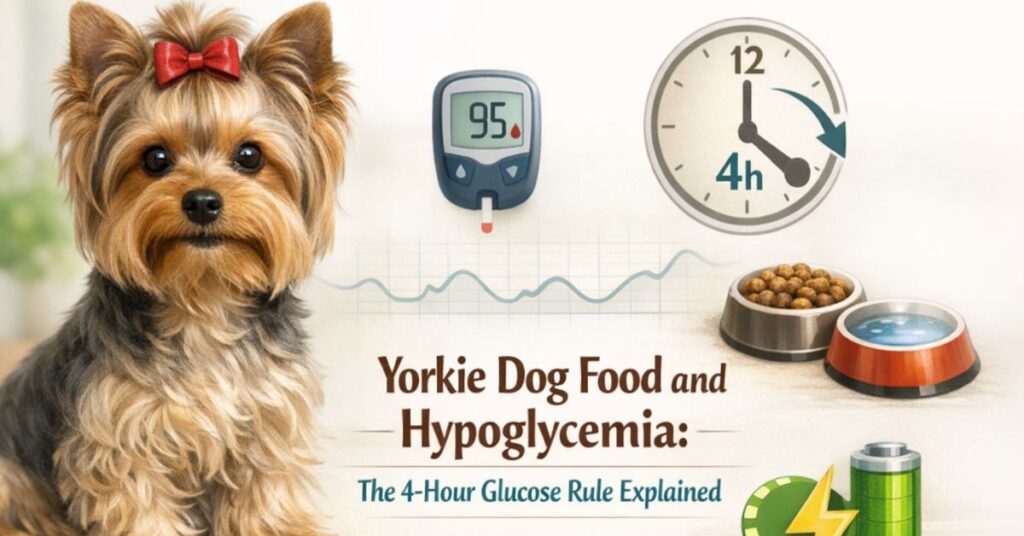
Yorkie Dog Food and Hypoglycemia: The 4-Hour Glucose Rule Explained
Yorkie Dog Food Guide: Why Yorkies Are Prone to Hypoglycemia
Hypoglycemia (low blood sugar) in toy breeds occurs because small bodies carry very little glycogen reserve. When a Yorkie goes more than 4–6 hours without food, especially as a puppy, blood glucose drops to dangerous levels. This is not merely an inconvenience; severe hypoglycemia can cause seizures and death within hours if untreated.
The Yorkie Glucose Schedul| Metabolic Mapping
Dr. Malik’s 4-Hour Rule is simple: puppies and small adult Yorkies under 2 kg should never go more than 4 hours between meals during waking hours. For dogs weighing over 2 kg, a maximum of 6 hours between daytime meals applies. The practical application:
- 7:00 AM — First meal (full portion)
- 11:00 AM — Small snack or ¼ portion (puppies and dogs under 2 kg)
- 1:00 PM — Second meal (full portion)
- 5:00 PM — Third meal (full portion)
- 8:00 PM — Optional small bite to carry through the night
Tip: Keep a high-calorie gel tube in your bag whenever you travel with your Yorkie. If your dog misses a meal for any reason, administer a pea-sized amount immediately.
Feeding & Energy Log: Track Your Yorkie’s Glucose Stability
Use the log below daily for the first two weeks after adopting a new Yorkie or changing their diet. Rate energy level on a scale of 1 (lethargic/trembling) to 5 (alert and playful). Consistent scores below 3 at the 3-hour mark after eating indicate the current feeding schedule needs adjustment.
| Time | Meal Given? | Amount | Energy Level (1–5) | Stool Quality | Notes |
|---|---|---|---|---|---|
| 7:00 AM | Yes | ¼ cup | |||
| 11:00 AM | Yes (snack) | 5g treats | |||
| 1:00 PM | Yes | ¼ cup | |||
| 5:00 PM | Yes | ¼ cup | |||
| 8:00 PM | Optional | Small bite |
Table 6: Yorkie Daily Feeding & Energy Log (Printable)
Warning Signs and Emergency Response
| Warning Sign | What You See | Action |
|---|---|---|
| Early (Mild) | Trembling, glassy eyes, lethargy | Offer high-calorie gel or Karo syrup immediately |
| Moderate | Staggering, disoriented, whimpering | Rub Karo syrup on gums; contact vet |
| Severe | Seizure, loss of consciousness, cold limbs | Emergency vet — IV dextrose required |
Yorkie Dog Food Nutrition: Managing Sensitivities with Hypoallergenic Diets
Identifying Food Allergies in Yorkshire Terriers
Yorkies are prone to food sensitivities that manifest as itchy skin, ear infections, loose stool, and flatulence. The most common triggers in the breed include chicken (despite being beneficial for non-sensitive dogs), beef, dairy, wheat, and soy. If your Yorkie shows recurring symptoms, perform a strict 8–12 week elimination diet using a novel protein they have never eaten before, typically venison, rabbit, or hydrolyzed protein.
Chicken-Free Diets for Terriers
For Yorkies confirmed to be sensitive to chicken, chicken-free diets built around turkey, duck, salmon, or rabbit provide comparable amino acid profiles without triggering an immune response. Ensure the formula also avoids ‘poultry fat’ and ‘poultry meal’ as generic terms, as these frequently contain chicken derivatives.
Homemade Food for Yorkies: A Safe Framework
Homemade food for Yorkies can work beautifully — but it requires precision. Dogs fed entirely home-cooked diets without professional formulation frequently develop nutrient deficiencies. The following framework, derived from AAFCO nutrient profiles for small breeds, provides a starting point for owners who wish to cook for their Yorkies:
- Lean protein (50% of meal): deboned turkey, salmon, or rabbit — cooked plain with no seasoning
- Complex carbohydrate (25%): white rice, sweet potato, or cooked oats
- Vegetable (20%): steamed carrots, green beans, or zucchini
- Healthy fat (5%): ½ tsp salmon oil or coconut oil
- Supplement: A veterinarian-approved canine multivitamin to cover calcium, B-vitamins, and zinc
Important: Always consult your veterinarian or a board-certified veterinary nutritionist before switching to a fully homemade diet. Nutrient imbalances in homemade food are the leading cause of skeletal and immune problems in toy breeds.
Yorkie Dog Food Guide: Daily Calorie Needs from Couch Potato to Agility Star

How to Calculate Your Yorkie’s Daily Caloric Need
The Resting Energy Requirement (RER) formula gives you the baseline calories your Yorkie needs at rest. Multiply by a life stage factor to find their true daily caloric target:
RER = 70 × (body weight in kg)^0.75
Then apply the appropriate activity multiplier:
- Neutered adult, low activity (‘Couch Potato’): RER × 1.6
- Intact adult, moderate activity: RER × 1.8
- Active adult, regular exercise (‘Agility Star’): RER × 2.0
- Puppy (under 4 months): RER × 3.0
- Puppy (4–12 months): RER × 2.5
- Senior (7+ years): RER × 1.4
Example — A 3 kg, neutered adult Yorkie with moderate activity:
RER = 70 × (3)^0.75 = 70 × 2.28 = 159.6 kcal/day × 1.6 = 255 kcal/day
Divide your daily caloric target by the kcal/cup value on your food’s packaging to calculate exact daily portions. Always measure with a proper measuring cup — ‘eyeballing’ portions is one of the leading causes of Yorkie obesity.
Yorkie Dog Food and Tracheal Health Management
Collapsing trachea is a genetic condition common in toy breeds where the cartilage rings of the windpipe weaken and flatten, causing a honking cough and breathing difficulty. Excess body weight dramatically worsens symptoms by placing physical pressure on the trachea. A Yorkie with tracheal collapse benefits significantly from maintaining a lean body condition score of 4–5 out of 9 on the standard veterinary scale.
If your Yorkie has been diagnosed with collapsing trachea, work with your veterinarian to create a reduced-calorie plan that maintains muscle mass while dropping fat. Avoid high-fat treats, which contribute disproportionately to caloric intake in toy breeds.
Yorkie Dog Food: Antioxidants & Life Expectancy
Yorkshire Terriers enjoy one of the longest life expectancies of any dog breed, often reaching 13–16 years with proper care. A significant part of that longevity stems from diet, specifically, the role of antioxidants in slowing cellular aging.
Antioxidants neutralize free radicals, which accumulate from normal metabolic processes and environmental exposure. Foods rich in vitamin E, vitamin C, beta-carotene (from sweet potatoes and carrots), and polyphenols (from blueberries) help maintain immune function, reduce inflammation, and protect against cognitive decline in senior Yorkies.
When selecting commercial food for an aging Yorkie, look for formulas that include:
- Vitamin E (minimum 50 IU/kg) as a natural preservative and immune booster
- Blueberry, cranberry, or pomegranate are named antioxidant sources
- Taurine for cardiac health (particularly in grain-free diets where taurine deficiency is a concern)
- Glucosamine and chondroitin for joint support in dogs 7 and older
Frequently Asked Questions (FAQs)
Q1: What is the best food for Yorkies overall?
The best food for Yorkies is a high-protein (28–35%), small-breed-specific dry kibble with an AAFCO complete and balanced statement, using deboned chicken, turkey, or salmon as the primary protein. Top picks include Royal Canin Yorkshire Terrier Adult and Purina Pro Plan Toy Breed. Supplement with omega-3-rich wet food topper for coat health.
Q2: How often should I feed my Yorkie?
Adult Yorkies (1–7 years) should eat 2–3 times per day with no more than 6–8 hours between meals. Puppies under 6 months need 4–5 meals per day spaced every 3–4 hours to prevent hypoglycemia. Senior Yorkies do best on 3 smaller meals per day.
Q3: Can Yorkies eat homemade food?
Yes, but homemade food for Yorkies must be formulated to meet AAFCO nutrient profiles for small breeds. Use the 50/25/20/5 framework (protein/carb/vegetable/fat) and always add a veterinarian-approved canine supplement. Never rely on homemade food alone without veterinary or veterinary nutritionist input.
Q4: What foods are toxic to Yorkies?
Avoid giving your Yorkie chocolate, xylitol (found in sugar-free gum and peanut butter), grapes, raisins, onions, garlic, macadamia nuts, alcohol, and raw yeast dough. These foods cause serious and often fatal toxicity in dogs of all sizes, with toy breeds being especially vulnerable due to their low body weight.
Q5: Is grain-free food good for Yorkies?
Grain-free food is appropriate only for Yorkies with confirmed grain allergies (uncommon). The FDA has investigated a potential link between grain-free diets high in legumes and dilated cardiomyopathy (DCM) in dogs. Until the science is settled, choose grain-inclusive formulas with rice, oats, or barley unless your veterinarian specifically recommends grain-free feeding.
Q6: How do I prevent hypoglycemia in my Yorkie puppy?
Apply Dr. Malik’s 4-Hour Rule: never let a puppy go more than 4 hours between meals during waking hours. Keep a high-calorie gel (like Nutri-Cal) readily available, and learn to recognize early signs of low blood sugar — trembling, glassy eyes, and sudden lethargy. If symptoms appear, apply a pea-sized amount of gel to the gums and contact your veterinarian immediately.
Q7: What is the best hypoallergenic food for Yorkies?
The best hypoallergenic food for Yorkies uses a novel protein that the dog has not previously eaten. Strong options include Royal Canin Hydrolyzed Protein, Hill’s Prescription Diet z/d, and Natural Balance Limited Ingredient Diet (duck and potato). Always confirm the allergy trigger with a supervised elimination diet before switching permanently.
Q8: How much should I feed my Yorkie per day?
Use the RER formula: 70 × (weight in kg)^0.75, then multiply by the appropriate activity factor (1.6 for neutered adults, 2.0 for active adults). A typical 3 kg adult Yorkie needs approximately 200–255 kcal/day. Divide by your food’s kcal/cup value for exact portions. Always measure with a proper measuring cup.
Conclusion
Feeding a Yorkshire Terrier well is both a science and a practice. This Yorkshire Terrier nutrition guide has walked you through the essential pillars of Yorkie dietary health: understanding small breed dog food requirements, choosing between Yorkie puppy food versus adult formulas, evaluating dry versus wet food, preventing hypoglycemia with strategic meal timing, and selecting the right protein sources for that iconic silky coat.
The best food for Yorkies combines evidence-based nutrition with practical daily habits. Choose AAFCO-compliant formulas with high-quality protein, feed on a consistent schedule to stabilize blood glucose, keep kibble size appropriate for your dog’s small jaw, and monitor body condition regularly to avoid weight-related complications like collapsing trachea.
Whether you choose commercial kibble, wet food, a mixed approach, or carefully formulated homemade food for Yorkies, the goal is the same: a long, active, healthy life for a breed that brings outsized joy in the smallest possible package.
Always consult your veterinarian before making significant dietary changes, especially for puppies, seniors, pregnant or nursing dogs, or dogs with health conditions such as hypoglycemia, collapsing trachea, or food allergies.
© Dr. Gulnaz Malik, DVM, MSc | YorkieWellness.com