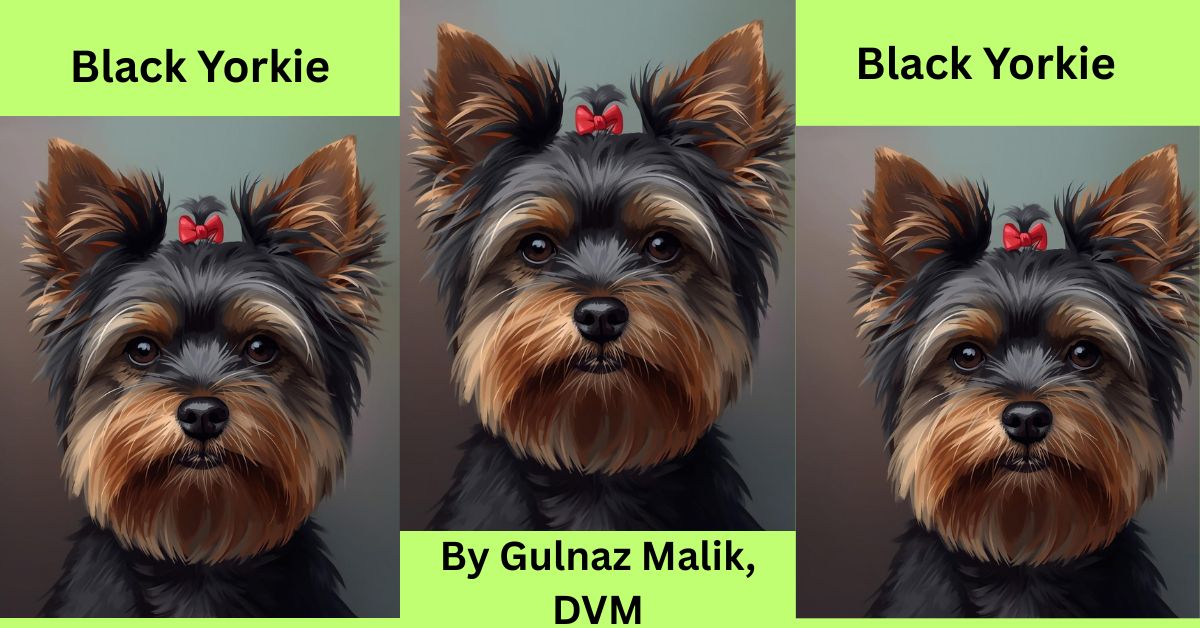
By Gulnaz Malik, DVM — Licensed Veterinarian & Animal Nutrition Specialist
Introduction: Is a Solid Black Yorkie Even Real?
You are scrolling through a breeder’s website, and you spot a tiny, jet-black dog with silky fur, bold eyes, and the unmistakable feisty personality of a Yorkshire Terrier. The listing reads: “Rare Solid Black Yorkie $6,500.” If you have ever searched for a Black Yorkie, you already know how confusing and expensive this journey can get.
Your first instinct is excitement. Your second instinct should be skepticism.
The Black Yorkie is one of the most talked-about and most misunderstood color variations in the toy breed world. Some of these dogs are genuinely rare, carrying specific recessive genetics that keep their coat solid black for life. Others are simply standard Yorkies in their puppy phase, still weeks away from beginning their natural color transition. And sadly, some are mixed breeds dressed up with a luxury price tag.
This guide gives you the full picture. We cover the real science behind Black Yorkie genetics, what the AKC actually says, how to feed your dog for maximum coat health, which health risks to watch for, and exactly how to spot a dishonest breeder before you lose your money.
By the time you finish reading, you will know more about the solid black Yorkshire Terrier than most breeders do.
The Science Behind Black Yorkie Genetics
How Dog Coat Color Actually Works
Every dog’s coat color is controlled by two base pigments produced in the skin:
- Eumelanin — responsible for black and brown tones
- Phaeomelanin — responsible for red, yellow, and tan tones
In a standard Yorkshire Terrier, both pigments are active. This produces the iconic black-and-tan coat in puppies and the blue-and-gold coat in adults. For a Yorkie to appear solid black, its body must produce eumelanin exclusively while almost completely suppressing phaeomelanin. This occurs only when the dog inherits specific recessive alleles at multiple loci simultaneously, making it a genuinely rare genetic event.
The Key Gene Loci That Control Black Coat Color
Three gene locations determine whether a Yorkie can be a true solid black:
K-Locus (Dominant Black Gene): The dog must carry two copies of the recessive k(y) allele combined with dominant black expression to lock in a solid dark coat without any tan point influence.
A-Locus (Agouti Gene): Standard Yorkies express tan points through the A-locus. A solid black Yorkie requires suppression at this locus so no tan or sable bleeding appears through the coat.
D-Locus (Dilution Gene): This locus is critical for health. If a dog carries two copies of the recessive dilute allele (d/d), the coat color dilutes from black to blue or grey, and the dog faces an elevated risk of Color Dilution Alopecia. A true, solid black Yorkie must carry at least one dominant D allele to avoid this.
Phenotype vs. Genotype|The Difference That Costs You Thousands
This distinction is the single most important concept in this entire article.
- Phenotype = what the dog looks like on the outside right now
- Genotype = what the dog’s DNA actually codes for
Every single Yorkshire Terrier is born black and tan. This is phenotypic; it is simply what they look like as newborns. The genetic transition to blue and gold typically begins anywhere between 6 months and 3 years of age. A breeder who photographs a 10-week-old black Yorkie puppy and calls it a “rare solid black” is selling you phenotype and calling it genotype. Without DNA testing, there is no way to confirm true solid black genetics in a young puppy.
The Color Stability Scale
Use this framework to assess whether your black Yorkie is likely to stay black:
| Stability Level | Age | Coat Look | Root Hair Color | Fade Probability |
|---|---|---|---|---|
| Level 1 — Transitional | 0–6 months | Jet black all over | Black with tan roots | Very High — 90% |
| Level 2 — Shifting | 6–18 months | Black with steel hints | Mixed black and gray roots | High — 70% |
| Level 3 — Stabilizing | 18–30 months | Dark steel blue | Gray or blue roots | Moderate — 40% |
| Level 4 — True Solid Black | 2+ years | Pure jet black, no fading | Solid black roots throughout | Low — 10 to 15% |
If your Yorkie still shows solid black roots at 24 months with zero steel or blue undertones, the probability of true solid black genetics is high. Anything younger than that is too early to confirm.
Are Black Yorkies Purebred? What the AKC Actually Says
AKC Standard Colors for Yorkshire Terriers
The American Kennel Club officially recognizes only four color combinations for the Yorkshire Terrier breed standard:
| AKC Code | Color Description |
|---|---|
| 016 / 043 | Black and Gold |
| 016 / 044 | Black and Tan |
| 037 / 044 | Blue and Tan |
| 037 / 043 | Blue and Gold |
Solid black does not appear anywhere in the AKC breed standard. This means a true, solid black Yorkie cannot compete in AKC conformation shows. However, and this is important, it can still be AKC-registered as a purebred Yorkshire Terrier using non-standard color codes, provided both parents carry full AKC registration.
So Can a Black Yorkie Be 100% Purebred?
Absolutely yes. Color has nothing to do with breed purity. A solid black Yorkshire Terrier born to two fully registered AKC Yorkie parents is a purebred dog. The coat color is simply a non-standard genetic expression — not evidence of mixed breeding.
The danger zone is when a breeder cannot produce registration papers and uses “rare color” as a substitute for documentation. In those cases, the dog is very likely a mixed breed, most commonly a Yorkie crossed with a Pomeranian, Schipperke, or Miniature Pinscher, deliberately marketed as a rare purebred to justify the price.
Black Yorkie vs. Other Yorkie Colors\Clear Comparisons
Black and Tan Yorkie vs. Solid Black Yorkie
| Feature | Black and Tan Yorkie | Solid Black Yorkie |
|---|---|---|
| Birth appearance | Black with defined tan markings | All black |
| Adult coat | Blue and gold or black and tan | Jet black if true genotype |
| AKC recognized | Yes — breed standard | No — non-standard color |
| Genetic complexity | Standard expression | Requires multiple recessive alleles |
| Rarity | Common | Very rare |
| Average price | $1,200 – $2,500 | $3,000 – $10,000+ |
Solid Black vs. Parti Yorkie vs. Teacup Black Yorkie
A Parti Yorkie carries the recessive S-locus Parti gene, producing a tri-color white, black, and tan coat pattern. This is a completely different genetic pathway from solid black; the two are not related at all.
A Teacup Black Yorkie is not a separate breed or color variety. It is simply a black Yorkie that weighs under 4 pounds. The extreme size reduction comes with significantly higher health risks, including hypoglycemia, fragile bones, and organ compression. The “teacup” label is not an AKC-recognized designation.
A true Solid Black Yorkie requires eumelanin dominance through the K-locus combined with A-locus suppression, making it the rarest of the three categories by a wide margin.
Black Yorkie Puppy Price| A Realistic Breakdown
| Category | Price Range |
|---|---|
| Standard Black and Tan Yorkie puppy | $1,200 – $2,500 |
| Solid Black Yorkie — genetics unverified | $2,500 – $5,000 |
| DNA-verified True Solid Black Yorkie | $5,000 – $10,000+ |
| Teacup Black Yorkie | $3,000 – $8,000 |
| Parti Black Yorkie | $1,500 – $4,000 |
The price of a black Yorkie should always reflect documented genetics, health clearances, and breeder reputation — not color alone. If a breeder charges $7,000 for a “rare black Yorkie” but cannot produce a DNA health panel, walk away immediately.
Feeding Your Black Yorkie for Maximum Coat Health
How Diet Directly Affects Eumelanin Production
One of the most overlooked responsibilities of owning a black-coated dog is feeding for coat color stability. The biological process of eumelanin synthesis, the pathway that keeps a black coat rich, deep, and glossy, depends entirely on specific amino acids and micronutrients supplied through diet.
When a black Yorkie’s meals lack these building blocks, owners start noticing coat reddening, rusting, or premature fading. Most people blame genetics when the real culprit is nutritional deficiency.
Nutrients That Protect and Maintain a Black Coat
| Nutrient | Role in Coat Pigmentation | Best Food Sources |
|---|---|---|
| L-Tyrosine | Direct precursor to eumelanin — the black pigment itself | Chicken, turkey, eggs, fish |
| L-Phenylalanine | Converts to Tyrosine and supports the pigment pathway | Beef, sardines, dairy |
| Copper | Activates the Tyrosinase enzyme — essential for pigment synthesis | Beef liver, legumes, sunflower seeds |
| Zinc | Maintains follicular health and prevents abnormal shedding | Pumpkin seeds, lamb, beef |
| Omega-3 Fatty Acids | Reduces skin inflammation and keeps coat glossy and deeply pigmented | Salmon oil, flaxseed, anchovies |
| Biotin (Vitamin B7) | Strengthens the hair shaft and prevents thinning | Eggs, sweet potato, oats |
| Methionine | Sulfur amino acid that builds the keratin structure of each hair | Fish, Brazil nuts, sesame seeds |
Daily Feeding Protocol for Black Yorkies
Follow these five steps consistently to maintain your dog’s coat color and health:
Step 1: Choose a high-protein kibble with a named meat source as the first ingredient. Aim for a minimum of 28% crude protein on the label.
Step 2: Add a quarter teaspoon of salmon oil to every meal for dogs under 7 lbs. This delivers Omega-3s directly and keeps the coat visibly darker and shinier within 4 to 6 weeks.
Step 3: Include a small copper-rich food topper once weekly. A thumbnail-sized piece of lightly cooked beef liver works perfectly and is highly palatable for Yorkies.
Step 4: Avoid corn-heavy and filler-loaded kibbles. These reduce protein bioavailability and are a primary dietary trigger for coat reddening in dark-coated dogs.
Step 5: Always provide access to fresh, clean water. Chronic mild dehydration accelerates coat dullness faster than almost any nutritional deficiency.
Black Yorkie Health Issues Every Owner Must Know
General and Color-Specific Health Risks
| Health Condition | Risk Level | Key Warning Signs |
|---|---|---|
| Color Dilution Alopecia (CDA) | Stunted growth, circling, and neurological episodes | Patchy hair loss, dry flaky skin, recurrent skin infections |
| Skin Follicular Dysplasia | Moderate to High in poorly bred dogs | Brittle coat texture, progressive bald patches |
| Hypoglycemia | High, especially in teacup size | Lethargy, trembling, glassy eyes, loss of coordination |
| Tracheal Collapse | Moderate in all Yorkies | Persistent honking cough, labored breathing |
| Luxating Patella | High in all Yorkies | Intermittent limping, skipping gait |
| Portosystemic Shunt | Moderate | Patchy hair loss, dry, flaky skin, recurrent skin infections |
| Dental Disease | Very High in all toy breeds | Bad breath, swollen gums, tooth loss |
Understanding Color Dilution Alopecia in Black Yorkies
CDA primarily affects dogs with dilute coat genes blue, fawn, lilac, and isabella colors. However, a black Yorkie that secretly carries two copies of the recessive d allele at the D-locus faces real CDA risk even if it currently appears black rather than blue.
This is exactly why DNA testing for the D-locus dilution gene is non-negotiable before purchasing any black Yorkie. A reputable breeder will have this result ready before you even ask.
Early signs of CDA to monitor at home:
- Gradual coat thinning along the back, sides, and tail base
- Dry, flaky, or itchy skin beneath the thinning areas
- Hair that snaps and breaks rather than shedding normally
- Recurring skin infections in the same spots
The Breeder Red Flag Checklist
Before you spend thousands of dollars on a “rare” solid black Yorkie, run through this complete audit:
Green Flags Signs of a Trustworthy Breeder
- Provides full AKC registration papers for both parents without hesitation
- Offers a complete DNA health panel, including D-Locus, K-Locus, and A-Locus results
- Shows OFA health clearances for patella and cardiac evaluations
- Welcomes in-person visits or live video walkthroughs of the facility
- Does not breed females before 2 years of age or more than 4 litters in a lifetime
- Provides a written health guarantee for at least 2 years
- Keeps puppies until at least 10 to 12 weeks before rehoming
Red Flags: Walk Away Immediately
- Refuses DNA testing and insists color is “visually obvious.”
- Charges a massive rare-color premium with zero genetic documentation
- Has multiple litters available at the same time across different color varieties
- Cannot provide the grandfather and grandmother lineage on request
- Uses high-pressure sales tactics like “only one left” or “price goes up tomorrow.”
- Sells puppies younger than 8 weeks of age
- Provides no veterinary health certificate for the puppy
Black Yorkie Grooming Tips
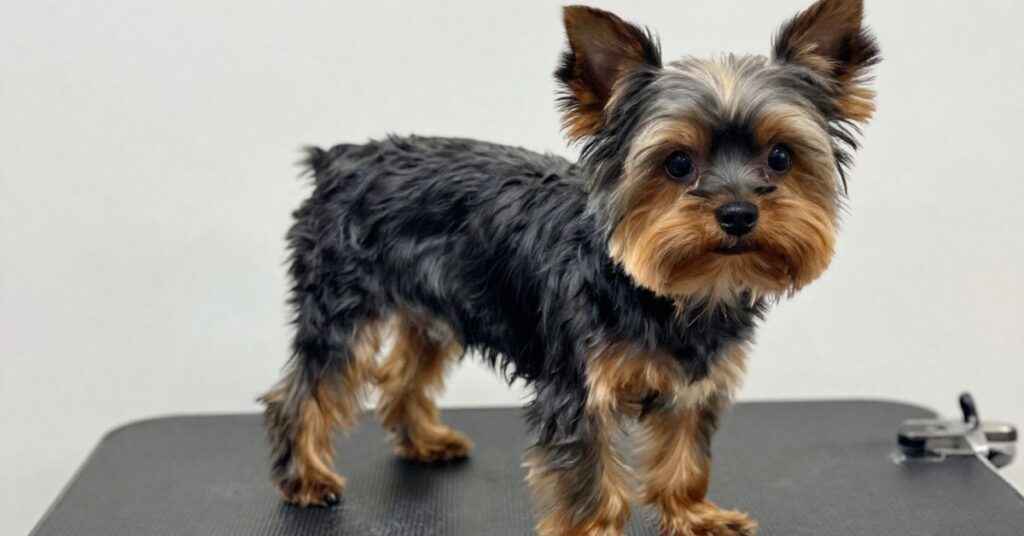
Complete Grooming Schedule
| Task | Frequency | Best Tool |
|---|---|---|
| Full coat brushing | Daily | Slicker brush plus fine-tooth steel comb |
| Bathing | Every 2 to 3 weeks | Black coat-enhancing dog shampoo |
| Ear cleaning | Weekly | Vet-approved ear cleaning solution |
| Nail trimming | Every 3 to 4 weeks | Rotary nail grinder |
| Eye area cleaning | Daily | Soft damp microfiber cloth |
| Professional grooming | Every 6 to 8 weeks | Experienced toy breed groomer |
Sun Protection for Black Coats
Black coats absorb significantly more UV radiation than lighter coats. Regular sun overexposure causes coat bleaching he deep black shift toward a reddish-brown tone, and can accelerate fading coat syndrome in dogs already predisposed to color transition.
Protect your black Yorkie by limiting direct sun exposure between 10 AM and 4 PM, applying a dog-safe SPF product to exposed skin areas like the nose, belly, and ear tips, and using a lightweight UV-protective dog shirt during extended outdoor activities.
FAQs: Black Yorkie
Q1. Do black Yorkies stay black?
Most do not. Standard Yorkies are born black and transition to blue and gold by age 3. Only dogs with DNA-verified recessive solid-black genetics stay black for life.
Q2. Are black Yorkies purebred?
Yes, they can be fully purebred if both parents carry AKC registration. Always request papers and DNA verification before purchasing.
Q3. How much does a black Yorkie puppy cost?
Prices range from $2,500 to over $10,000, depending on genetic verification and breeder reputation. Never pay a premium without documented proof.
Q4. Are black Yorkies AKC recognized?
Solid black is not a standard AKC color, but the dog can still receive AKC registration as a purebred Yorkshire Terrier using non-standard color codes.
Q5. Why is my black Yorkie turning red or brown?
This is coat reddening, usually caused by a copper or tyrosine deficiency in the diet, or by excessive sun exposure. Adjust nutrition first and limit direct sunlight.
Q6. Can two standard Yorkies produce a solid black puppy?
Extremely rare, but theoretically possible if both parents carry hidden recessive solid-black alleles. DNA testing of both parents is the only way to know.
Conclusion: What You Now Know That Most Buyers Don’t
The solid black Yorkshire Terrier is genuinely rare, scientifically fascinating, and unfortunately, one of the most commercially exploited color variations in the toy breed market.
Here is your complete takeaway:
Most black Yorkies you see in puppy listings are phenotypically black; they are simply in their natural newborn phase before the standard color transition begins. A true, solid black Yorkie requires specific recessive genetics confirmed through a DNA panel, not just a photograph and a breeder’s word.
Solid black is not an AKC-recognized standard color, but a properly documented black Yorkie with registered parents is 100% purebred. Diet plays a direct and measurable role in coat color maintenance. Copper, tyrosine, and omega-3s are non-negotiable for any black-coated dog. Color Dilution Alopecia is a real risk if hidden D-locus genes are present, and the only way to know is through genetic testing.
If you find a reputable breeder with full documentation, a clean DNA health panel, and a genuinely verified solid black Yorkie, you will own one of the rarest, most striking, and most misunderstood dogs in the entire toy breed world. That is worth every bit of due diligence you put in before writing that check.
About the Author
Gulnaz Malik, DVM, is a licensed Veterinarian and Animal Nutrition Specialist with over 8 years of clinical experience managing the health and dietary needs of hundreds of toy breeds. She specializes in the unique genetic expressions of the Yorkshire Terrier and combines veterinary expertise with first-hand breed research to provide pet parents with authoritative, science-backed guidance.