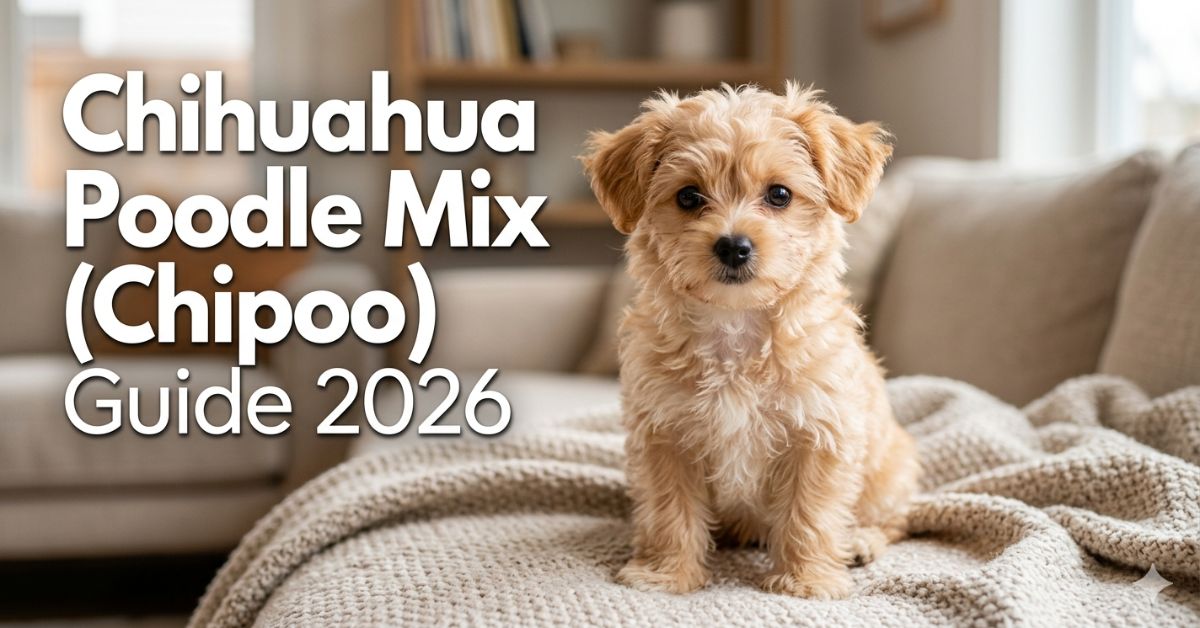
The Chihuahua Poodle Mix, commonly known as the Chipoo or Poochi, continues to gain popularity among dog lovers who want a small, intelligent, and adaptable companion. This hybrid combines the bold, confident personality of the Chihuahua with the high intelligence and trainability of the Poodle. As a result, the Chipoo offers a unique blend of traits that appeal to apartment dwellers, families, and first-time dog owners alike.
However, many people misunderstand this designer breed. They often assume that all Chipoo dogs are hypoallergenic, easy to train, and low maintenance. In reality, the Chipoo requires structured training, consistent grooming, and careful health management. Genetics play a critical role in shaping each dog’s temperament, coat type, and long-term health outcomes. Without proper knowledge, owners may struggle with barking issues, anxiety, or grooming challenges.
This comprehensive guide explores everything you need to know about the Chihuahua Poodle Mix, including size variations, temperament traits, health risks, nutrition, grooming requirements, and buying advice. By the end of this guide, you will understand whether the Chipoo fits your lifestyle and how to care for it properly.
Chihuahua Poodle Mix (Chipoo) Overview and Breed Basics

The Chihuahua Poodle Mix results from intentionally crossing a Chihuahua with a Toy or Miniature Poodle. Breeders created this hybrid to combine the Poodle’s intelligence and low-shedding coat with the Chihuahua’s compact size and loyalty. While the concept sounds simple, the outcome varies significantly depending on genetics, breeding practices, and generational differences.
Chipoo dogs fall into different genetic categories, most commonly F1 and F1b generations. An F1 Chipoo inherits an equal mix of traits from both parents, while an F1b Chipoo is backcrossed with a Poodle, increasing the likelihood of a curly, low-shedding coat. This distinction matters because it directly affects grooming needs, allergy compatibility, and behavioral tendencies.
Unlike purebred dogs, the Chipoo does not follow a strict breed standard. This flexibility means that no two Chipoo dogs look or behave the same. Some resemble tiny Poodles with curly coats, while others display the sleek appearance of a Chihuahua. This unpredictability attracts some owners but frustrates others who expect consistent traits.
You should also understand that the Chipoo remains a companion dog at its core. It thrives on human interaction and often forms strong emotional bonds with its owner. This attachment makes it affectionate and loyal, but also increases the risk of separation anxiety if left alone for long periods.
Chihuahua Poodle Mix Size, Growth, and Teacup vs Standard Differences
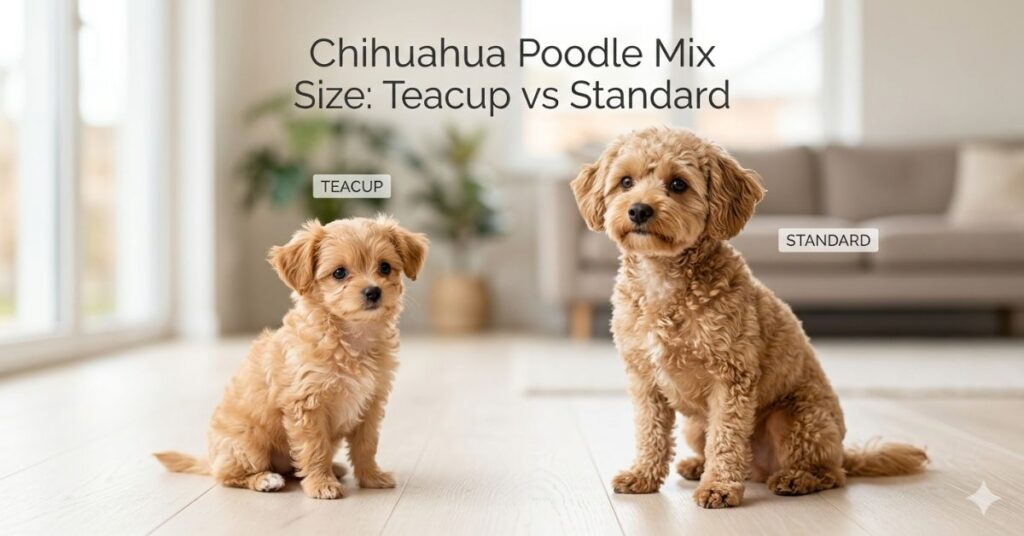
The Chihuahua Poodle mix size varies widely, making it one of the most misunderstood aspects of this hybrid. Many breeders advertise “teacup” Chipoo puppies as premium or rare, but this label often indicates extremely small size rather than superior quality. In fact, teacup dogs frequently face higher health risks due to fragile bone structure, underdeveloped organs, and increased susceptibility to hypoglycemia.
Standard Chipoo dogs typically offer a more balanced and healthier option. They maintain a slightly larger size, which supports better mobility, stronger bones, and improved resilience against common health conditions. Understanding growth patterns helps you set realistic expectations and avoid misleading breeder claims.
Chipoo Growth & Weight Matrix (Chihuahua Poodle Mix)
| Age | Toy/Standard Chipoo | Teacup Chipoo |
| 8 Weeks | 0.8–1.2 kg | 0.5–0.9 kg |
| 4 Months | 1.8–2.5 kg | 1.2–1.8 kg |
| 6 Months | 2.5–3.5 kg | 1.5–2.3 kg |
Most Chipoo dogs reach near-adult size by six months, but their muscles, coordination, and behavior continue to develop for several more months. You should monitor growth carefully during the first year, as rapid weight changes may indicate nutritional imbalance or underlying health issues.
Owners should avoid overfeeding small dogs in an attempt to accelerate growth. Excess weight places stress on joints and increases the risk of orthopedic problems later in life. Instead, you should focus on consistent feeding schedules, balanced nutrition, and regular veterinary checkups.
Chipoo Temperament, Behavior & Barking Habits (Chihuahua Poodle Mix)
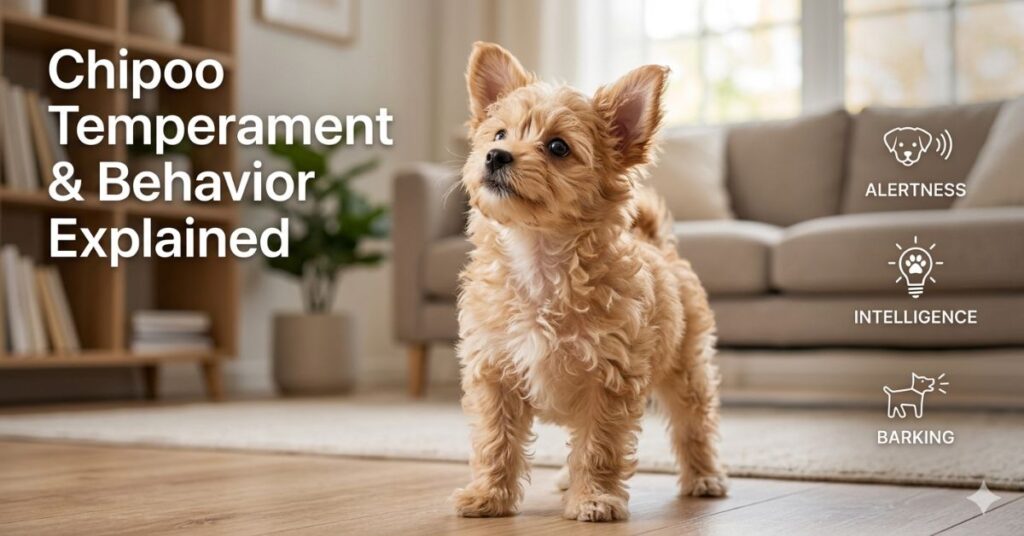
Chipoo’s temperament reflects a dynamic mix of intelligence, sensitivity, and stubbornness. The Chihuahua contributes boldness and alertness, while the Poodle adds problem-solving ability and eagerness to learn. This combination creates a dog that responds quickly to training but may also test boundaries if not guided properly.
One of the most noticeable traits of the Chipoo is its tendency to bark. These dogs act as natural watchdogs and often alert their owners to unfamiliar sounds, people, or movements. While this behavior can be useful, it may become excessive without proper training. Owners should address barking early by rewarding quiet behavior and avoiding reinforcement of attention-seeking noise.
Chipoo dogs also display strong attachment to their owners. They often follow their favorite person from room to room and seek constant interaction. While this loyalty feels rewarding, it can lead to separation anxiety if the dog does not learn to remain calm when alone. You should gradually build independence through short periods of separation and positive reinforcement.
Despite their small size, Chipoo dogs require mental stimulation and structured activities. Without engagement, they may develop destructive behaviors such as chewing, excessive barking, or restlessness. Interactive toys, short training sessions, and daily playtime help constructively channel their energy.
Chipoo Grooming Requirements & Coat Types (Chihuahua Poodle Mix)
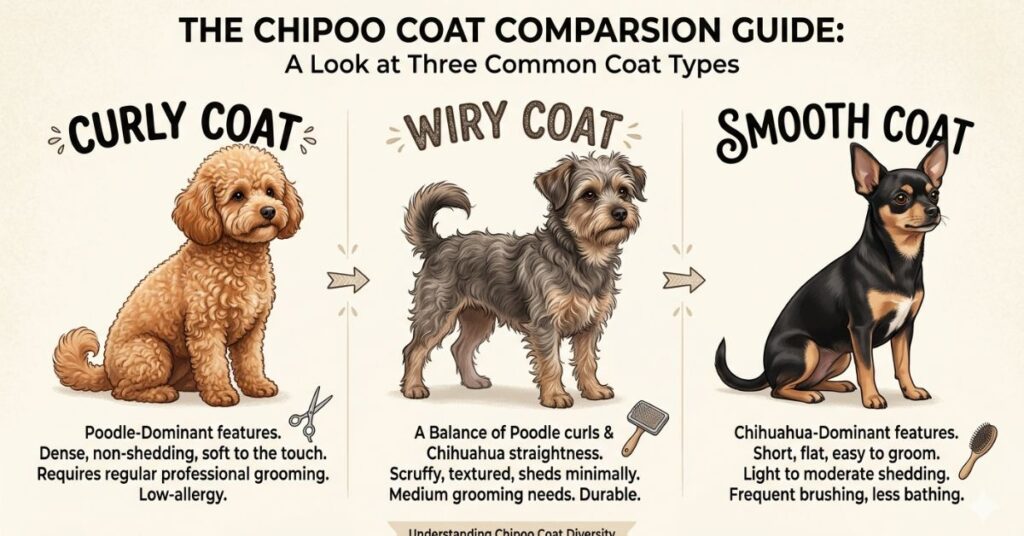
Chipoo grooming requirements depend heavily on coat type, which varies based on genetic dominance. Some dogs inherit the dense, curly coat of the Poodle, while others develop a smoother or wirier coat closer to the Chihuahua. Each coat type requires a different grooming approach, and owners must adjust their routine accordingly.
Curly-coated Chipoo dogs shed less, making them popular among people searching for hypoallergenic small dogs. However, this coat type demands frequent brushing to prevent tangles and matting. Without regular grooming, the hair can trap dirt, moisture, and bacteria, leading to skin irritation or infections.
Wiry or smooth-coated Chipoo dogs require less brushing but tend to shed more. While this may reduce grooming time, it increases the need for regular cleaning around the home. Owners should also pay close attention to seasonal shedding patterns and adjust grooming frequency as needed.
Dental care remains one of the most critical aspects of grooming for this breed. Small dogs often develop dental crowding, which leads to plaque buildup, gum disease, and tooth loss if left untreated. You should brush your Chipoo’s teeth daily and schedule professional cleanings as recommended by your veterinarian.
Regular ear cleaning, nail trimming, and bathing complete the grooming routine. Consistency in these practices not only improves appearance but also prevents long-term health issues.
Chipoo Lifespan & Health Risks (Chihuahua Poodle Mix)
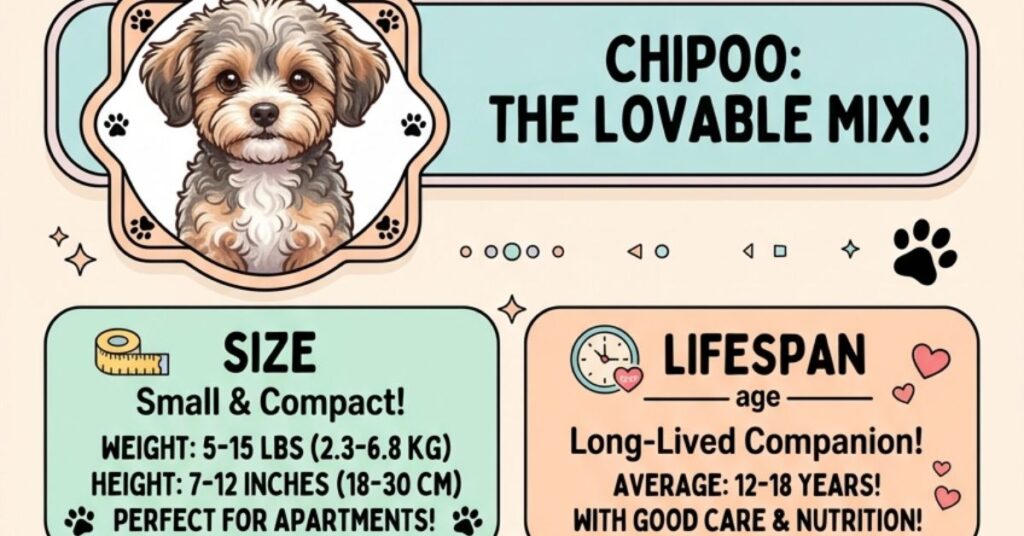
The Chipoo lifespan typically ranges from 12 to 16 years, making it a long-term companion for dedicated owners. However, longevity depends heavily on genetics, nutrition, and preventive healthcare. While hybrid dogs benefit from genetic diversity, they still inherit conditions that affect both parent breeds.
Common health concerns include Patellar Luxation, which affects joint stability, and Hypoglycemia, which poses a serious risk for small and teacup dogs. Additionally, eye conditions such as Progressive Retinal Atrophy can develop over time, leading to vision loss.
These conditions persist because both Chihuahuas and Poodles share similar genetic vulnerabilities. This concept, known as genetic overlap, explains why hybrid dogs do not eliminate all health risks despite benefiting from hybrid vigor.
You should prioritize preventive care to reduce these risks. Regular veterinary checkups, balanced nutrition, and maintaining a healthy weight significantly improve quality of life. Early detection of health issues allows for more effective treatment and better outcomes.
Best Food for Chihuahua Poodle Mix and Nutritional Needs
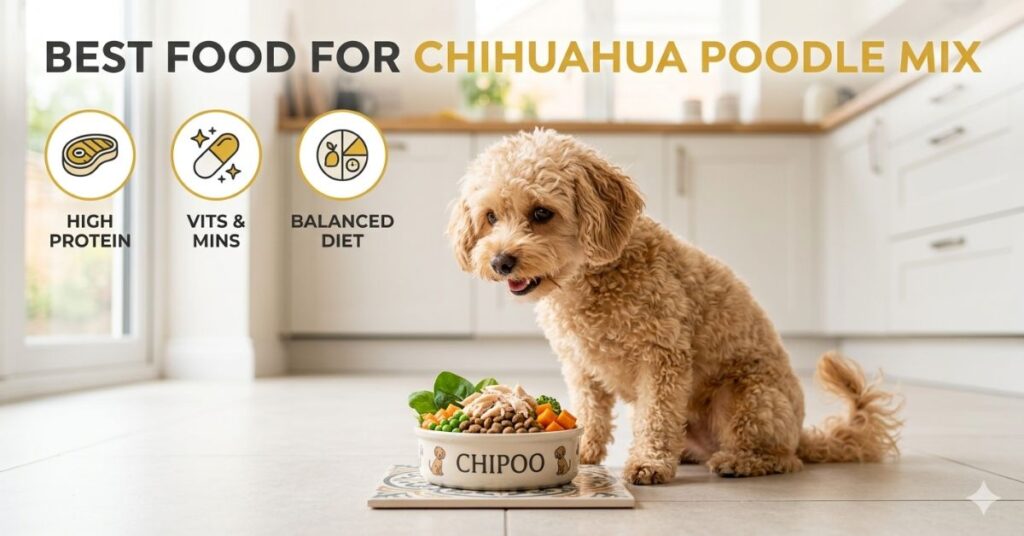
Choosing the best food for a Chihuahua Poodle mix requires careful consideration of its size, metabolism, and digestive sensitivity. These small dogs burn energy quickly, so they need nutrient-dense meals that provide consistent energy throughout the day. High-quality protein supports muscle maintenance, while healthy fats contribute to coat health and brain function.
You should select small-breed formulas with appropriately sized kibble to prevent choking and improve digestion. Feeding smaller portions multiple times a day helps stabilize blood sugar levels, especially in puppies and teacup Chipoo dogs.
Avoid low-quality foods that contain artificial additives, excessive fillers, or vague ingredient sources. These products reduce nutrient absorption and may cause digestive issues over time. Instead, focus on whole-food ingredients, clear labeling, and balanced nutrient profiles.
Hydration also plays a key role in overall health. Always provide fresh water and monitor intake, especially during hot weather or periods of increased activity.
Socializing a Nervous Chipoo and Training Strategy
Socializing a nervous Chipoo requires patience, consistency, and a structured approach. Many Chipoo dogs inherit anxiety traits, which makes early exposure to different environments essential. Without proper socialization, they may develop fear-based behaviors such as barking, hiding, or aggression.
You should introduce new experiences gradually and pair them with positive reinforcement. For example, reward calm behavior when meeting new people or encountering unfamiliar sounds. This approach helps build confidence and reduces stress over time.
Training should focus on short, engaging sessions that match the dog’s attention span. Chipoo dogs learn quickly but may lose interest if sessions become repetitive or overly long. Positive reinforcement methods, including treats and praise, produce the best results.
Consistency remains the key to success. All household members should follow the same training rules to avoid confusion. Over time, this structured approach creates a well-adjusted and confident companion.
Chipoo Puppy Prices & Buying Guide (Chihuahua Poodle Mix)

Chipoo puppy prices typically range from $500 to $2,000, depending on breeder reputation, location, and lineage. While price often reflects quality, it does not guarantee ethical breeding practices. You should evaluate breeders carefully before making a purchase.
Responsible breeders provide health testing records, allow you to meet the puppy’s parents, and maintain clean, humane living conditions. They also answer questions openly and offer guidance on care and training.
In contrast, unethical breeders often rely on marketing tactics such as “rare teacup” labels without providing evidence of responsible breeding. They may refuse to share health information or limit your ability to visit their facility. These red flags indicate a higher risk of health and behavioral issues.
Taking time to research and choose the right breeder ensures a healthier and more stable Chipoo.
FAQs About Chihuahua Poodle Mix (Chipoo)
Are Chipoo dogs hypoallergenic?
Chipoo dogs are not completely hypoallergenic, but Poodle-dominant coats shed less and may reduce allergic reactions.
How big does a Chihuahua Poodle mix get?
Most Chipoo dogs weigh between 3 and 6 kg, while teacup varieties remain smaller but face higher health risks.
Do Chipoo dogs bark a lot?
Yes, they bark frequently, but proper training and socialization can significantly reduce excessive barking.
How long do Chipoo dogs live?
The average lifespan ranges from 12 to 16 years with proper care.
Is a Chipoo good for apartments?
Yes, their small size and adaptability make them ideal for apartment living.
Conclusion
The Chihuahua Poodle Mix (Chipoo) offers intelligence, loyalty, and adaptability in a compact form. However, this breed requires consistent training, proper grooming, and informed health management to thrive. You should not rely on appearance alone when choosing a Chipoo. Instead, focus on genetics, breeder quality, and long-term care requirements.
With the right approach, the Chipoo becomes a loving, intelligent, and highly rewarding companion that fits well into modern lifestyles.
About the Author
Dr. Gulnaz Malik, DVM, MSc
Dr. Gulnaz Malik is a veterinarian and animal nutrition specialist with over a decade of clinical experience. As the founder of Chihuahuanest.com, she combines her medical expertise with firsthand experience in toy-breed genetics and behavior. She provides evidence-based guidance to help small-breed owners raise healthier and happier dogs.