Introduction
Miniature Pomeranian, Teacup Pomeranian, and Zwergspitz remain among the most misunderstood categories in the toy dog world. Many breeders and websites use these terms interchangeably, which creates confusion for new dog owners who want a healthy and ethically bred companion.
As a veterinarian specializing in small and toy breeds, I see a growing number of cases where extreme miniaturization leads to preventable health complications.
In this guide, I explain the true biological reality behind Miniature Pomeranians, provide clinical growth predictions, explore genetic risks like Alopecia X and double merle, and share a complete care protocol designed specifically for fragile toy breeds. This article will help you make an informed decision based on scienc not marketing.
Miniature Pomeranian, Teacup Pomeranian, Zwergspitz| Understanding the Reality
Many people believe that Miniature Pomeranian, Teacup Pomeranian, and Zwergspitz represent three distinct breeds. In reality, all these names refer to variations of the same breed: the Pomeranian. The term Zwergspitz comes from Germany and serves as the official breed name recognized by international kennel clubs. Breeders use “Miniature” and “Teacup” primarily as marketing labels to attract buyers looking for extremely small dogs.
From a genetic standpoint, no separate breeding line produces a true “mini” or “teacup” Pomeranian. Instead, breeders achieve smaller sizes by selectively breeding the smallest individuals in a litter, often called “runts.” This practice can compromise genetic stability over time, especially when repeated across generations.
You should understand that kennel organizations such as the AKC only recognize Pomeranians within a standard weight range. Any dog significantly below this range falls outside breed standards and may face increased health risks. Therefore, when you encounter terms like “Micro Pomeranian health” or “Teacup Pomeranian,” you should interpret them as indicators of size manipulation rather than legitimate breed categories.
Mini Pomeranian Full Grown|Growth & Weight Prediction Chart
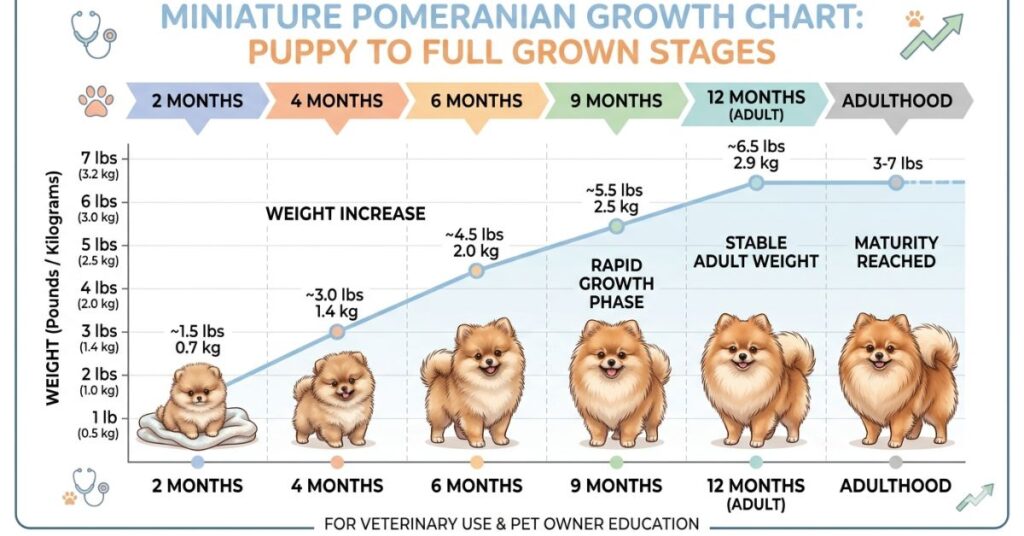
Predicting the adult size of a Miniature Pomeranian requires more than guesswork. Many owners ask about the “Mini Pomeranian full-grown” size, but accurate estimation depends on applying veterinary growth models rather than relying on breeder claims.
In clinical practice, I use two common methods: the Rule of Three and the Rule of Two. The Rule of Three multiplies a puppy’s weight at eight weeks by three, while the Rule of Two multiplies the weight at twelve weeks by two. Among these, I find the Rule of Two more reliable for Miniature and Teacup variations because growth slows earlier in smaller dogs.
However, the most accurate predictions come from observing bone density, paw size, and growth plate development. Extremely small puppies often appear deceptively tiny early on but may not maintain proportional health as they mature.
Miniature Pomeranian Weight Chart by Month
| Age | Expected Weight Range |
| 2 Months | 0.5 – 1 lb |
| 3 Months | 1 – 1.5 lbs |
| 4 Months | 1.5 – 2 lbs |
| 6 Months | 2 – 3 lbs |
| Adult | 3 – 7 lbs |
You should use this chart as a guideline, not an absolute rule. If a puppy remains significantly underweight, it may indicate underlying metabolic or nutritional issues rather than desirable “teacup” genetics.
Miniature Pomeranian Price & Ethical Breeding Reality
The Miniature Pomeranian price often reflects marketing hype rather than actual quality. Breeders frequently charge higher prices for smaller puppies because demand for “tiny” dogs remains high on social media. However, a higher price does not guarantee better genetics or health outcomes.
Ethical breeders focus on health testing, proper nutrition, and responsible pairings rather than size reduction. In contrast, unethical breeders prioritize profit by producing smaller dogs without considering long-term health consequences.
Miniature Pomeranian Price Breakdown
| Category | Price Range |
| Pet Quality | $800 – $2,500 |
| Show Quality | $3,000 – $6,000 |
| Teacup (Marketed) | $2,500 – $8,000+ |
When you evaluate a breeder, you should prioritize transparency, veterinary records, and parental lineage over size claims. A slightly larger Pomeranian with strong genetics will almost always outperform a fragile teacup dog in both lifespan and quality of life.
Toy Pomeranian vs Standard| Genetic Stability Comparison
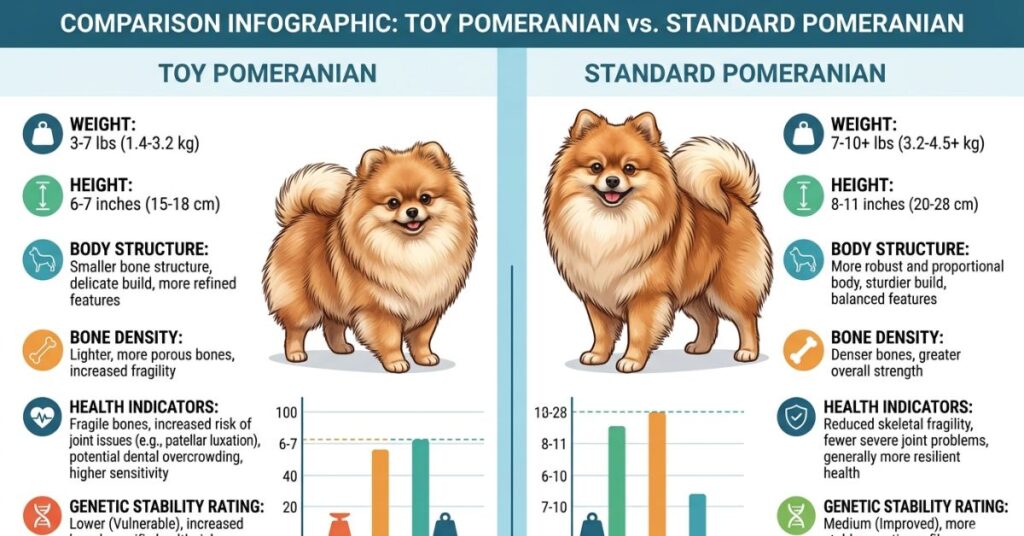
The debate around Toy Pomeranian vs Standard size centers on health and genetic stability. While all Pomeranians belong to the toy group, size variations significantly impact their physical resilience.
Standard Pomeranians fall within a healthy weight range of 4 to 7 pounds, which allows for proper bone density, organ development, and immune function. Miniature and Teacup variants, on the other hand, often experience compromised physiological development due to selective breeding for extreme smallness.
Standard vs Miniature vs Teacup Comparison Table
| Feature | Standard | Miniature | Teacup |
| Weight | 4–7 lbs | 3–5 lbs | <3 lbs |
| Genetic Stability | High | Moderate | Low |
| Health Risk | Low | Medium | High |
You should understand that genetic stability directly influences disease resistance, longevity, and overall vitality.
Miniature Pomeranian Temperament and Behavior
Miniature Pomeranian temperament remains largely consistent across size variations. These dogs are intelligent, alert, and deeply attached to their owners. However, their small size often leads owners to overlook training, which can result in behavioral issues.
Without proper boundaries, Pomeranians develop what trainers call “Small Dog Syndrome,” where the dog becomes overly dominant, vocal, or reactive. You should start training early using positive reinforcement techniques to build confidence and obedience.
Despite their size, Pomeranians possess high energy levels and require mental stimulation. Daily interaction, structured play, and consistent routines help maintain emotional balance and prevent anxiety-related behaviors.
Do Miniature Pomeranians Have More Health Issues? (Micro Pomeranian Health Explained)
Yes, Miniature and Teacup Pomeranians tend to have more health issues compared to standard-sized dogs. This increased risk stems from reduced body mass, fragile bone structure, and genetic compromises introduced during selective breeding.
Common health conditions include hypoglycemia, tracheal collapse, patellar luxation, and Alopecia X. Smaller dogs struggle to regulate blood sugar levels, which can lead to sudden weakness or seizures if not managed properly.
Additionally, their delicate skeletal structure makes them prone to joint instability, especially in the knees. You should monitor movement patterns closely to detect early signs of discomfort or abnormal gait.
Hypoglycemia Symptoms in Toy Breeds
Hypoglycemia remains one of the most critical concerns in toy breeds. Miniature Pomeranians require frequent feeding schedules to maintain stable blood glucose levels.
Common symptoms include lethargy, trembling, disorientation, and, in severe cases, seizures. Puppies face the highest risk due to their rapid metabolism and limited energy reserves.
You should always keep a quick source of glucose, such as honey or glucose gel, available in emergencies. Early intervention can prevent life-threatening complications.
The Fragile Anatomy Care Protocol|Tracheal Safety Audit for Miniature Pomeranian
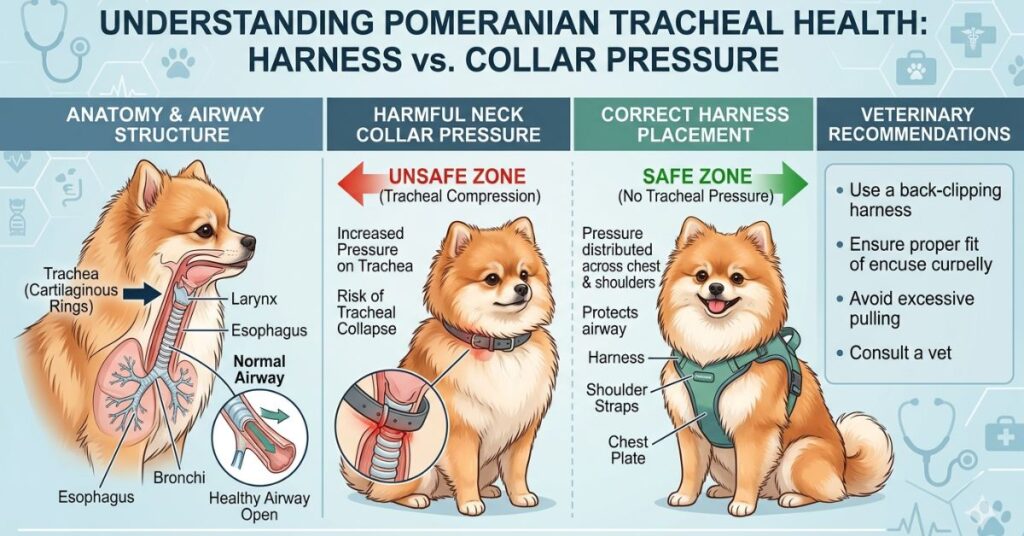
The trachea of a Miniature Pomeranian is highly sensitive and prone to collapse under pressure. Many owners unknowingly worsen this condition by using neck collars.
A proper Tracheal Safety Audit involves evaluating how equipment interacts with your dog’s anatomy. You should ensure that any harness sits above the shoulder joints and does not compress the throat or upper chest.
Regularly observe your dog’s breathing during walks. If you notice coughing, wheezing, or a honking sound, you should consult a veterinarian immediately.
Best Harness for Fragile Pomeranian Tracheas
Choosing the best harness for fragile Pomeranian tracheas requires attention to design and material. A well-fitted harness distributes pressure evenly across the chest rather than concentrating it on the neck.
You should select a Y-shaped harness with soft padding and adjustable straps. Lightweight materials reduce strain, while proper fitting ensures unrestricted movement.
Avoid harnesses that sit too low on the chest or restrict shoulder mobility. Proper equipment plays a critical role in preventing long-term respiratory issues.
Home Environment Checklist for Patellar Luxation Prevention
Patellar luxation is a common orthopedic issue in small breeds. You can significantly reduce the risk by modifying your home environment.
Install ramps near beds and sofas to eliminate jumping. Use non-slip mats to provide traction on smooth floors. Designate “no-jump zones” to protect your dog’s joints from repeated impact.
Maintaining a healthy weight also reduces stress on the knees. You should combine environmental management with proper nutrition and moderate exercise for optimal joint health.
Miniature Pomeranian Puppy Uglies Stage Survival Guide
The “Pomeranian puppy uglies stage” often surprises new owners. During this phase, the puppy’s coat undergoes a natural transition from soft puppy fur to a mature double coat.
You may notice uneven fur, thinning patches, and color changes. This process usually occurs between 4 and 8 months of age and resolves naturally over time.
You should avoid excessive grooming or panic during this stage. Proper nutrition supports healthy coat development and ensures a smooth transition.
White vs Orange Miniature Pomeranian Genetics
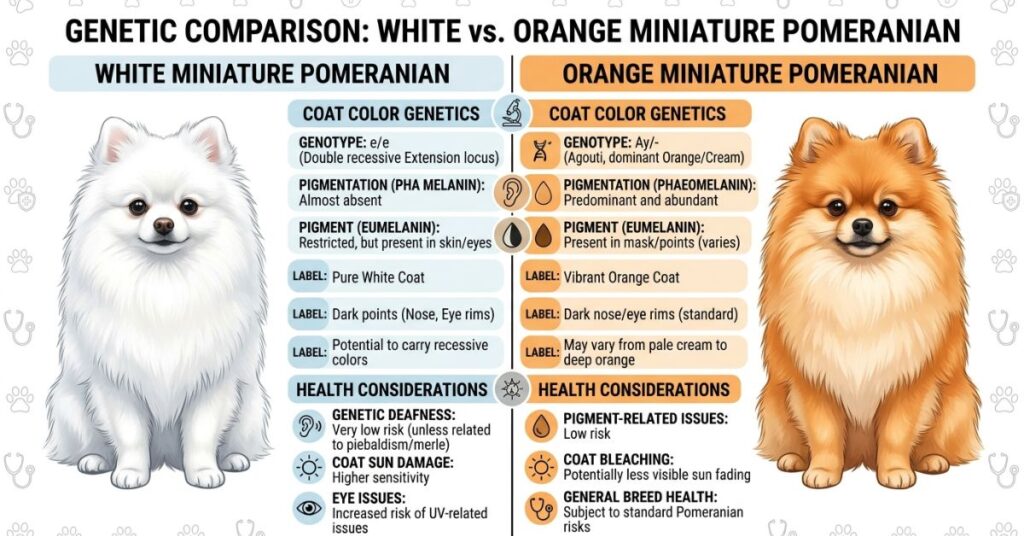
Color genetics play a significant role in both appearance and health. When comparing white vs orange miniature pomeranian genetics, you should understand that certain colors carry higher risks.
Orange Pomeranians typically exhibit stable genetics with fewer complications. White Pomeranians may carry recessive genes that influence coat quality and skin sensitivity.
Merle patterns, while visually striking, introduce serious risks when bred improperly. You should always verify genetic testing before choosing a puppy based on color.
Genetic Risks|Double Merle and Alopecia X in Miniature Pomeranian Treatment
The Double Merle gene combination can result in severe defects, including hearing and vision impairments. Ethical breeders avoid pairing two merle dogs to prevent these outcomes.
Alopecia X, another common condition, affects coat growth and hormonal balance. In clinical practice, I manage this condition using a combination of nutritional therapy, omega fatty acids, and melatonin supplementation.
Each case requires individualized treatment based on hormonal evaluation and overall health status. You should avoid unproven treatments and focus on evidence-based care.
Miniature Pomeranian vs Teacup|AKC Breed Standards Explained
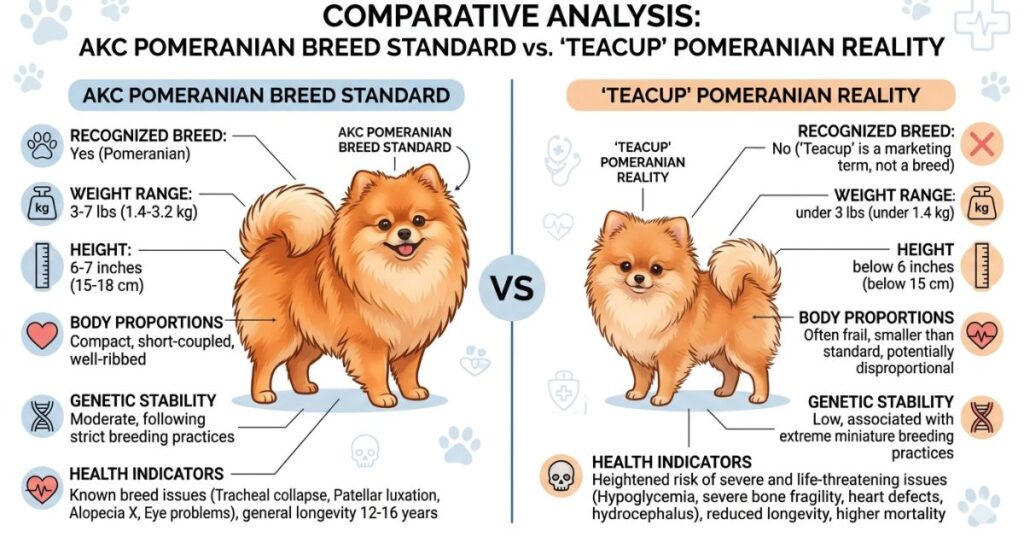
The AKC Pomeranian breed standards define a healthy and balanced dog within a specific weight range. Teacup Pomeranians fall outside these standards and often lack the structural integrity required for long-term health.
You should view adherence to breed standards as a marker of responsible breeding. Deviations for the sake of size often compromise essential biological functions.
Lifespan of a 3lb Pomeranian
The lifespan of a 3lb Pomeranian typically ranges from 7 to 12 years, which is shorter than the 12 to 16 years seen in standard Pomeranians. Reduced lifespan results from increased susceptibility to metabolic and structural health issues.
You should focus on preventive care, proper nutrition, and regular veterinary checkups to maximize longevity.
Are Teacup Poms Recognized by the AKC?
Teacup Pomeranians are not recognized by the AKC or any major kennel club. These organizations only acknowledge the standard Pomeranian breed.
You should remain cautious of breeders who market “AKC Teacup Pomeranians,” as this claim often misleads buyers.
FAQs
Do miniature pomeranians have more health issues?
Yes, a smaller size increases vulnerability to metabolic and structural disorders.
What is the safest size for a Pomeranian?
A weight range of 4–6 lbs offers the best balance of health and stability.
How do I predict my puppy’s adult size?
Use the Rule of Two for better accuracy.
Is a harness necessary?
Yes, it prevents tracheal damage.
Conclusion
Miniature and Teacup Pomeranians may appear adorable, but extreme size reduction often comes at a biological cost. You should prioritize health, genetics, and ethical breeding practices over aesthetics.
A well-bred Pomeranian within the standard size range will provide a longer lifespan, fewer health complications, and a better overall quality of life. When you choose responsibly, you not only protect your pet but also promote better breeding practices across the industry.