


Introduction
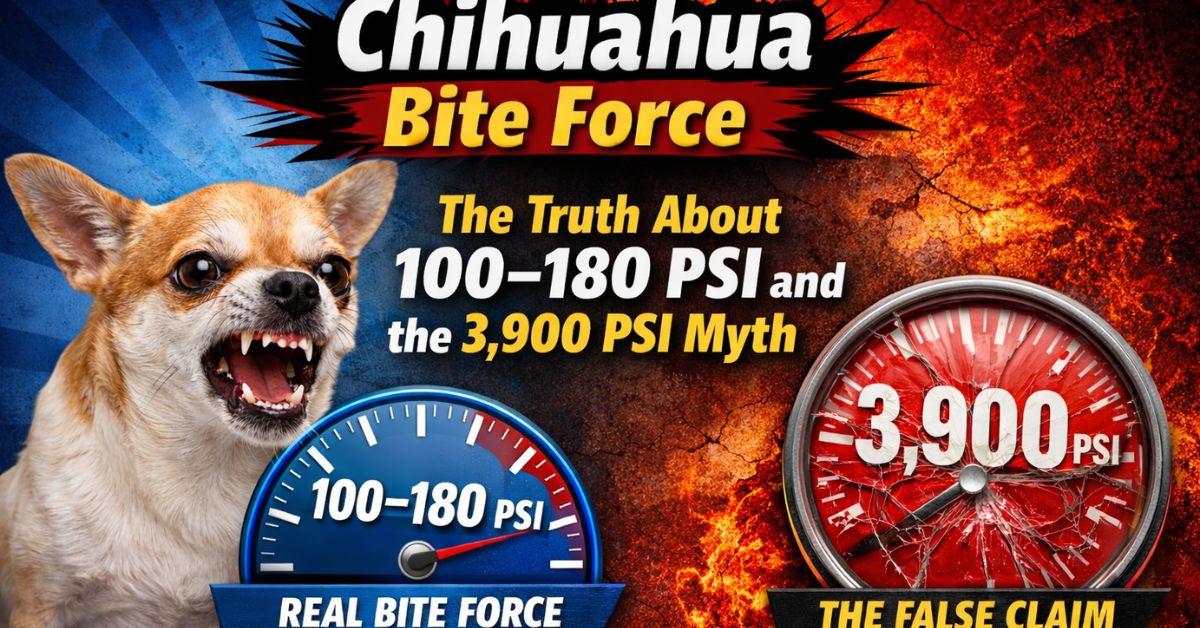
Do you want to know the real bite force of a Chihuahua? Many websites and social media posts claim that a Chihuahua bites with 3,900 PSI, but that claim is completely false. In this article, we explain the scientific facts about the Chihuahua’s bite force and debunk the viral myth with clear evidence.
We also analyze the real safety risks, explain why Chihuahuas bite, and share practical child safety tips. In addition, we compare their bite strength with that of larger dog breeds so you can understand the facts instead of believing online rumors.
Chihuahua Bite Force (PSI) | What Scientific Research Shows
People often search for: Chihuahua bite force PSI, small dog bite strength, and how strong is a Chihuahua bite?
Scientific estimates show that a Chihuahua generates 100 to 180 PSI (Pounds per Square Inch) of bite force.
For comparison:
- The average human bite force measures 120–160 PSI
- German Shepherd reaches about 238 PSI
- Rottweiler reaches about 328 PSI
This data proves that a Chihuahua’s bite force remains relatively low compared to large breeds. However, its small, pointed teeth can create deep puncture wounds, especially on small body areas like fingers or a child’s face.
Key Facts
- Chihuahua bite force: 100–180 PSI
- Human bite force: 120–160 PSI
- German Shepherd: ~238 PSI
- Rottweiler: ~328 PSI
- Sharp, narrow teeth increase puncture risk
- Jaw strength remains strong relative to body size
The 3,900 PSI Myth | Internet Misinformation Exposed

Many viral posts claim that a Chihuahua bites with 3,900 PSI. That statement has no scientific support.
To understand how unrealistic that number sounds, consider this comparison:
- Great White Shark: ~4,000 PSI
- Saltwater Crocodile: ~3,700 PSI
- Spotted Hyena: ~1,100 PSI
- Rottweiler: ~328 PSI
- Chihuahua: 100–180 PSI
A Chihuahua does not have the jaw muscles, skull structure, or bone density required to generate thousands of PSI. The 3,900 PSI claim spreads through memes and unverified blogs. Always verify bite statistics before believing viral content.
Can a Chihuahua Bite Force Attack Be Fatal?
Many people ask: Can a Chihuahua kill a human? or Are Chihuahuas dangerous for babies?
A healthy adult does not face fatal risk from a Chihuahua’s bite force alone. However, risk depends on:
- Bite location
- Victim’s age
- Infection complications
High-Risk Groups: Chihuahua Bite Force
- Newborn babies | face, eyes, and necks remain vulnerable
- Toddlers under 3 | they stay at the dog’s height level
- Elderly individuals | fall risk increases after a sudden attack
- Immunocompromised individuals | infection risk increases
- Face and neck bites | proximity to arteries increases danger
In the United States, millions of dog bites occur every year. Small breeds, including Chihuahuas, contribute significantly due to their higher aggression frequency.
The danger does not come from extreme bite force. The danger comes from the location and medical complications.
Infection Risk and Pasteurella | Hidden Dangers After a Bite
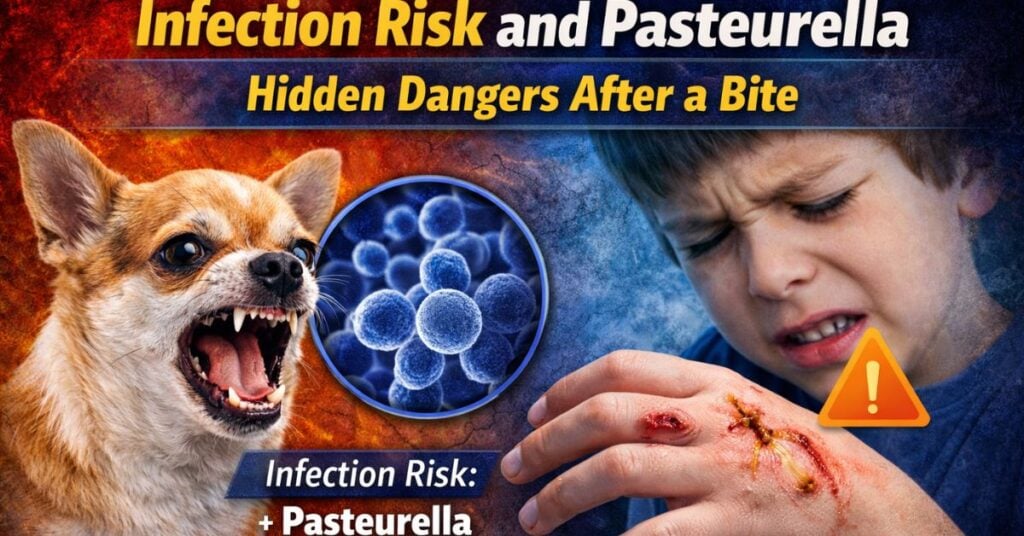
Dog bites transfer bacteria into the wound.
Pasteurella multocida commonly lives in a dog’s mouth. This bacterium can cause infection within 24 hours.
Possible Complications
- Swelling and redness
- Fever
- Pus formation
- Joint or bone infection
- Sepsis in severe cases
What You Should Do After a Bite
- Wash the wound with soap and water for at least 5 minutes
- Apply antiseptic
- Cover with a clean bandage
- Visit a doctor within 24 hours
- Check rabies vaccination status
- Monitor for swelling, fever, or discharge
Prompt treatment prevents serious complications.
Why Do Chihuahuas Bite? Psychological Reasons
People frequently search: Why do Chihuahuas bite so much?
Chihuahuas usually bite because of fear, not dominance.
Common Causes of Aggression
- Fear Aggression | the dog reacts defensively
- Territorial Behavior | It protects the space of the owner
- Lack of Socialization | Poor early exposure increases anxiety
- Pain-Induced Aggression | illness or injury triggers biting
- Small Dog Syndrome | owners reinforce bad behavior
- Resource Guarding | the dog protects food or toys
Chihuahua vs Pitbull | Size and Power Comparison

Many people compare small dogs like the Chihuahua with powerful breeds such as the Pit Bull to understand size and strength differences. A Chihuahua has a much smaller body and jaw, while a Pit Bull has strong muscles and a larger skull designed for power.
Bite force data shows a clear gap. A Chihuahua delivers about 100–180 PSI, while a Pit Bull produces around 235–330 PSI. Larger breeds cause more severe tissue damage per bite because of their strength and jaw structure.
However, studies suggest that small breeds may bite more frequently in certain situations. Repeated minor bites can still cause infections, especially in children. Proper training, socialization, and supervision determine safety far more than a dog’s size.
How Scientists Measure Dog Bite Force (PSI Testing Explained)
Many readers ask: How do experts measure Chihuahua bite force?
Scientists do not guess bite force numbers. They use controlled testing methods and biomechanical modeling.
Measurement Methods: Chihuahua Bite Force
- Bite Sleeve Pressure Sensors
Researchers place calibrated pressure sensors inside protective sleeves. Dogs bite the sleeve, and the sensor records PSI. - Force Plates with Digital Gauges
Labs use digital force plates that measure maximum jaw compression. - Skull and Muscle Analysis
Scientists calculate the estimated bite force by studying skull shape, jaw muscle size, and leverage ratios. - Comparative Modeling
Researchers compare small breeds like the Chihuahua to larger breeds to estimate realistic force ranges.
Because Chihuahuas have small skulls and limited jaw muscle mass, experts consistently place their bite force within the 100–180 PSI range. No scientific lab has ever recorded a number anywhere near 3,900 PSI.
Warning Signs Before a Chihuahua Bite Force Bites
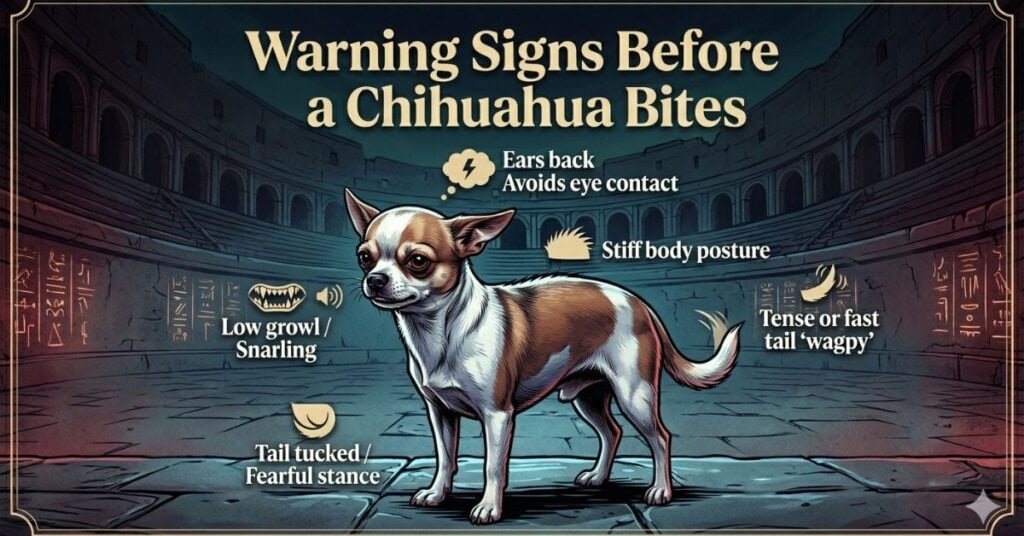
A Chihuahua rarely bites without showing signals first. Owners prevent most incidents when they recognize early warning signs.
Physical Warning Signals
- Stiff body posture
- Ears pinned backward
- Tail tucked tightly
- Visible whites of the eyes (“whale eye”)
- Lip lifting or teeth baring
Behavioral Warning Signals
- Low growling
- Snapping without contact
- Sudden freezing before movement
- Avoiding eye contact but staying tense
When owners ignore these signals, the dog escalates to biting. Early intervention reduces risk dramatically. Proper obedience training teaches the dog alternative behaviors instead of aggression.
Chihuahua Bite Force Comparison Table
Below, I present a clear comparison table that shows the Chihuahua bite force vs other animals and dog breeds. This table helps readers understand realistic PSI values and exposes the 3,900 PSI myth.
| Animal / Breed | Average Bite Force (PSI) | Damage Level | Scientific Status |
| Chihuahua | 100–180 PSI | Puncture wounds, skin injury | Realistic estimate |
| Average Human | 120–160 PSI | Crushing & tearing | Medically measured |
| German Shepherd | ~238 PSI | Strong tissue damage | Verified estimate |
| Rottweiler | ~328 PSI | Severe bite strength | Verified estimate |
| American Pit Bull Terrier | 235–330 PSI | High tissue damage | Estimated range |
| Spotted Hyena | ~1,100 PSI | Bone crushing | Scientifically studied |
| Saltwater Crocodile | ~3,700 PSI | Extreme crushing force | Lab measured |
| Great White Shark | ~4,000 PSI | Apex predator force | Scientific estimate |
Long-Term Training Strategies to Prevent Biting

Training determines whether a Chihuahua becomes reactive or calm. Owners must actively shape behavior from puppyhood.
Effective Training Techniques|Chihuahua Bite Force
- Early Socialization (8–16 Weeks)
Introduce the puppy to different people, sounds, and environments. - Positive Reinforcement
Reward calm behavior with treats and praise. - Controlled Exposure Therapy
Gradually expose the dog to triggers in a safe setting. - Consistent Boundaries
Do not excuse bad behavior because of small size. - Professional Obedience Classes
Certified trainers correct aggression patterns safely.
Owners often create “Small Dog Syndrome” when they tolerate growling or snapping. When you correct unwanted behavior early, you prevent long-term aggression problems.
Legal Responsibility and Dog Bite Laws
Many people overlook legal consequences after a bite incident.
Important Legal Considerations
- Owners remain responsible for injuries caused by their dog.
- Some regions apply “strict liability” dog bite laws.
- Medical bills and compensation claims can become expensive.
- Repeated aggression reports may lead to mandatory behavior evaluation.
- Authorities may classify a dog as dangerous after serious incidents.
Even a small dog like a Chihuahua can create legal and financial consequences. Responsible ownership protects both the dog and the family.
Final Thoughts
The real Chihuahua bite force measures only 100–180 PSI. The viral 3,900 PSI claim remains a myth with no scientific backing. While a Chihuahua cannot overpower a healthy adult, it can cause injury or infection if owners ignore training and supervision.
You control the risk. When you train your Chihuahua properly, socialize it early, and teach children dog safety, you turn a potentially reactive small dog into a loyal and loving family companion.
(FAQs)
1. What is the exact bite force of a Chihuahua?
Scientific estimates place the Chihuahua bite force between 100 and 180 PSI.
2. Is the 3,900 PSI Chihuahua claim true?
No. That number has no scientific support and exceeds realistic anatomical limits.
3. Can a Chihuahua break bones?
A Chihuahua cannot normally break adult human bones, but it can puncture skin.
4. Are Chihuahuas aggressive by nature?
Chihuahuas often show defensive aggression, especially without proper socialization.
5. Should I worry about infection after a small bite?
Yes. Even a small puncture can develop an infection if you ignore treatment.
6. Are Chihuahuas safe family pets?
Yes. Proper training, supervision, and socialization make them safe companions.