

Many dogs face stomach problems at some point in life. Some dogs suffer from diarrhea, vomiting, gas, bloating, or poor digestion. These issues can make dogs feel uncomfortable and weak. The right dog food for digestive upset can help improve digestion and support gut health.
A healthy digestive system helps dogs absorb nutrients properly. It also supports energy levels, immune health, and overall well-being. Many digestive problems happen because of food intolerance, sudden diet changes, low-quality ingredients, or infections.
Dog owners often struggle to find the right food when digestive issues appear. Some foods contain fillers, artificial flavors, or ingredients that irritate the stomach. Dogs with sensitive stomachs need gentle and easy-to-digest meals.
Veterinarians often recommend bland diets and highly digestible foods during digestive upset. Common ingredients include boiled chicken, white rice, pumpkin, and easily digestible proteins. These foods help calm the stomach and support recovery.
Choosing the best dog food for digestive upset requires understanding your dog’s symptoms and nutritional needs. This guide explains everything you need to know. You will learn about ingredients, feeding tips, foods to avoid, and ways to improve digestive health naturally.
Dog Food for Digestive Upset and Common Digestive Problems
Digestive problems affect dogs of all ages and breeds. Some dogs experience occasional stomach issues, while others struggle with chronic digestive disorders. Understanding the signs helps owners choose the right dog food for digestive upset.
Dogs can develop digestive problems for many reasons. Sudden food changes often trigger stomach upset. Eating spoiled food, table scraps, or unfamiliar treats can also cause digestive discomfort. Some dogs develop food sensitivities that make digestion difficult.
Common digestive symptoms include loose stools, diarrhea, vomiting, excessive gas, stomach noises, loss of appetite, and abdominal discomfort. Dogs may also appear tired or less active than normal.
Many dogs improve when owners switch to highly digestible foods. These foods place less stress on the digestive system and allow the gut to recover. Bland diets often work well during short-term digestive problems. Veterinarians frequently recommend simple foods such as boiled chicken and white rice because dogs digest them easily.
Some digestive issues require long-term dietary changes. Dogs with food sensitivities may need limited-ingredient diets. Others benefit from foods that contain probiotics and prebiotics. These ingredients support healthy gut bacteria and improve digestion.
Monitoring symptoms helps owners identify possible food triggers. Keeping a feeding journal can reveal patterns and help prevent future digestive problems. A healthy diet remains one of the most effective ways to support digestive health.
Signs Your Dog Needs Dog Food for Digestive Upset
- Frequent diarrhea
- Vomiting after meals
- Excessive gas
- Poor appetite
- Loose stools
- Bloating
- Stomach noises
- Weight loss
- Food sensitivities
- Chronic digestive discomfort
Dog Food for Digestive Upset and the Importance of Easy Digestion
Easy digestion plays a major role in recovery. Dogs with digestive problems often struggle to break down complex ingredients. Their stomachs and intestines need foods that digest quickly and efficiently.
Highly digestible dog food reduces stress on the gastrointestinal system. It allows nutrients to be absorbed more effectively and helps the body recover faster. Many veterinary digestive formulas focus on simple ingredients and balanced nutrition.
Protein remains an important part of dog food for digestive upset. However, not all proteins are digested equally. Lean proteins such as chicken, turkey, and fish usually work better than fatty meats. Dogs often tolerate these proteins well during recovery.
Carbohydrates also support digestion. White rice remains one of the most popular choices because it digests easily and helps firm stools. Potatoes and oatmeal can also support sensitive stomachs.
Healthy digestion depends on more than food selection. Feeding smaller meals throughout the day helps reduce digestive stress. Large meals can overwhelm the stomach and worsen symptoms.
Hydration also plays a critical role. Dogs lose fluids during diarrhea and vomiting. Fresh water helps prevent dehydration and supports recovery.
Easy-to-digest foods help restore normal digestion while providing essential nutrients. They create a foundation for long-term digestive health and comfort.
Benefits of Easy-to-Digest Dog Food for Digestive Upset
- Supports nutrient absorption
- Reduces stomach irritation
- Helps control diarrhea
- Improves stool quality
- Supports faster recovery
- Reduces vomiting episodes
- Promotes healthy digestion
- Maintains energy levels
Dog Food for Digestive Upset and the Best Ingredients to Look For
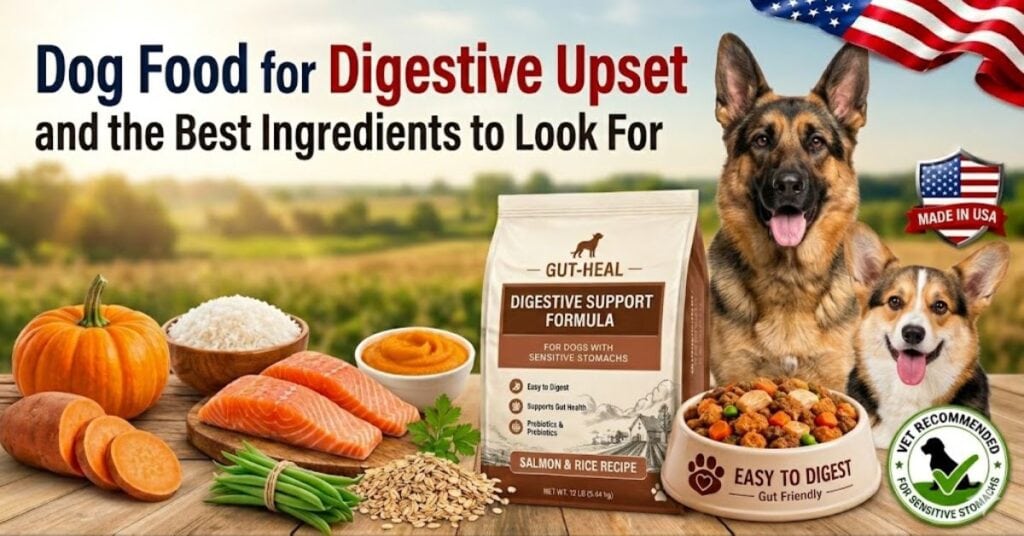
The ingredients inside dog food matter greatly. Quality ingredients often improve digestion and reduce stomach irritation. Many digestive formulas use carefully selected ingredients that support gut health.
Lean protein should appear near the top of the ingredient list. Chicken, turkey, salmon, and lamb often work well for sensitive dogs. These proteins provide essential amino acids while remaining easy to digest.
White rice remains one of the best carbohydrate sources for digestive upset. It helps stabilize digestion and provides energy without causing excessive stomach stress. Many veterinary digestive diets include rice as a primary ingredient.
Pumpkin offers natural fiber that supports healthy digestion. Many dog owners use plain pumpkin to improve stool consistency. Sweet potatoes can also provide gentle fiber and nutrients.
Probiotics support beneficial gut bacteria. Healthy gut bacteria improve digestion and help maintain digestive balance. Prebiotics work alongside probiotics by feeding beneficial bacteria.
Omega-3 fatty acids may reduce inflammation and support digestive health. Fish oil often provides these healthy fats.
Choosing foods with natural ingredients can improve digestive comfort and overall health.
Best Ingredients in Dog Food for Digestive Upset
- Chicken
- Turkey
- Salmon
- White rice
- Pumpkin
- Sweet potatoes
- Oatmeal
- Probiotics
- Prebiotics
- Fish oil
Ingredient Benefits Table
| Ingredient | Digestive Benefit |
| Chicken | Easy-to-digest protein |
| White Rice | Helps firm stools |
| Pumpkin | Supports digestion |
| Oatmeal | Gentle carbohydrate |
| Salmon | Provides omega-3 fats |
| Probiotics | Supports gut bacteria |
| Sweet Potato | Provides fiber |
Dog Food for Digestive Upset and Foods You Should Avoid

Many foods can worsen digestive issues. Owners should avoid ingredients that increase stomach irritation or trigger sensitivities.
Fatty foods often cause digestive discomfort. Fried foods, greasy table scraps, and fatty meat can lead to diarrhea and vomiting. Dogs with sensitive stomachs usually tolerate low-fat diets better.
Artificial preservatives and additives may also contribute to digestive issues. Some dogs react negatively to synthetic ingredients and flavor enhancers.
Dairy products can cause problems in dogs that struggle to digest lactose. Excessive dairy consumption may lead to gas, diarrhea, and bloating.
Spicy foods and seasoned foods should never enter a dog’s diet. These ingredients can irritate the digestive tract and create additional health risks.
Chocolate, onions, garlic, grapes, and raisins remain toxic to dogs. Owners should avoid these foods completely.
Choosing simple ingredients often produces the best results for dogs with digestive upset.
Foods to Avoid During Digestive Upset
- Fatty meats
- Fried foods
- Table scraps
- Chocolate
- Garlic
- Onions
- Grapes
- Raisins
- Excess dairy
- Spicy foods
Dog Food for Digestive Upset and Homemade Meal Options

Homemade meals can help with short-term digestive problems. Many veterinarians recommend bland diets when dogs experience mild digestive upset.
Boiled chicken and white rice remain one of the most popular homemade options. This combination provides protein and carbohydrates without placing excess stress on digestion. Many dogs tolerate it well during recovery.
Plain pumpkin can also support digestive health. Owners often add small amounts to meals to improve stool consistency.
Some dogs respond well to boiled turkey and rice. Others may benefit from plain cooked potatoes and lean proteins.
Homemade diets should only serve as short-term solutions unless a veterinary nutritionist creates a complete long-term plan. Dogs need balanced nutrition that includes vitamins and minerals.
Owners should avoid seasoning homemade meals. Salt, butter, oils, and spices can worsen digestive symptoms.
Simple homemade meals often provide temporary relief while the digestive system recovers.
Homemade Dog Food for Digestive Upset Ideas
- Boiled chicken and white rice
- Turkey and rice
- Lean beef and rice
- Chicken and pumpkin
- White fish and potatoes
- Turkey and sweet potatoes
Dog Food for Digestive Upset and Long-Term Digestive Health
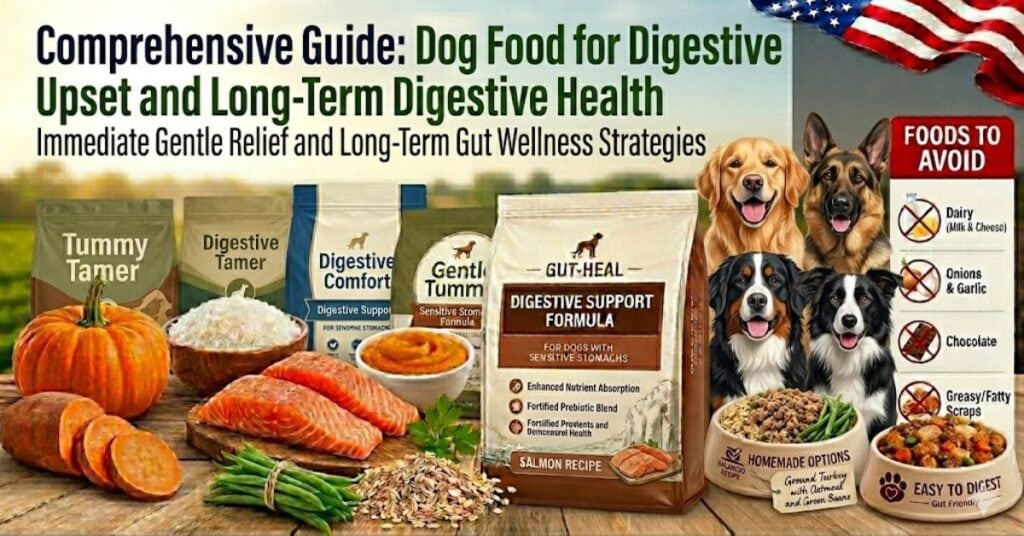
Long-term digestive health requires consistency. Dogs thrive when owners maintain a stable feeding routine and choose quality food.
Frequent food changes can upset digestion. Gradual transitions help dogs adjust to new foods without stomach problems. Many experts recommend mixing old and new food over several days.
Regular feeding schedules also support digestive function. Dogs digest food more efficiently when meals occur at the same times each day.
Exercise supports digestion as well. Physical activity encourages healthy bowel movements and overall wellness.
Routine veterinary checkups help detect digestive problems early. Early intervention often prevents more serious complications.
Owners should monitor stool quality, appetite, and energy levels. These signs provide valuable information about digestive health.
A combination of proper nutrition, hydration, exercise, and routine care helps maintain a healthy digestive system for years.
Long-Term Tips for Dog Food for Digestive Upset
- Feed high-quality food
- Maintain feeding schedules
- Provide fresh water daily
- Avoid sudden diet changes
- Add probiotics when needed
- Monitor stool quality
- Exercise regularly
- Visit the veterinarian regularly
Conclusion
Choosing the right dog food for digestive upset can improve your dog’s comfort, digestion, and overall health. Dogs with sensitive stomachs need gentle ingredients that digest easily and support gut health. Lean proteins, white rice, pumpkin, probiotics, and quality carbohydrates often provide excellent results.
Avoid fatty foods, artificial ingredients, and sudden diet changes. Feed smaller meals and keep your dog hydrated. Monitor symptoms closely and contact your veterinarian if digestive issues persist.
A healthy digestive system helps your dog stay active, comfortable, and happy every day.
FAQs
What is the best dog food for digestive upset?
The best dog food for digestive upset contains easy-to-digest proteins, white rice, probiotics, and low-fat ingredients.
Can I feed my dog chicken and rice if they have a digestive upset?
Yes. Boiled chicken and white rice often help dogs recover from mild digestive issues. Veterinarians commonly recommend this bland diet.
How long should I feed dog food for digestive upset?
Most dogs need a bland diet for a few days. Contact your veterinarian if symptoms continue for more than 48 hours.
Is pumpkin good for digestive upset in dogs?
Yes. Plain pumpkin provides fiber that may improve stool quality and support digestion.
Should I feed smaller meals during digestive upset?
Yes. Smaller meals reduce digestive stress and often improve recovery.
Are probiotics helpful for dogs with digestive problems?
Yes. Probiotics support healthy gut bacteria and may improve digestion.
When should I call a veterinarian?
Call a veterinarian if vomiting, diarrhea, dehydration, blood in stool, or loss of appetite continues or becomes severe.