

QUICK ANSWER
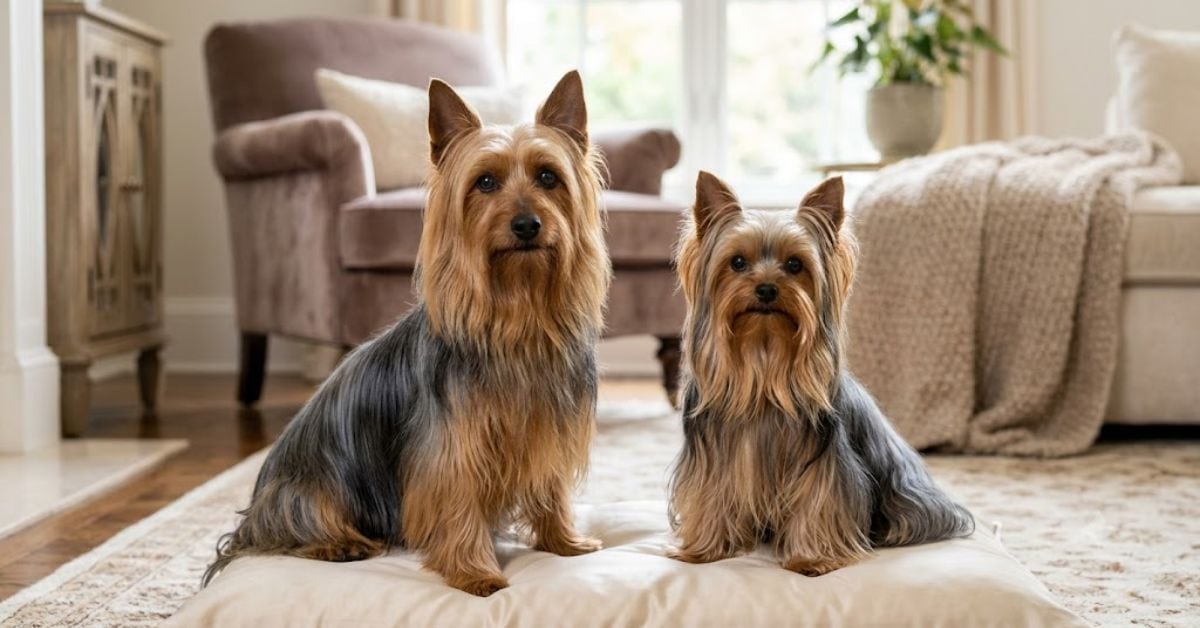
The Australian Silky Terrier and the Yorkie share Yorkshire Terrier ancestry, but they are not the same breed.
Silkies are sturdier and heavier, usually 8 to 11 pounds, with a bolder terrier temperament. Yorkies stay smaller, around 4 to 7 pounds, and bond more closely with one person. Both need daily brushing and an experienced small-dog owner.
Author
Gulnaz Malik
Role
Publisher & Pet Care Expert
Experience:
5+ Years in Dog Care & Dog Grooming
Content reviewed using trusted canine care resources and hands-on small-breed grooming experience.
Introduction
Australian Silky Terrier vs Yorkie: This comparison confuses even experienced dog owners because both breeds look almost identical at first glance.
Both carry the same steel-blue and tan coat, the same confident strut, and a shared family tree that traces back to 19th-century England and Australia.
But once you look past the coat, real differences show up in size, bone structure, energy level, and temperament.
Choosing between them matters more than most people expect, because each breed fits a slightly different kind of household.
This guide breaks down everything a pet parent needs before deciding: origins, physical traits, personality, grooming demands, health risks, training needs, and feeding requirements.
By the end, you will know exactly which of these two glamorous toy terriers matches your lifestyle, your home, and your grooming routine.
What Is the Difference Between an Australian Silky Terrier and a Yorkie?
The core difference comes down to body structure and purpose. The Yorkie was bred as a compact ratter for English textile mills, so it stayed tiny and light. The Silky Terrier was developed later in Australia for tougher outdoor pest control, so breeders favored a sturdier, longer body with more bone and muscle.
Visually, both dogs wear the same silky, floor-length coat in blue and tan. Look closer, though, and the Silky Terrier has a more substantial frame, a slightly longer muzzle, and larger, more V-shaped ears. The Yorkie has a more compact, doll-like head and a daintier overall build.
Temperament splits along similar lines. Yorkies tend to be more clingy and people-focused, often becoming a true one-person dog.
Silky Terriers keep more of their original terrier grit, showing greater independence, stronger digging or chasing instincts, and a bit more tolerance for being left alone.
Neither breed is “better.” The right choice depends on how much grooming time you have, how much independence you want in a dog, and whether your household includes active kids or other small pets. The sections below walk through every category in detail.
Australian Silky Terrier and a Yorkie|Breed History and Origins
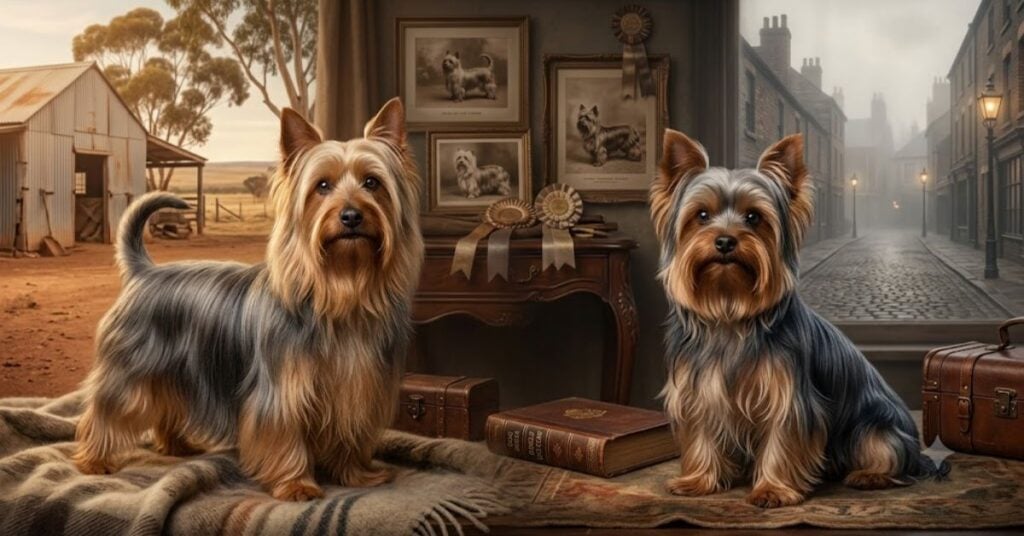
The Yorkshire Terrier’s story starts in the mills and mines of 19th-century Northern England. Scottish weavers brought small terriers south, and breeders mixed Skye, Dandie Dinmont, and Maltese bloodlines to create a fearless little ratter that could squeeze into tight factory spaces.
A show dog named Huddersfield Ben, introduced in 1865, became the foundation sire recognized as the father of the modern Yorkie.
The Australian Silky Terrier has a more recent history. English settlers brought their Yorkies to Australia, where breeders crossed them with the native Australian Terrier, along with some Cairn, Dandie Dinmont, and Skye Terrier influence.
The goal was a dog tough enough for Australian conditions but still small enough to be a household companion.
For decades, Yorkies, Silkies, and Australian Terriers were interbred without a clear line between them.
That changed in 1929, when Australian breed clubs discouraged further crossbreeding and renamed the breed the Australian Silky Terrier to reflect its now-distinct identity.
The American Kennel Club recognizes that the Australian Silky Terrier descends from crosses between the Yorkshire Terrier and the Australian Terrier, and this shared lineage is exactly why the two breeds still look so alike today.
The AKC accepted the Yorkshire Terrier in 1885, while the Silky Terrier gained official AKC recognition much later, in 1959. Yorkshire Terrier Info Center
Understanding this shared ancestry helps explain almost every similarity and difference covered in the rest of this guide, from coat texture to temperament quirks.
[Multimedia placeholder: historical timeline graphic showing Yorkie-to-Silky Terrier breed development]
Australian Silky Terrier and a Yorkie|Size and Physical Appearance
Size is the fastest way to tell these breeds apart in person. Yorkies stay noticeably smaller and more delicate, while Silky Terriers carry more bone, muscle, and overall body length.
Neither breed is large by any standard, but the difference is easy to feel when you pick each one up.
Coat length also differs slightly. Yorkie coats typically reach the floor, or are kept with a signature top knot to keep hair from covering the eyes. Silky Terrier coats are usually parted down the center but sit a bit shorter, not quite touching the ground.
Head shape offers another clue. The Silky Terrier has a wedge-shaped head with a longer muzzle, while the Yorkie’s head is more compact and rounded.
Ear shape differs too, with Silky ears appearing larger and more V-shaped compared to a Yorkie’s smaller, more triangular ears.
| Feature | Australian Silky Terrier | Yorkshire Terrier (Yorkie) |
| Weight | 8–11 lbs | 4–7 lbs |
| Height | 9–10 inches | 7–8 inches |
| Body Build | Sturdier, more muscular | Compact, daintier |
| Coat Length | Parted, doesn’t reach floor | Long, often floor-length |
| Head Shape | Wedge-shaped, longer muzzle | Rounded, compact |
| Ear Shape | Larger, V-shaped | Smaller, triangular |
| AKC Group | Terrier Group | Toy Group |
For families deciding between a Chihuahua-sized companion and something with a bit more sturdiness, it helps to compare against other small hybrids too, such as the Chihuahua Yorkie mix, which blends similar traits into a different-sized package.
[Multimedia placeholder: comparison graphic showing side-view silhouettes of both breeds at actual size]
Australian Silky Terrier and a Yorkie|Temperament and Personality
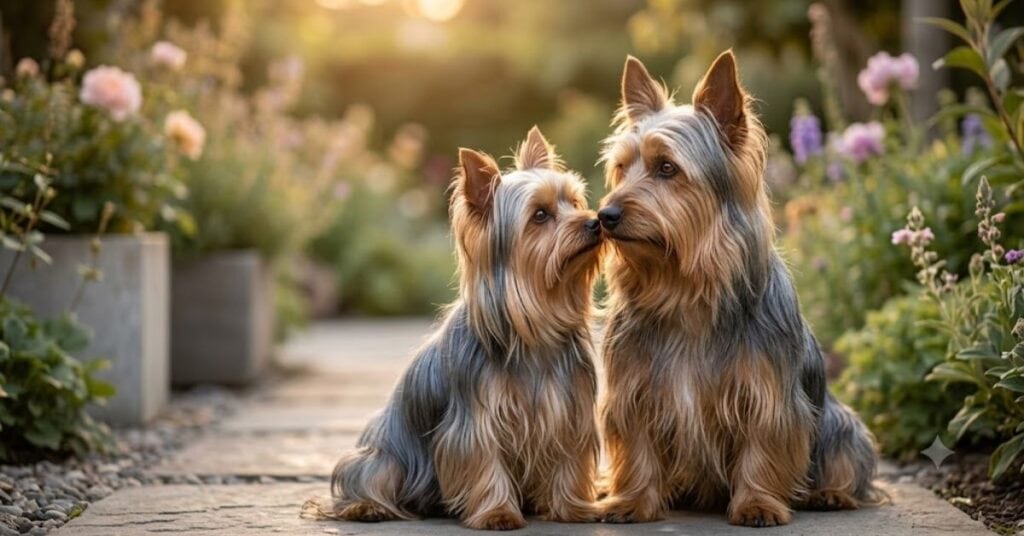
Both breeds inherited real terrier confidence, but the way that confidence shows up differs. Yorkies bond intensely with one primary person and often struggle with separation anxiety when left alone too long. They tend to be vocal, alert watchdogs who announce every doorbell and passing car.
Silky Terriers carry more of their working-terrier instinct. They show higher prey drive, more curiosity about digging and chasing, and slightly more comfort with independence. This makes them a good match for owners who cannot be home every hour of the day.
Neither breed does well with rough handling. Both are small enough to get injured by boisterous toddlers, so families with very young children should supervise closely regardless of which breed they choose. Older, gentler children tend to do well with both.
Socialization early in puppyhood makes a major difference for both breeds. Exposure to new people, sounds, and situations before 16 weeks helps prevent the excessive barking and stranger wariness that toy terriers can develop without it.
Positive reinforcement training works far better than harsh correction for either breed’s sensitive, strong-willed nature.
Australian Silky Terrier and a Yorkie|Grooming and Coat Care Needs
Grooming is where the two breeds demand the most attention, and it’s often the deciding factor for busy owners. Both coats are single-layered and shed minimally, but both mat easily without a consistent routine.
Silky Terrier Grooming Routine
The Silky Terrier’s coat sits shorter than a show-length Yorkie’s, which makes daily upkeep slightly more manageable for most pet owners.
- Brush 3 to 4 times per week with a pin or slicker brush
- Bathe every 3 to 4 weeks using a gentle, pH-balanced dog shampoo
- Trim the coat every 6 to 8 weeks to maintain a neat pet-cut length
- Check ears weekly and trim nails every 2 to 3 weeks
Australian Silky Terrier and a Yorkie| Grooming Routine
Yorkies kept in a long, show-style coat require daily attention, though many pet owners choose a shorter cut to reduce maintenance.
- Brush daily if keeping the coat long; 3 times weekly for a short cut
- Bathe every 3 to 4 weeks with a gentle shampoo made for sensitive skin
- Trim every 6 to 8 weeks, especially around the eyes, paws, and ears
- Re-tie the signature top-knot daily to keep hair out of the eyes
Owners who prefer a low-maintenance look often choose the Yorkie puppy cut, which keeps hair short and even across the whole body and cuts grooming time significantly.
According to ASPCA grooming guidance, dogs with long, silky coats like Yorkshire Terriers need daily brushing, starting with a slicker brush to remove tangles before smoothing the coat with a bristle brush. This advice applies equally well to Silky Terriers kept in a longer coat. ASPCA
[Multimedia placeholder: grooming flowchart showing weekly brushing and monthly bathing schedule for both breeds]
Australian Silky Terrier and a Yorkie|Health and Lifespan

Because they share so much genetic history, Silky Terriers and Yorkies face similar health risks. Both are prone to dental disease due to their small jaws, luxating patella (a slipped kneecap), tracheal collapse, and portosystemic shunt, a liver condition more common in toy breeds.
Yorkies also carry a higher known risk for hypoglycemia in puppyhood, since their tiny bodies burn through blood sugar quickly. Silky Terriers show a somewhat higher rate of allergies and skin sensitivities, partly linked to their Australian Terrier ancestry.
Both breeds are generally long-lived for dogs their size. With consistent veterinary care, dental cleanings, and a quality diet, both commonly reach 12 to 16 years, and some individuals live even longer.
Australian Silky Terrier and a Yorkie| Small-Breed Health Monitoring Checklist
Use this quick monthly scale to catch problems early in either breed:
- Teeth and gums checked for tartar buildup or bad breath
- Kneecaps checked for clicking, skipping, or limping during walks
- Weight tracked to catch sudden gain or loss
- Coughing or gagging sounds noted (early tracheal collapse sign)
- Energy level and appetite compared to the previous month
- Annual vet checkup and bloodwork scheduled
For families weighing lifespan as a deciding factor, the Yorkie life expectancy guide breaks down the exact factors that add or subtract years from a toy terrier’s life.
Australian Silky Terrier and a Yorkie|Training and Exercise Needs
Both breeds are intelligent and food-motivated, which makes them trainable with the right approach.
Short, consistent sessions work far better than long ones, since both breeds lose focus quickly and respond poorly to repetition-heavy drilling.
Yorkies can be a bit more stubborn about housebreaking, often needing crate training and a strict potty schedule for the first several months.
Silky Terriers usually pick up commands a touch faster, thanks to their working-terrier problem-solving instinct, though that same instinct can lead to selective listening around interesting smells.
Exercise needs are modest for both. A daily 20 to 30 minute walk plus some indoor play covers most of their physical needs.
Silky Terriers generally need a bit more mental stimulation, such as puzzle toys or scent games, to keep their terrier brain satisfied and prevent digging or chewing habits from developing.
Leash manners matter more than most owners expect with both breeds. Their small size makes them vulnerable around larger dogs, so early leash training and careful supervision at dog parks protect against accidental injury.
Australian Silky Terrier and a Yorkie|Nutrition and Feeding Requirements
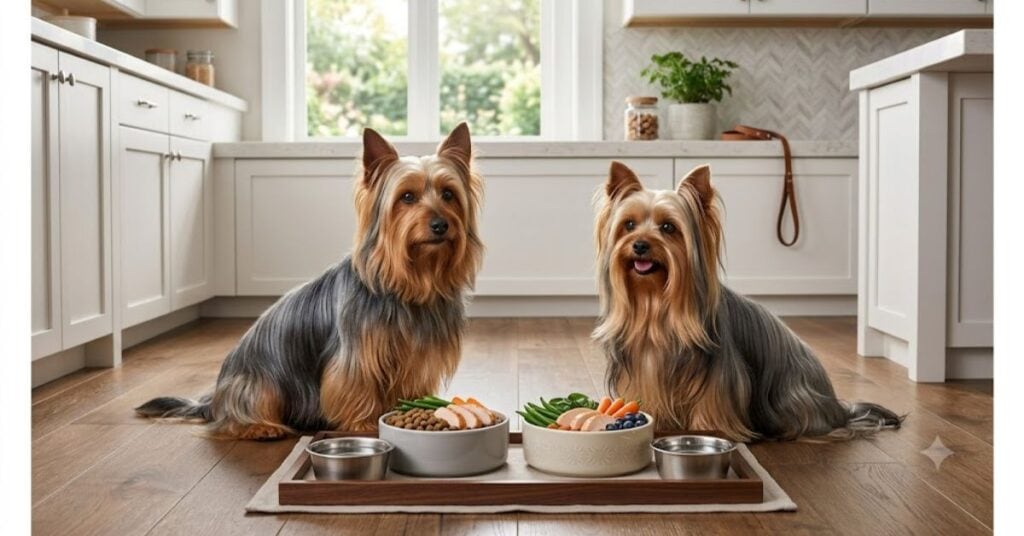
Toy breeds burn calories fast and have small stomachs, so both the Silky Terrier and the Yorkie do best on nutrient-dense, small-kibble formulas designed for toy or small breeds. Overfeeding is a common mistake, since even a few extra treats can push these dogs toward obesity quickly.
Look for a food listing real meat as the first ingredient, with controlled fat content and added joint support for aging toy breeds. Puppies of both breeds need frequent small meals to prevent the hypoglycemia risk mentioned earlier.
| Life Stage | Meals Per Day | Daily Calories (approx.) | Key Nutrition Focus |
| Puppy (2–4 months) | 4 meals | 200–250 kcal | Small kibble, frequent feeding |
| Puppy (4–12 months) | 3 meals | 250–300 kcal | DHA for brain development |
| Adult (1–7 years) | 2 meals | 300–400 kcal | Lean protein, joint support |
| Senior (7+ years) | 2 meals | 250–350 kcal | Lower fat, dental-friendly kibble |
Portion sizes should always be adjusted based on the individual dog’s weight, activity level, and vet recommendations rather than the numbers on a bag alone.
The ASPCA advises checking dedicated nutrition guidance to keep dogs of any life stage healthy, and this is especially true for toy breeds where even small overfeeding adds up fast.
Owners exploring other easy-to-feed small companions sometimes also look at the Yorkie Poo puppies guide, which covers feeding needs for a closely related low-shedding hybrid.
Which Breed Fits Your Lifestyle? Australian Silky Terrier and a Yorkie
Choosing between these two toy terriers comes down to daily routine more than looks. A Yorkie suits an owner who works from home or wants a dog glued to their side all day.
A Silky Terrier suits someone who wants a slightly more independent, resilient companion that still loves affection on its own terms.
Do’s and Don’ts for Silky Terrier and Yorkie Owners
| Do | Don’t |
| Brush the coat several times weekly, even if trimmed short | Skip grooming for weeks and expect no mats |
| Use a harness instead of a collar to protect the trachea | Pull on the leash or collar during walks |
| Feed measured, small-breed portions | Free-feed or overuse high-calorie treats |
| Socialize puppies early with people and other dogs | Isolate the dog to reduce barking complaints |
| Schedule dental cleanings regularly | Ignore early dental disease symptoms |
Households with cats or larger dogs generally do fine with either breed, provided introductions happen slowly and are supervised. Apartment living suits both breeds well, since their exercise needs stay modest.
If a Silky Terrier’s higher energy feels like too much, or a Yorkie’s clinginess feels overwhelming, the Maltese Yorkie mix, known as the Morkie, offers a gentler middle ground worth considering.
[Multimedia placeholder: YouTube video thumbnail “Silky Terrier vs Yorkie: Which Toy Terrier Fits Your Home?”]
Frequently Asked Questions
Is an Australian Silky Terrier the same as a Yorkie?
No. They share ancestry and a similar coat, but the Silky Terrier is a distinct, sturdier breed developed in Australia. Yorkies stay smaller and lighter, while Silkies carry more bone and muscle, and each has its own AKC breed standard.
Which breed sheds less, the Silky Terrier or the Yorkie?
Both breeds shed minimally since their coat grows like human hair instead of shedding seasonally. Neither is truly hypoallergenic, but both work well for owners sensitive to heavy-shedding breeds, provided regular grooming continues.
Are Silky Terriers more aggressive than Yorkies?
Silky Terriers are not more aggressive, but they show stronger prey drive and independence from their working-terrier ancestry. Yorkies can become more reactive due to separation anxiety and over-attachment to one person if not properly socialized.
Which breed is better for first-time dog owners?
Yorkies often suit first-time owners better because of their smaller size and strong desire for companionship. Silky Terriers can also work well, but their independent streak and higher energy benefit from an owner with some small-breed training experience.
Do Silky Terriers and Yorkies get along with other dogs?
Yes, both breeds generally get along with other dogs when properly socialized as puppies. Early exposure to different sizes and temperaments prevents the small-dog wariness that can develop in toy breeds raised without it.
Conclusion
The Australian Silky Terrier vs Yorkie comparison really comes down to size, independence, and grooming commitment rather than one breed being objectively better than the other. Yorkies offer a tinier, more devoted lap companion, while Silky Terriers bring a sturdier body and a touch more terrier grit and self-sufficiency.
Both breeds reward consistent grooming, early socialization, and a nutrient-dense small-breed diet with 12 to 16 years of loyal companionship. Neither is a low-maintenance breed, but both are manageable for owners willing to commit to regular brushing and vet care.
Before bringing either breed home, spend time with both if possible. Visit a breeder or rescue with dogs of each type, and pay attention to which personality naturally pulls at your heart. Whichever you choose, you’re getting a small dog with a genuinely big personality.
Multimedia Placement Suggestions
- Featured image: side-by-side breed comparison photo, top of article
- Grooming flowchart: within the Grooming and Coat Care section
- Comparison graphic: within the Size and Physical Appearance section
- YouTube video thumbnail: within the Which Breed Fits Your Lifestyle section
Internal links used
- Chihuahua Yorkie Mix (Chorkie) — Size and Appearance section
- Yorkie Puppy Cut — Grooming section
- Yorkie Life Expectancy — Health section
- Yorkie Poo Puppies — Nutrition section
- Maltese Yorkie Mix (Morkie) — Lifestyle section
External links used (2):
- AKC — Yorkshire Terrier vs Silky Terrier (breed history)
- ASPCA — Dog Grooming Tips (grooming section)
Social Media Caption
🐾 Australian Silky Terrier vs Yorkie: can you actually tell them apart? 👀 These two toy terriers share the same glamorous coat, but their size, temperament, and energy are worlds apart. Swipe to see which one fits YOUR lifestyle! 🐶✨
#SilkyTerrier #YorkshireTerrier #YorkieVsSilky #ToyTerrier #SmallDogBreeds #ChihuahuaNest #DogGroomingTips #DogBreedComparison
Schema Markup Recommendations
- Article schema — headline, author (Gulnaz Malik), datePublished, image
- FAQPage schema — all 5 FAQ Q&A pairs
- BreadcrumbList schema — Home > Yorkie & Yorkie Mixes > Australian Silky Terrier vs Yorkie