

Quick Answer
The Pekingese Chihuahua Mix, often called a Peke-A-Chi, is a small companion dog created by crossing a Pekingese with a Chihuahua. It can be affectionate, alert, confident, and playful. Adult size varies, but many remain under 15 pounds. Coat type, grooming needs, personality, and health risks are determined by inherited traits.
Author Box
Author: Gulnaz Malik
Role: Publisher & Pet Care Expert
Experience: 5+ Years in Dog Care & Dog Grooming
Content Review: Veterinary-reviewed content approach based on trusted canine care resources and practical pet care experience.
Introduction
The Pekingese Chihuahua Mix is a small dog with a surprisingly strong personality. This hybrid combines characteristics from the dignified Pekingese and the alert, confident Chihuahua. Depending on which parent’s traits dominate, a Peke-A-Chi may have a short coat, a longer, flowing coat, a flatter face, or a more Chihuahua-like muzzle.
Many people choose this mix because it can adapt well to smaller homes. However, its tiny size does not mean it needs little care. A Pekingese Chihuahua Mix still needs appropriate nutrition, exercise, grooming, dental care, training, socialization, and routine veterinary attention.
This mix can also be independent. Some dogs become very attached to one person, while others enjoy attention from the entire family. Early socialization helps them become more comfortable around visitors, children, other dogs, and unfamiliar environments.
Another important consideration involves physical structure. Pekingese can have shortened facial features, while Chihuahuas can have delicate bodies and dental concerns. A puppy may inherit some of these characteristics from either parent.
This complete Pekingese Chihuahua Mix guide covers its size, appearance, temperament, exercise, grooming, nutrition, training, health concerns, and everyday care. It also gives you practical checklists to help you decide whether this little companion is right for your home.
Pekingese Chihuahua Mix Appearance, Size, and Lifespan

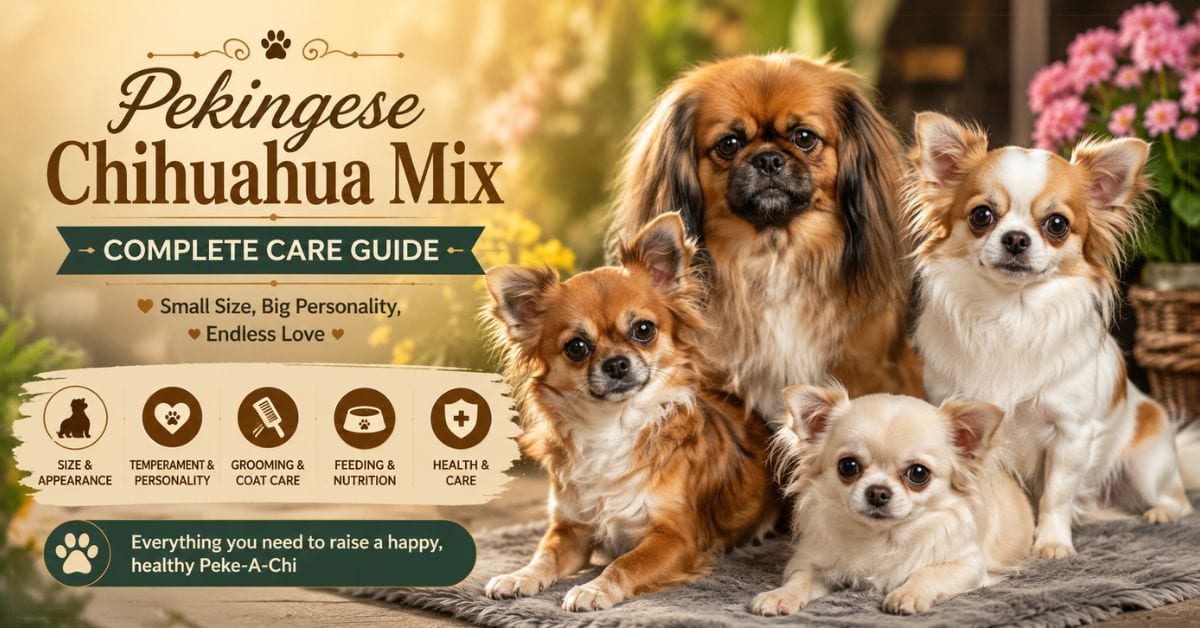
The Pekingese Chihuahua Mix does not have one standardized appearance. Because it combines two different breeds, puppies from the same litter can look surprisingly different.
Some Peke-A-Chis have the rounder head and shorter facial structure associated with the Pekingese. Others have a more pointed Chihuahua-like face. Ears may stand upright, fold over, or fall somewhere between the two.
The coat also varies. A puppy with stronger Pekingese traits may develop a dense, longer coat. Another puppy may inherit a shorter Chihuahua-like coat that needs less brushing.
| Feature | Typical Pekingese Chihuahua Mix Traits |
| Common name | Peke-A-Chi |
| Adult weight | Often around 5–15 pounds |
| Approximate height | About 6–12 inches |
| Coat | Short, medium, long, smooth, or fluffy |
| Coat colors | White, cream, black, brown, tan, fawn, or combinations |
| Ears | Upright, dropped, or semi-folded |
| Body | Compact and small |
| Lifespan | Often around 10–15 years |
These ranges are estimates rather than breed standards. Genetics can produce dogs outside these measurements.
Weight management becomes particularly important as the dog ages. A few extra pounds can make a major difference in a tiny dog’s body. Excess weight can increase stress on the joints and make activity more difficult.
The Pekingese Chihuahua Mix lifespan depends on many factors, including genetics, preventive healthcare, nutrition, dental care, exercise, body weight, and environmental safety.
Owners should also consider the dog’s facial structure. If your Pekinese has a very short muzzle, watch carefully for breathing difficulty, overheating, or reduced exercise tolerance.
The best way to understand your individual dog’s expected adult size and health needs is to monitor growth with your veterinarian rather than relying only on averages.
Pekingese Chihuahua Mix Temperament and Personality
The Pekingese Chihuahua Mix often has a confident personality that seems much bigger than its body. Both parent breeds can form strong bonds with their owners, so a Peke-A-Chi may enjoy staying close to its favorite person.
Many are affectionate and enjoy cuddling. However, this mix may also have an independent side. Some dogs want attention on their own terms and may become irritated when handled too much.
A Peke-A-Chi can also become very alert to sounds around the home. Doorbells, visitors, traffic, other dogs, and unfamiliar noises may trigger barking.
If barking becomes a problem, understanding the cause matters more than simply telling the dog to stop. Your Peke-A-Chi may be responding to fear, excitement, territorial behavior, frustration, or a desire for attention. ChihuahuaNest’s guide on Chihuahua Barking Noises provides additional information about different barking patterns and training approaches.
Common Personality Traits
- Affectionate with familiar people
- Alert and observant
- Confident despite its small size
- Playful in short sessions
- Sometimes stubborn or independent
- Potentially protective
- Sensitive to harsh correction
- Capable of becoming strongly attached to its owner
Early socialization can prevent many behavioral problems. Introduce your puppy gradually to different people, friendly dogs, household sounds, surfaces, and safe environments.
Never assume that a tiny dog can automatically handle children. Young children may accidentally drop, squeeze, chase, or step on a small dog.
A Peke-A-Chi may do well with older children who understand gentle handling. Supervision remains important.
The same applies to other pets. Calm introductions and supervised interactions give the dog time to adjust instead of forcing immediate contact.
Pekingese Chihuahua Mix Exercise and Daily Activity Needs

A Pekingese-Chihuahua mix usually does not need intense exercise. However, it still needs regular movement and mental stimulation to maintain healthy behavior and body weight.
Short walks can provide physical activity and exposure to the outside world. Indoor games can provide additional exercise when the weather is too hot, cold, or unpleasant.
The dog’s individual energy level matters. One Pekinese may be satisfied after a short walk, while another may want several play sessions throughout the day.
A Practical Daily Activity Schedule
- Morning: 10–15 minute gentle walk
- Midday: 5–10 minutes of indoor play
- Afternoon: Short training or puzzle session
- Evening: Another gentle walk or supervised play
- Night: Calm interaction and bathroom break
Mental stimulation is especially useful for dogs that become bored easily. Food puzzles, scent games, basic obedience exercises, and safe interactive toys can give the dog a job to do.
Avoid forcing a small dog to run for long periods. This becomes even more important if the dog has a shortened muzzle or shows poor heat tolerance.
Hot weather requires extra care. A small dog with a dense coat or short muzzle may overheat more quickly than expected. Offer fresh water and schedule outdoor activity during cooler parts of the day.
Watch for warning signs such as excessive panting, weakness, confusion, unusual drooling, reluctance to continue, or breathing difficulty.
A secure yard can provide useful play space, but fencing must be appropriate for a very small dog. Tiny dogs can escape through surprisingly narrow openings.
For another example of how a small Chihuahua mix can combine exercise and mental stimulation needs, see ChihuahuaNest’s Dachshund Mixed Chihuahua Complete Breed Guide. That guide also discusses short walks, interactive play, puzzle toys, and training for a small hybrid dog.
Pekingese Chihuahua Mix Grooming and Coat Care
Grooming needs depend on the coat your Pekinese inherits.
A short-coated dog may only need occasional brushing, while a long-coated Pekingese Chihuahua Mix can require brushing several times a week.
Long hair can develop tangles around the ears, chest, legs, belly, and tail. Regular brushing prevents small tangles from becoming painful mats.
Weekly Grooming Routine
- Brush the coat according to its length and texture.
- Check the ears for redness, dirt, odor, or discharge.
- Inspect the eyes for unusual discharge.
- Brush the teeth with dog-safe toothpaste.
- Check nails and paw pads.
- Look through the coat for parasites or skin irritation.
- Bathe when necessary with a dog-safe shampoo.
Dental care deserves special attention. Small dogs commonly need careful dental maintenance because their teeth can become crowded in a small mouth.
Daily tooth brushing is ideal. If your dog is not used to it, start slowly by allowing it to taste dog-safe toothpaste and gradually introducing the toothbrush.
Never use human toothpaste unless your veterinarian specifically confirms that a product is safe for your dog.
Nail care also matters. Long nails can change the way a dog walks and may contribute to discomfort.
If your Peke-A-Chi becomes frightened during grooming, do not force long sessions. Break grooming into short steps and reward calm behavior.
Coat maintenance can vary dramatically among Chihuahua mixes. ChihuahuaNest’s Jack Russell Terrier Chihuahua Mix care guide is another useful example of how coat characteristics and general grooming needs can vary among small hybrids.
Pekingese Chihuahua Mix Feeding and Nutrition

A healthy diet helps support the Pekingese Chihuahua Mix throughout puppyhood, adulthood, and senior years.
The right amount of food depends on age, body size, activity level, reproductive status, health, and the calorie density of the food.
Because this is a small dog, portions can become excessive quickly. Treats that seem tiny to an owner may represent a significant number of daily calories for a toy-sized dog.
Puppies need nutrition formulated for growth. Adult dogs generally need a complete and balanced adult diet. Senior dogs may require dietary adjustments based on their health and veterinary advice.
| Life Stage | Main Nutrition Goal | Owner Priority |
| Puppy | Growth and development | Appropriate puppy food and measured meals |
| Adult | Healthy body condition | Portion control and balanced nutrition |
| Senior | Support changing needs | Weight monitoring and veterinary guidance |
| Overweight | Gradual healthy weight reduction | Controlled calories and professional advice |
Treats should remain a small part of the overall diet. Use tiny treats during training and count them toward daily calorie intake.
Fresh water should always be available.
When changing food, transition gradually unless your veterinarian recommends a different approach. Sudden changes can cause digestive upset.
Do not automatically choose a diet because it is marketed specifically for “small dogs.” Look at the nutritional adequacy statement, life-stage suitability, ingredients, calories, and your dog’s individual needs.
Dogs with allergies, digestive problems, dental disease, obesity, or other medical conditions may need a customized feeding plan.
A veterinarian can help determine appropriate portions and monitor body condition.
Pekingese Chihuahua Mix Training and Socialization
Training a Pekingese-Chihuahua mix requires consistency and patience.
This mix can be intelligent but independent. If training feels repetitive or confusing, the dog may lose interest.
Positive reinforcement works well. Reward desired behavior with a tiny treat, praise, play, or another reward your dog values.
Start with simple commands such as name recognition, sit, stay, come, leave it, and gentle handling.
House training can take longer than owners expect because small dogs have small bladders. Frequent bathroom opportunities and a predictable routine can make the process easier.
Essential Training Priorities
- Teach the dog’s name.
- Reward calm behavior around visitors.
- Practice gentle handling.
- Introduce new environments gradually.
- Teach leash walking.
- Practice a reliable recall.
- Prevent excessive barking through reward-based training.
- Keep sessions short and positive.
Socialization is just as important as obedience.
Expose the puppy gradually to safe experiences rather than overwhelming it. A confident puppy learns that unfamiliar people, sounds, dogs, and places do not automatically represent danger.
Never use physical punishment or repeated yelling. Harsh methods can increase fear and may make defensive behavior worse.
Small dogs sometimes receive less training because owners consider unwanted behavior “cute.” Allowing persistent barking, snapping, jumping, or resource guarding can make those behaviors harder to change later.
Other Chihuahua mixes show similar training patterns. ChihuahuaNest’s Jack Russell and Chihuahua Mix guide discusses the combination of small size, intelligence, energy, and the need for consistent training.
Pekingese Chihuahua Mix Health Problems and Veterinary Care

The Pekingese Chihuahua Mix can be a healthy companion, but mixed breeding does not guarantee freedom from inherited health problems.
Potential concerns depend on the individual dog’s genetics and physical structure.
Small dogs can experience dental disease, patellar luxation, eye problems, obesity, heart conditions, and other health issues.
Dogs that inherit a very short facial structure may also have increased concern around heat and breathing. Owners should monitor exercise tolerance rather than assuming that a small dog is automatically comfortable in warm weather.
Dental health deserves ongoing attention. Bad breath, difficulty chewing, dropping food, excessive drooling, or visible dental buildup should not be ignored.
Patellar luxation can affect small dogs and may cause intermittent limping or an unusual skipping gait.
Regular veterinary examinations allow problems to be identified earlier. Your veterinarian can recommend vaccinations, parasite prevention, dental care, weight management, and screening based on your dog’s age and individual risk.
For additional general canine health guidance, consult the American Veterinary Medical Association (AVMA) and the American Kennel Club (AKC).
Peke-A-Chi Health Monitoring Scale
Green — Normal
- Normal appetite
- Normal energy
- Comfortable breathing
- Normal stool
- Healthy skin and coat
- Normal walking
- Usual behavior
Yellow — Monitor
- Mild appetite change
- Increased scratching
- New bad breath
- Occasional limping
- Unusual tiredness
- Change in behavior
If a yellow-level change continues or worsens, contact your veterinarian.
Red — Veterinary Attention
- Breathing difficulty
- Collapse
- Severe pain
- Repeated vomiting
- Seizure
- Inability to walk normally
- Sudden severe weakness
This scale is an observation framework, not a veterinary diagnosis.
Pekingese Chihuahua Mix Care Checklist and Common Mistakes
Consistent daily habits can make Peke-A-Chi care much easier.
Weekly Care Checklist
- Check your dog’s body condition.
- Brush the coat.
- Inspect ears and eyes.
- Check paws and nails.
- Brush teeth regularly.
- Wash bedding.
- Look for skin irritation or unusual lumps.
- Check appetite and water intake.
- Notice changes in stool.
- Observe energy and behavior.
Avoid overfeeding because the dog looks small or hungry. Follow measured portions and monitor body condition.
Another common mistake involves carrying the dog everywhere. A healthy Pekinese still needs safe opportunities to walk, explore, sniff, and exercise.
Do not allow unsafe jumping from high furniture. A small dog can injure itself during a fall.
Do’s and Don’ts
Do:
- Provide regular gentle exercise.
- Use positive reinforcement.
- Socialize early.
- Maintain dental hygiene.
- Keep the dog at a healthy weight.
- Schedule routine veterinary examinations.
- Supervise interactions with children and larger dogs.
Don’t:
- Overfeed treats.
- Ignore breathing problems.
- Use human medication without veterinary advice.
- Punish fear or barking harshly.
- Force grooming when the dog is frightened.
- Allow unsupervised play with much larger animals.
- Assume a small dog does not need training.
Is a Pekingese Chihuahua Mix a Good Family Dog?

A Pekingese Chihuahua Mix can be a wonderful companion when its needs match the household.
Its small size makes it suitable for apartments and other smaller living spaces. However, owners still need to provide exercise, mental stimulation, grooming, training, and social interaction.
This mix can suit adults, couples, seniors, and families with older children who understand how to handle a small dog.
Homes with very young children require extra caution. A toddler may unintentionally hurt a tiny dog during normal play.
The dog’s individual personality also matters. Some Peke-A-Chis are outgoing and social, while others prefer one or two trusted people.
Before adopting or purchasing one, spend time observing the dog’s behavior. Look for comfortable body language, curiosity, appropriate interaction, and recovery from unfamiliar sounds or situations.
If you are comparing this mix with other Chihuahua hybrids, ChihuahuaNest’s Pomeranian Chihuahua Mix guide offers another example of a small Chihuahua hybrid with different coat, temperament, and care characteristics.
Responsible breeders should discuss the health and temperament of the parent dogs. Rescue organizations can also provide valuable information about an adult dog’s personality and medical history.
The right Peke-A-Chi is not simply the smallest or cutest puppy. The best match is a dog whose personality, care requirements, activity level, and grooming needs fit your lifestyle.
Frequently Asked Questions
Is a Pekingese-Chihuahua mix a good family dog?
Yes, a Pekingese Chihuahua Mix can be a loving family companion when owners provide gentle handling, training, socialization, and appropriate care. It can work well with older children who understand how to interact safely with small dogs. Families with toddlers should provide close supervision because this mix can be physically fragile.
How big does a Pekingese Chihuahua Mix get?
Most Pekingese Chihuahua Mix dogs remain small, often weighing around 5–15 pounds and standing approximately 6–12 inches tall. However, these numbers are only general estimates. Individual puppies can become larger or smaller depending on genetics, parent size, nutrition, health, and overall development.
Does a Pekingese Chihuahua Mix shed a lot?
Shedding varies according to the coat inherited from each parent. A dog with a longer, denser Pekingese-type coat may shed more and require frequent brushing. A short-coated Pekinese generally needs less grooming. Regular brushing helps remove loose hair and prevent tangles.
What health problems can a Pekingese Chihuahua Mix have?
Potential health concerns include dental disease, patellar luxation, eye problems, obesity, heart conditions, and breathing problems in dogs with shortened facial structures. Not every Peke-A-Chi will develop these conditions. Regular veterinary care, healthy weight management, dental hygiene, and safe exercise support long-term health.
How much exercise does a Pekingese Chihuahua Mix need?
A Pekingese Chihuahua Mix usually does well with short daily walks, indoor play, and brief training sessions. It does not normally need intense exercise. Owners should adjust activity according to age, health, weather, and individual energy. Dogs with breathing difficulties should receive veterinary guidance about exercise.
Conclusion
The Pekingese Chihuahua Mix is a small companion dog with a big personality. Its combination of Pekingese and Chihuahua traits can produce an affectionate, alert, playful, and confident pet.
However, every Peke-A-Chi is different. Coat type, adult size, facial structure, energy level, and temperament can vary significantly from one dog to another.
Good care starts with the basics: balanced nutrition, healthy weight management, regular grooming, dental hygiene, safe exercise, positive training, and early socialization.
Owners should also pay attention to breathing, walking ability, appetite, behavior, and other changes that could signal a health problem. Small dogs deserve the same careful preventive healthcare as larger breeds.
Before bringing home a Pekingese Chihuahua Mix, think beyond appearance. Consider whether you can provide the time needed for grooming, training, companionship, veterinary care, and safe exercise.
With the right environment, this little hybrid can become a devoted and entertaining member of the family. Give your Peke-A-Chi consistent boundaries, gentle handling, appropriate nutrition, and plenty of positive interaction, and you can help it enjoy a healthier and happier life.
Multimedia Placement Suggestions
Featured Image:
Place a 1200 × 628 image of a Pekingese Chihuahua Mix in a bright, clean home environment.
Grooming Infographic:
Show short-coat versus long-coat grooming requirements and a weekly grooming schedule.
Comparison Graphic:
Compare Pekingese, Chihuahua, and Pekingese Chihuahua Mix characteristics.
Before & After Image:
Show a long-coated Pekinese before and after professional grooming.
YouTube Thumbnail:
Use the headline “Pekingese Chihuahua Mix Complete Care Guide” with a clear image of the dog.
Pinterest Image:
Create a vertical infographic featuring Peke-A-Chi size, temperament, grooming, feeding, training, and health tips.
Tags
Pekingese Chihuahua Mix, Peke-A-Chi, Chihuahua Mix, Pekingese Mix, Chihuahua Pekingese Mix, Small Dogs, Small Dog Care, Chihuahua Care, Pekingese Care, Dog Grooming, Dog Training, Dog Health, Toy Dogs
Social Media Caption
Thinking about getting a Pekingese Chihuahua Mix? 🐶❤️ Learn about the Peke-A-Chi’s size, personality, grooming, nutrition, exercise, training, and health needs in this complete care guide.
#PekingeseChihuahuaMix #PekeAChi #ChihuahuaMix #PekingeseMix #SmallDogs #DogCare #DogGrooming
Internal Link Check
Exactly 5 internal links included:
- Chihuahua Barking Noises — temperament/barking section
- Dachshund Mixed Chihuahua — exercise section
- Jack Russell Terrier Chihuahua Mix — grooming section
- Jack Russell and Chihuahua Mix — training section
- Pomeranian Chihuahua Mix — family dog/comparison section
These five pages were verified on ChihuahuaNest.com before placement.
Primary Keywords:
- Pekingese Chihuahua Mix
- Pekingese Chihuahua Mix puppy
- Pekingese Chihuahua Mix dog
Secondary Keywords:
- Peke-A-Chi
- Chihuahua Pekingese mix
- Pekingese Chihuahua hybrid
- Pekingese Chihuahua temperament
- Pekingese Chihuahua size
Related Keywords:
Peke-A-Chi size, Peke-A-Chi weight, Pekingese Chihuahua temperament, Pekingese Chihuahua grooming, Pekingese Chihuahua lifespan, small mixed breed dogs, Chihuahua mix breeds, Pekingese mix, toy dog care, small dog nutrition, puppy socialization, positive reinforcement training, dental care for small dogs, patellar luxation, brachycephalic dogs