

Quik Answer
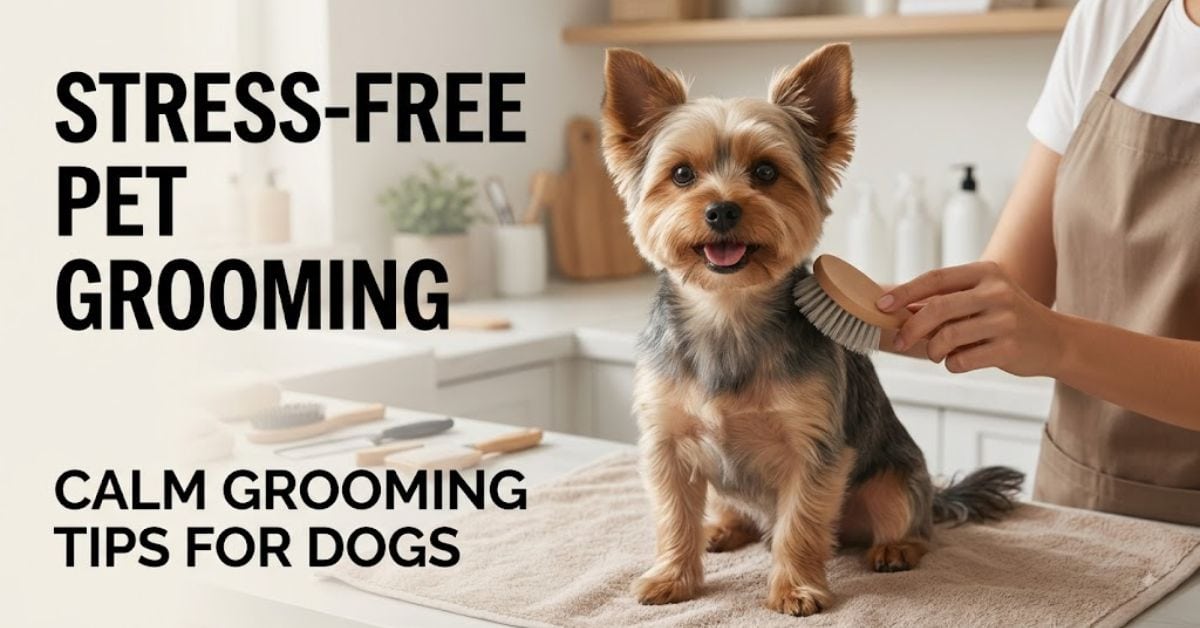
Stress-free pet grooming means using calm handling, gradual desensitization, and positive reinforcement to groom dogs without triggering fear.
Short sessions, gentle tools, treats, and a quiet space help anxious dogs feel safe.
Reading your dog’s body language and stopping before panic sets in builds lasting trust and makes every grooming session easier.
Author Box
Author: Gulnaz Malik Role: Publisher & Pet Care Expert Experience: 5+ Years in Dog Care & Dog Grooming Content Review: Veterinary-reviewed content approach based on trusted canine care resources and practical pet care experience.
Introduction
Stress-free pet grooming starts with understanding why your dog trembles, hides, or growls the moment the brush comes out. Grooming should never feel like a battle, yet for millions of small dog owners, bath time and nail trims turn into stressful standoffs. Your dog is not being stubborn. Fear, past trauma, sensitive skin, or unfamiliar tools often cause the resistance you see.
Chihuahuas and other small breeds are especially prone to grooming anxiety. Their tiny bodies feel vulnerable when restrained, and loud clippers or spraying water can overwhelm their senses quickly. Left unaddressed, this stress builds over time and makes every future session harder.
This guide breaks down exactly how to turn grooming into a calm, even enjoyable, routine. You will learn to spot early stress signals, prepare a soothing environment, choose the right tools, and use proven desensitization steps. By the end, you will have a practical, repeatable system that keeps your dog relaxed from the first brush stroke to the final nail trim.
WHAT IS STRESS-FREE PET GROOMING?
Stress-free pet grooming is a handling approach that prioritizes your dog’s emotional comfort as much as their physical cleanliness. It combines gentle technique, gradual exposure, and rewards so grooming never feels forced or frightening. The goal is not just a well-groomed coat. It is a dog that stays relaxed throughout the whole process.
This approach differs from traditional grooming, which often focuses only on getting the job done quickly. Traditional methods can involve firm restraint, unfamiliar sounds introduced all at once, and long sessions that overwhelm a nervous dog. Stress-free grooming instead breaks tasks into small, manageable steps.
Veterinary behaviorists increasingly recommend this method because repeated stressful grooming experiences can create lasting fear responses. A dog that panics during one nail trim may associate the entire grooming process with danger, making every future session progressively harder.
The core principles include reading canine body language, keeping sessions short, pairing tools with positive experiences, and never pushing through visible distress. Owners who commit to this approach usually see noticeable improvement within two to four weeks of consistent practice.
Small dog breeds benefit the most from this method. Their compact size means groomers and owners often have to hold them firmly, which can intensify feelings of being trapped. A slower, trust-based approach respects this vulnerability while still achieving a clean, healthy coat.
WHY GROOMING CAUSES STRESS AND FEAR IN DOGS
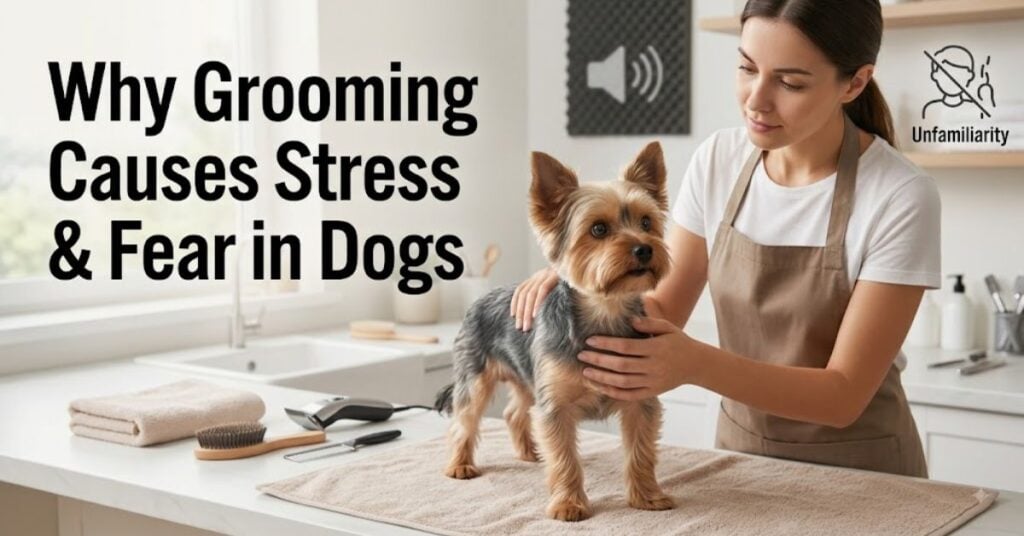
Understanding the root causes of grooming stress helps you address the problem instead of just managing symptoms. Most dogs are not born afraid of brushes or clippers. Fear develops through specific experiences and physical sensitivities.
Loud or vibrating tools rank among the top triggers. Clippers, dryers, and vacuums produce noise and vibration frequencies that many dogs find alarming, especially breeds with sensitive hearing. A sudden buzz near the face can trigger a flight response instantly.
Past negative experiences also play a major role. A rushed nail trim that nicked the quick, a rough bath with cold water, or a groomer who restrained the dog too tightly can create lasting associations. Dogs remember pain and fear far longer than owners realize.
Physical vulnerability contributes as well. Grooming requires holding paws, touching ears, and restricting movement, all of which can feel threatening to a dog that has not been gradually taught these actions are safe. Chihuahuas, with their small frames, often feel this vulnerability more intensely than larger breeds.
Environmental factors matter too. A grooming space near loud appliances, slippery surfaces, or unfamiliar rooms adds extra stress on top of the grooming task itself. Even strong scented shampoos can overwhelm a dog’s sensitive nose and heighten anxiety.
Finally, some dogs are simply more genetically predisposed to anxiety. Nervous or highly sensitive temperaments require extra patience and a slower introduction to grooming tools, regardless of past experience.
SIGNS YOUR DOG IS STRESSED DURING GROOMING
Recognizing stress early lets you pause before fear escalates into panic. Dogs communicate discomfort primarily through body language, and catching these cues early makes stress-free pet grooming far more achievable.
Early Stress Signals
These subtle cues often appear before a dog fully panics. Watching for them lets you slow down or stop before things escalate.
- Lip licking or yawning outside of tiredness
- Ears pinned back or held flat
- Whale eye, where the whites of the eyes become visible
- Stiff, frozen body posture
- Tail tucked tightly between the legs
- Panting without physical exertion
Advanced Stress Signals
If early signals go unaddressed, stress can intensify into more obvious warning signs.
- Trembling or full-body shaking
- Attempts to escape or hide
- Growling, snapping, or air-biting
- Excessive drooling
- Sudden freezing followed by explosive movement
- Vocalizing with whines or yelps
If you notice advanced signals, stop the session immediately. Continuing past this point reinforces the fear rather than resolving it, making future grooming sessions increasingly difficult.
PREPARING A CALM GROOMING ENVIRONMENT
The physical space where grooming happens shapes your dog’s emotional response before you even pick up a brush. A thoughtfully prepared environment removes many stress triggers automatically.
Choose a quiet, familiar room away from washing machines, television noise, or heavy foot traffic. Consistency matters here.
Using the same location every time helps your dog associate that specific space with a predictable, safe routine rather than unpredictable stress.
Non-slip surfaces prevent the sudden loss of footing that often triggers panic in small dogs. A rubber mat or towel on the grooming table or floor gives your dog stable footing and noticeably reduces tension throughout the session.
Temperature control also matters more than most owners realize. Cold water or a chilly room can cause shivering that mimics or worsens anxiety symptoms.
Keep bath water lukewarm and the room comfortably warm, especially for short-coated breeds like Chihuahuas that lose body heat quickly.
Creating a calming retreat nearby gives your dog a psychological safety net. A soft, enclosed resting space, such as a cozy cave dog bed, placed just outside the grooming area lets your dog decompress immediately after each session.
Dogs that know a safe space awaits them often tolerate grooming better because they trust the stress will end soon.
Soft background sounds, like low classical music or white noise, can also mask sudden external noises that might otherwise startle a sensitive dog mid-session.
STEP-BY-STEP STRESS-FREE GROOMING ROUTINE
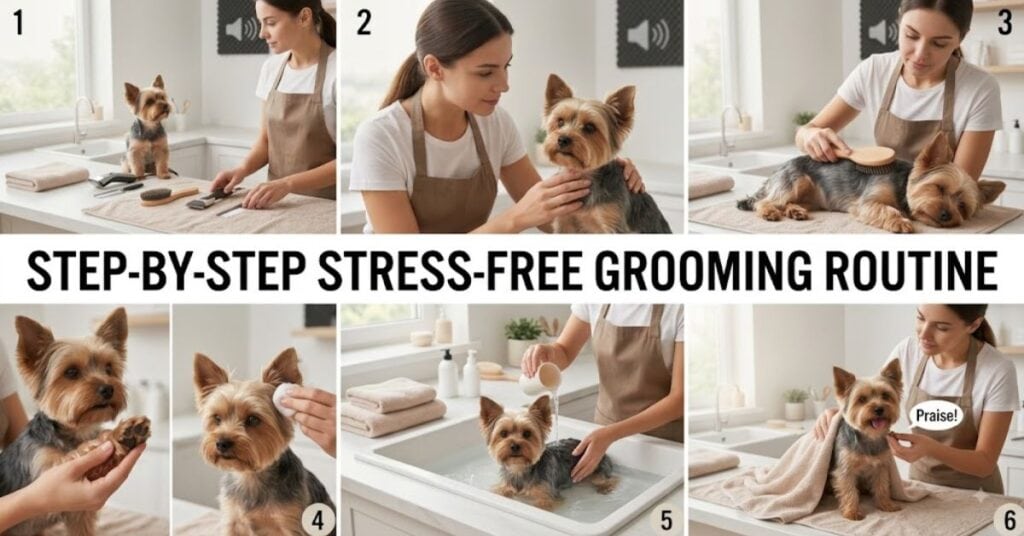
Breaking grooming into a predictable sequence reduces uncertainty, which is one of the biggest drivers of canine anxiety. Following the same order every time helps your dog anticipate what comes next instead of bracing for the unknown.
The Five-Step Routine
This structured approach works for brushing, bathing, and nail trims alike, adjusted slightly for each task.
- Warm-up touch: Spend two to three minutes petting your dog calmly before introducing any tool, reinforcing that this time together starts safely.
- Tool introduction: Let your dog sniff and investigate the brush, clipper, or nail trimmer while it is turned off or still, pairing it with a treat.
- Short exposure: Begin the actual grooming task for only 30 to 60 seconds, focusing on the least sensitive area first, such as the back or shoulders.
- Reward and pause: Stop, offer a treat or praise, and give your dog a short break before continuing to a more sensitive area like paws or ears.
- End on success: Finish the session while your dog is still calm, even if the full groom isn’t complete, rather than pushing through to finish everything at once.
Repeating this five-step structure daily or every other day, even for just a few minutes, builds tolerance far more effectively than one long, forced session. Over two to three weeks, most dogs show measurable improvement in how calmly they accept each step.
BEST TOOLS FOR LOW-STRESS GROOMING AT HOME
The right equipment makes a measurable difference in how your dog experiences grooming. Loud, dull, or poorly designed tools amplify stress, while quiet, sharp, well-fitted tools reduce it significantly.
Quiet, low-vibration clippers matter enormously for coat trimming. Many budget clippers produce a harsh buzzing that startles sensitive dogs the moment they are switched on.
Investing in a quieter model, like the options reviewed in our guide to the best dog clippers, can transform a dreaded task into a manageable one.
Nail trimming deserves special attention because it triggers some of the strongest fear responses in small dogs.
Sharp, well-fitted tools cut nails cleanly in one motion instead of crushing or pulling, which causes pain and lasting fear. Our comparison of the best toenail clippers covers designs suited to small, delicate paws.
Soft-bristle brushes and detangling combs with rounded tips prevent the scratching sensation that makes some dogs flinch away from brushing.
Choose tools sized appropriately for your dog’s coat length and body size rather than reaching for a generic option.
A styptic powder or clotting gel should always be on hand during nail trims. Simply knowing you can quickly stop any accidental bleeding lets you stay calm, and dogs pick up on your composure far more than you might expect.
Finally, non-slip grooming tables or mats, gentle sprayers with adjustable pressure, and unscented or lightly scented shampoos round out a low-stress grooming toolkit that respects your dog’s sensory comfort.
DESENSITIZATION AND POSITIVE REINFORCEMENT TECHNIQUES
Desensitization gradually reduces fear by pairing grooming tools and actions with positive experiences over repeated, low-pressure sessions. This method works because it rewires the emotional association your dog has built around grooming.
Start by rewarding calm behavior around grooming tools even when no grooming is happening. Leave the brush or clipper visible near your dog’s bed, and offer a treat whenever your dog approaches it without fear. This removes the tool’s association with stress entirely.
Counter-conditioning strengthens this further. Every time you touch a sensitive area, like paws or ears, immediately follow with a high-value treat.
Over time, your dog begins to expect something good rather than something scary the moment that area is touched.
A real-world example illustrates how effective this can be. Our detailed case study on a fearful rescue Pomchi, covered in the Pomeranian Chihuahua mix guide, shows how a structured, multi-week exposure plan reduced trembling and reactive behavior significantly through consistent, low-stress repetition.
Consistency across sessions matters more than intensity. Five-minute daily practice sessions build trust far faster than one long weekly session that overwhelms your dog.
Patience during this process pays off with a dog who eventually tolerates, and sometimes even enjoys, grooming.
Never use punishment or forceful restraint during this process. Fear-based corrections increase anxiety and can create new, harder-to-treat trauma responses that undo weeks of progress in a single session.
COMMON GROOMING MISTAKES THAT INCREASE STRESS
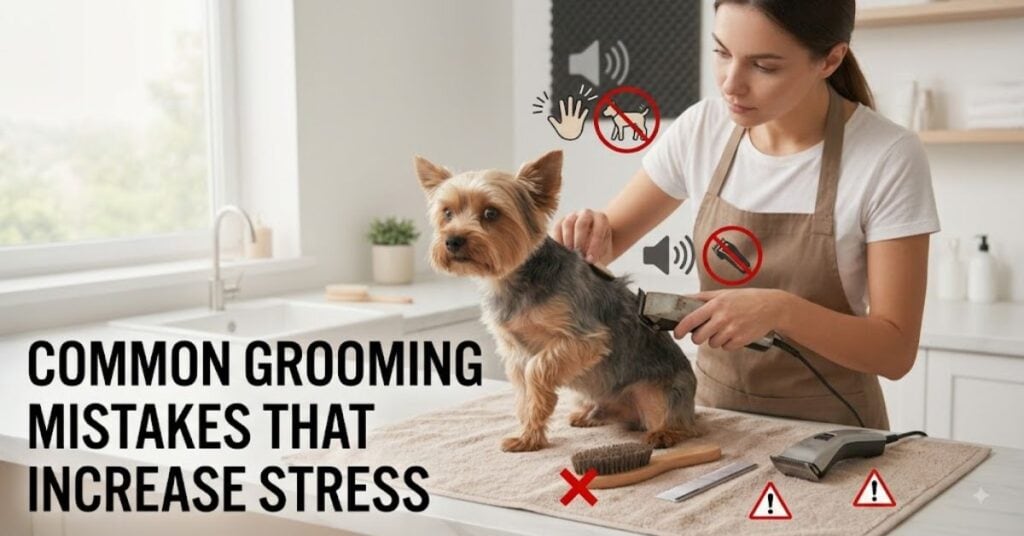
Even well-meaning owners sometimes unintentionally worsen their dog’s grooming anxiety. Avoiding these common mistakes protects the progress you build through desensitization.
Do’s:
- Keep sessions short, especially early in the desensitization process
- Watch body language continuously and stop at early stress signals
- Use high-value treats reserved only for grooming sessions
- Groom during calm times of day, never right after high-energy play
- Praise generously, even for small moments of tolerance
Don’ts:
- Do not restrain your dog forcefully to finish faster
- Do not introduce multiple new tools in a single session
- Do not groom when you are frustrated or rushed, since dogs sense tension
- Do not skip warm-up touch and jump straight into grooming
- Do not punish growling or flinching, since these are communication, not defiance
Rushing remains the single biggest mistake owners make. A hurried five-minute nail trim that causes panic undoes far more progress than a calm ten-minute session split across two days. Slowing down consistently produces better long-term results.
WHEN TO CHOOSE A PROFESSIONAL GROOMER VS. DIY
Not every dog reaches a point where home grooming feels manageable, and that is completely normal. Recognizing when to bring in a professional protects both your dog’s wellbeing and your relationship with them.
Consider a professional groomer if your dog shows advanced stress signals despite weeks of consistent desensitization, if grooming involves complex coat work like the shorter, low-maintenance styles seen in guides such as the Yorkie puppy cut, or if a medical condition makes handling risky.
Professional groomers experienced with anxious dogs often use specialized handling techniques, calming pheromone sprays, and flexible scheduling that allows for breaks.
According to the American Kennel Club, choosing a groomer who offers “fear-free” certified handling can significantly reduce stress for anxious dogs during professional visits.
That said, DIY grooming remains valuable even for anxious dogs because it builds trust between you and your pet in a way a stranger cannot replicate as quickly.
Many owners find success with a hybrid approach, handling brushing and light maintenance at home while leaving nail trims or full coat trims to a fear-free certified professional.
Veterinary guidance from the American Veterinary Medical Association also recommends starting grooming routines early in a dog’s life to prevent fear from developing in the first place, though older dogs can still learn to tolerate grooming with patient, gradual training.
STRESS-LEVEL DIAGNOSTIC TABLE
| Stress Level | Body Language Signs | Recommended Action |
| Mild | Lip licking, ear flattening, mild panting | Continue slowly, add treats, monitor closely |
| Moderate | Trembling, whale eye, stiff posture | Pause, offer reassurance, shorten session |
| Severe | Growling, snapping, escape attempts | Stop immediately, resume another day, consider professional help |
WEEKLY LOW-STRESS GROOMING SCHEDULE
| Day | Task | Duration | Focus Area |
| Monday | Brushing | 5 minutes | Coat and tangles |
| Wednesday | Ear and eye check | 3 minutes | Cleaning, spot-checking |
| Friday | Nail trim (1–2 nails) | 5 minutes | Gradual paw handling |
| Sunday | Bath or wipe-down | 10 minutes | Full body, calm pace |
FAQ
How often should I groom my Chihuahua to reduce stress?
Short, frequent sessions work better than long, infrequent ones. Brush two to three times weekly, check ears and nails weekly, and bathe every three to four weeks.
Frequent, brief handling keeps your Chihuahua accustomed to touch, which prevents anxiety from building between sessions.
What are signs that my dog is scared during grooming?
Early signs include lip licking, pinned ears, and whale eye. Advanced signs include trembling, growling, or escape attempts.
Watching for these cues lets you pause before fear escalates, which is essential for building trust during any stress-free pet grooming routine.
Can I groom an anxious dog myself?
Yes, many anxious dogs respond well to home grooming when owners use gradual desensitization, short sessions, and positive reinforcement.
Building trust with a familiar person often reduces stress more than a professional setting, though severe cases may still benefit from professional support.
What calming techniques help before grooming?
Gentle massage, calm background music, and a warm-up petting session before tools appear all help lower baseline stress. Some owners also use vet-approved calming aids or pheromone sprays. Consistency and a predictable routine remain the most effective long-term calming techniques.
When should I take my dog to a professional groomer instead?
Choose a professional if stress signals remain severe despite weeks of home desensitization, if coat work is complex, or if handling poses an injury risk. Fear-free certified groomers use specialized techniques suited to anxious dogs, making the experience safer and calmer for everyone involved.
Concluion
Stress-free pet grooming is not about eliminating every ounce of nervousness overnight. It is about building trust gradually through short sessions, gentle tools, and consistent positive reinforcement. Every dog progresses at a different pace, and that is perfectly normal.
Start small. Focus on reading your dog’s body language, preparing a calm environment, and rewarding even tiny moments of tolerance.
Over two to four weeks of consistent practice, most owners notice a real shift in how their dog responds to the brush, clippers, or bath.
Remember that patience is the most powerful tool in your grooming kit. A dog who trusts the process will stand still for nail trims, relax during brushing, and may even enjoy the bonding time grooming provides.
Keep sessions short, celebrate small wins, and never hesitate to bring in professional support when needed. Your calm, consistent approach today builds a lifetime of stress-free grooming ahead.
TAGS
Stress-Free Pet Grooming, Dog Grooming Anxiety, Calm Dog Handling, Small Breed Grooming Tips, Chihuahua Care, Desensitization Training, Positive Reinforcement Grooming, Home Dog Grooming, Fear-Free Grooming, Pet Grooming Tools
Related/LSI Keywords (10–15): dog grooming stress signs, positive reinforcement grooming, nail trimming anxiety, dog grooming tools, grooming desensitization training, calming dog before grooming, gentle dog brushing, dog fear of clippers, small breed grooming, professional groomer vs home grooming, dog body language grooming, grooming routine for anxious dogs
MULTIMEDIA PLACEMENT SUGGESTIONS
- Featured Image: A calm small dog (Chihuahua) being gently brushed by an owner, soft lighting, relaxed body language — place at top of article
- Grooming Flowchart/Infographic: Visual of the Five-Step Routine — place within the “Step-by-Step Stress-Free Grooming Routine” section
- Comparison Graphic: Visual version of the Stress-Level Diagnostic Table — place near that table
- Before & After Image: Dog showing tense body language vs. relaxed body language during grooming — place in “Signs Your Dog Is Stressed” section
- YouTube Video/Thumbnail: Embedded video demonstrating the five-step desensitization routine — place after “Desensitization and Positive Reinforcement Techniques”
- Pinterest Image: Vertical graphic with title text “5 Steps to Stress-Free Dog Grooming” and checklist icons — place near the end or in sidebar
SOCIAL MEDIA CAPTION
Does grooming turn into a wrestling match with your pup? 🐾 It doesn’t have to! Our new guide breaks down exactly how to make bath time, brushing, and nail trims calm and stress-free — one gentle step at a time. 💕 #StressFreeGrooming #DogGroomingTips #ChihuahuaCare #FearFreePets #SmallDogGrooming #DogAnxietyHelp #PetGroomingGuide