

Quick Answer
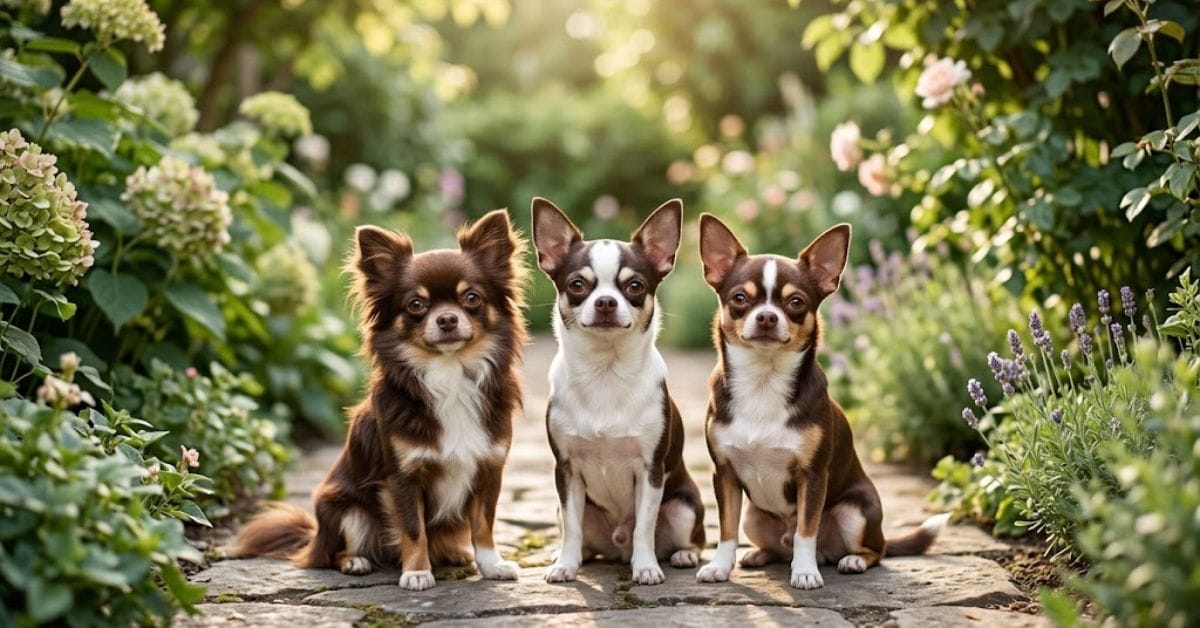
A Brown and White Chihuahua is a Chihuahua with brown, chocolate, or reddish-brown coloring combined with white markings.
This attractive color pattern can appear in both smooth-coat and long-coat Chihuahuas. Coat color does not determine personality, but every Brown and White Chihuahua still needs proper nutrition, grooming, dental care, training, exercise, and regular veterinary checkups.
About the Author
Author: Gulnaz Malik
Role: Publisher & Pet Care Expert
Experience: 5+ Years in Dog Care & Dog Grooming
Content Review: Veterinary-reviewed content approach based on trusted canine care resources and practical pet care experience.
Intoduction
A Brown and White Chihuahua can be one of the most eye-catching color combinations in this tiny but confident breed. The brown areas may range from light brown and fawn-like shades to deep chocolate. White markings can appear on the chest, face, neck, legs, paws, belly, or tail.
Some dogs have a mostly brown body with a small white chest patch. Others have a white blaze running down the face, white socks, or large white areas across the body. Because coat color patterns vary widely, no two Brown and White Chihuahuas look exactly alike.
Chihuahuas themselves come in an unusually broad range of colors and markings. The breed also comes in Smooth Coat and Long Coat varieties, so a brown-and-white puppy may grow into a sleek short-coated adult or a dog with longer feathering and a fuller coat.
The American Kennel Club notes that Chihuahua grooming needs differ according to coat type, with long-coated dogs needing more regular brushing to prevent tangles.
It is important to understand one key point: brown and white describe appearance, not a separate Chihuahua breed. A Brown and White Chihuahua should have the same basic breed characteristics as other healthy Chihuahuas.
Coat color alone does not tell you whether a puppy will be friendly, healthy, calm, energetic, or easy to train.
Brown and White Chihuahua Coat Colors and Genetics Explained
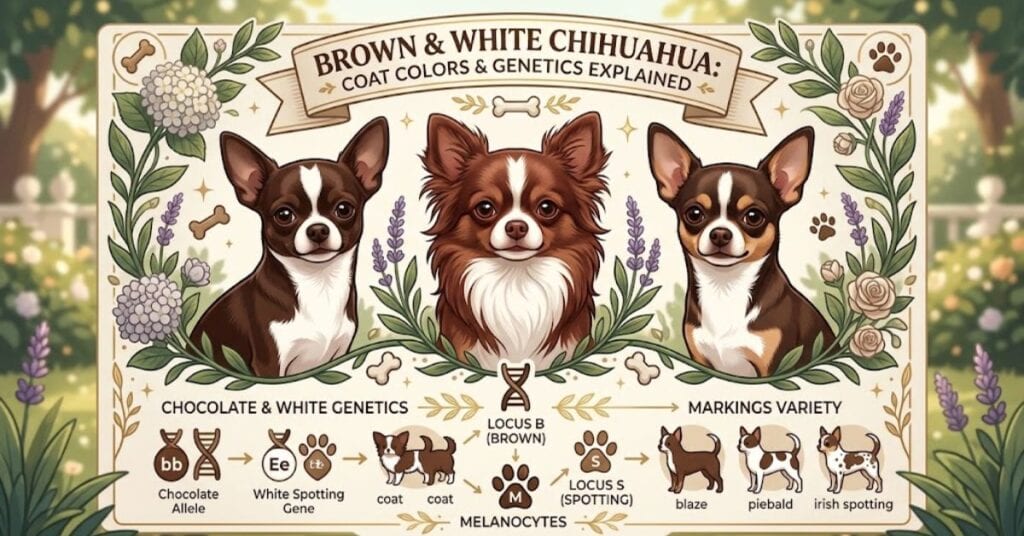
The color of a brown-and-white Chihuahua is determined by inherited genes. Dog coat color genetics can be complicated because several genes may interact to control pigment, shade, and the placement of white markings.
In simple terms, brown or chocolate coloring is connected to genes that influence dark pigment. Genetic testing information from the AKC identifies a B locus associated with brown coloring, while veterinary genetics resources explain that brown can result when specific inherited variants change black pigment into brown.→ Pomeranian Chihuahua Mix (Pomchi) Guide
White markings involve a different part of the overall color picture. A dog may inherit brown pigment along with genes that create areas of white fur. This produces the patches, blazes, chest markings, socks, and other patterns that owners see.
The exact shade can also differ. One Brown and White Chihuahua may look chocolate brown, while another appears lighter, warmer, or more reddish. Puppies can also change somewhat as they mature. Coat texture, sunlight, seasonal shedding, and the development of adult hair may affect how the color appears to the human eye.
Do not assume that a puppy’s future coat will look exactly the same as its early puppy coat. Ask the breeder to show you photos of the parents and, when possible, older puppies from the same bloodline. This can provide a better idea of adult appearance, although genetics can still produce variation.
What to look for when identifying the color
- Brown: May range from light brown to deep chocolate.
- White: Can appear as small or large areas of unpigmented-looking fur.
- Facial blaze: A white stripe may run between the eyes and toward the nose.
- Chest markings: A white bib or chest patch is common in many marked dogs.
- White paws: Some dogs have one or more white “socks.”
- Brown pigment: Nose, eye rims, and paw-pad pigment can vary depending on the dog’s complete genetic makeup.
Do brown and white mean the dog is rare?
Not necessarily. A breeder may advertise a Brown and White Chihuahua as “rare,” but attractive wording does not automatically make the color genetically rare or justify a very high price.
The AKC Chihuahua standard describes the breed as accepting any color, solid, marked, or splashed, so buyers should focus on health and quality rather than marketing labels.
A healthy, well-socialized puppy from a responsible breeder is usually a better choice than a poorly bred puppy sold mainly because of its color.
Brown and White Chihuahua Appearance, Size, and Personality
A Brown and White Chihuahua remains a Chihuahua first. Its coat pattern changes its appearance, but it does not create a different breed type. Healthy adult Chihuahuas are small companion dogs known for their alert expression, large ears, compact body, and confident personality.
The breed may have either a Smooth Coat or a Long Coat. A smooth-coated Brown and White Chihuahua usually has short, close, glossy hair. A long-coated dog has a soft coat with longer hair and noticeable feathering around areas such as the ears, legs, tail, and neck. The official breed information also describes these two coat varieties.
Personality varies from one dog to another. Many Chihuahuas form strong attachments to their families and enjoy staying close to their favorite people. They are often alert, intelligent, lively, and surprisingly bold for their size.
However, owners should avoid expecting a certain personality simply because the dog is brown and white. Coat color does not reliably predict temperament.
A puppy’s personality develops through genetics, early handling, socialization, training, daily experiences, and its individual nature. A puppy raised in a safe environment with gentle exposure to people, sounds, handling, and normal daily life has a better foundation for confidence.
A Brown and White Chihuahua also needs respectful handling. Because the breed is tiny, people sometimes treat it like a toy. This can create fear or defensive behavior. Children should learn to sit calmly when interacting with the dog, support the body properly, and never pull ears, legs, or tail.
Positive reinforcement training works especially well for this intelligent breed. Use small rewards, praise, and short training sessions. Avoid harsh punishment, shouting, or physical corrections.
| Feature | Smooth-Coat Brown and White Chihuahua | Long-Coat Brown and White Chihuahua |
| Coat length | Short and close | Longer with feathering |
| Brushing needs | Usually about once weekly | Usually several times weekly |
| Tangle risk | Low | Higher |
| Shedding | Moderate | Can require more regular coat management |
| Best grooming tool | Soft brush or grooming mitt | Pin brush and gentle comb |
| White areas | May show dirt easily | Can collect more debris and tangles |
| Bath routine | As needed | As needed, with careful drying |
Brown and White Chihuahua Grooming and Coat Care
A beautiful coat needs consistent care, but grooming a Brown and White Chihuahua does not need to become difficult. The right routine depends mainly on whether your dog has a smooth or long coat.→ Shorkie (Yorkie Shih Tzu Mix) Complete Guide
Smooth-coated Chihuahuas usually need less brushing. A gentle weekly brushing can remove loose hair and spread natural skin oils through the coat. Long-coated Chihuahuas need more frequent brushing because fine hairs can tangle around the ears, chest, legs, tail, and behind the front legs.
The AKC recommends occasional brushing for smooth-coated Chihuahuas and regular weekly brushing for long-coated dogs to help prevent tangles and mats. Breed guidance from the Chihuahua Club of America also recommends regular brushing, routine nail care, ear checks, and dental care.
White fur may show dirt, tear staining, food residue, or mud more easily than darker fur. Do not solve this problem by bathing your dog too often. Frequent unnecessary bathing can dry the skin. Instead, wipe dirty areas when needed and give full baths according to your dog’s lifestyle and condition.
Use a gentle dog-safe shampoo. Rinse thoroughly because leftover shampoo can irritate the skin. Dry the dog completely, especially in cool weather.
Check the skin during grooming. Look for redness, dandruff, unusual bumps, excessive scratching, hair loss, or bad odor. These signs may point to a skin problem that needs veterinary advice.
Brown and White Chihuahua coat-care routine
- Brush the smooth coat weekly.
- Brush the long coat several times each week.
- Check behind the ears and under the legs for tangles.
- Wipe dirty white fur with a soft, damp cloth when needed.
- Bathe with dog-safe shampoo when genuinely necessary.
- Trim nails regularly.
- Check ears for odor, redness, or unusual debris.
- Brush teeth regularly because dental care is especially important for small dogs.
- Check paws and pads after walks.
- Contact a veterinarian if you notice persistent itching, sores, or sudden hair loss.
Never use human shampoo on your dog unless a veterinarian specifically tells you to do so. Human products can have ingredients and pH levels that do not suit canine skin.
Regular grooming does more than keep the Brown and White Chihuahua pretty. It gives you a regular opportunity to notice physical changes early.
Brown and White Chihuahua Feeding and Daily Nutrition
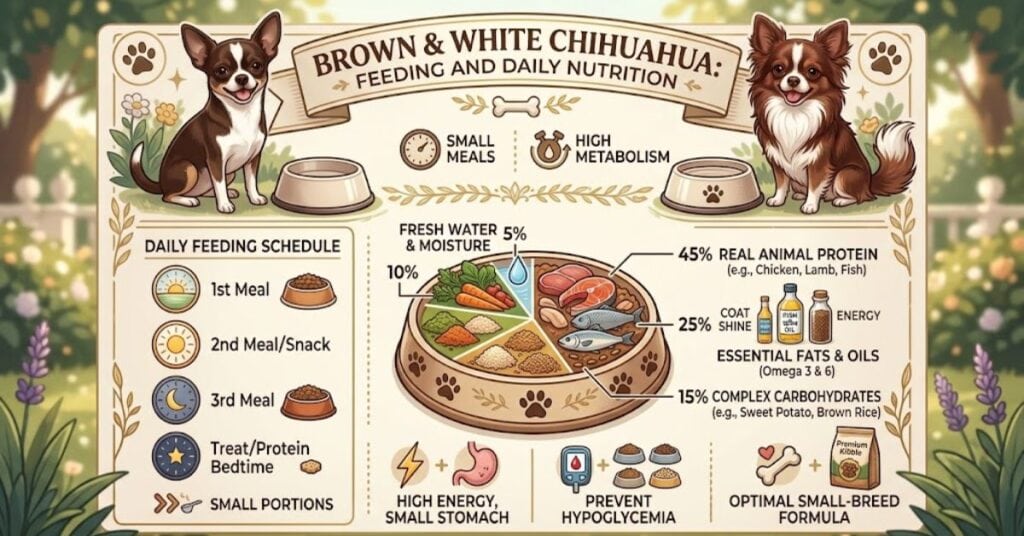
Coat color does not change the nutritional needs of a Chihuahua. A Brown and White Chihuahua needs a complete and balanced diet appropriate for its age, size, activity level, and overall health.
Puppies need food formulated for growth, while adults need an adult maintenance diet. Senior dogs may need a diet or feeding approach based on changing activity levels and veterinary recommendations.
Small dogs have tiny stomachs, so owners should avoid guessing portions by eye. Follow the feeding guidance on the food label as a starting point, then adjust based on your dog’s body condition, activity, and veterinary advice.
Treats can quickly add extra calories because Chihuahuas are so small. A treat that seems tiny to a large dog may represent a larger part of a Chihuahua’s daily calorie intake. Use training treats in very small pieces. → Shaved Pomeranian Puppy Guide
Fresh, clean water should always be available. Chihuahua Club of America breed guidance specifically stresses ready access to fresh water.
Do not choose food because you believe it will make a brown coat darker or white fur brighter. Good nutrition supports healthy skin and coat quality, but marketing claims about changing natural coat color should be viewed carefully.
If your dog develops a dull coat, dry skin, poor appetite, vomiting, diarrhea, or unexplained weight changes, do not simply switch foods repeatedly. Speak with a veterinarian to identify the underlying cause.
| Daily Care Area | What to Do | Why It Matters |
| Morning | Provide measured food and fresh water | Supports healthy weight and hydration |
| Daily | Short walks and safe play | Provides exercise and mental stimulation |
| Daily | Brief coat and body check | Helps spot dirt, tangles, or changes early |
| Daily | Positive training practice | Builds manners and confidence |
| Several times weekly | Brush long coats | Helps prevent tangles and mats |
| Weekly | Brush smooth coats | Removes loose hair |
| Regularly | Dental care | Supports oral health |
| Regularly | Nail trimming | Helps maintain comfortable movement |
A simple routine works best. Sudden major changes in food or feeding schedules can upset some dogs. When changing diets, follow veterinary guidance and make the transition gradually when appropriate.
Brown and White Chihuahua Health Concerns to Know
A Brown and White Chihuahua does not become unhealthy simply because of its color pattern. Owners should separate normal coat appearance from genuine health concerns.
The more important factors include responsible breeding, inherited conditions, body weight, dental care, preventive veterinary care, nutrition, exercise, and early attention to symptoms.
Chihuahuas are tiny dogs, so even small health changes deserve attention. Sudden refusal to eat, weakness, repeated vomiting, breathing difficulty, collapse, severe diarrhea, or signs of pain require prompt veterinary assessment.
Dental care is particularly important. Small dogs can develop dental problems, so regular tooth brushing and professional veterinary dental advice should form part of the long-term care plan. Breed guidance recommends regular tooth brushing and yearly veterinary dental checks.
Owners should also monitor the eyes. Chihuahuas have prominent eyes, which can make eye injuries or irritation easier to notice. Persistent redness, squinting, cloudiness, swelling, or discharge should not be ignored.
The following checklist can help you monitor your dog between routine veterinary visits.
Brown and White Chihuahua health monitoring checklist
Green: Normal to monitor at home
- Normal appetite and water intake
- Bright, comfortable behavior
- Normal movement
- Clean skin without persistent itching
- No new lumps or sores
Yellow: Arrange veterinary advice
- Repeated scratching
- New hair loss
- Persistent bad breath
- Weight change
- Ongoing tear discharge
- Limping or reluctance to jump
- Repeated digestive upset
Red: Seek urgent veterinary care
- Trouble breathing
- Collapse or severe weakness
- Severe injury
- Repeated vomiting with weakness
- A swollen or painful abdomen
- Sudden severe eye pain
- Inability to walk normally
White fur itself does not automatically signal deafness, skin disease, or other illness. Never diagnose a health problem based on coat color alone.
If you buy a puppy, ask for honest information about the parents’ health history. Responsible breeders should welcome sensible questions about veterinary care and breeding practices. Avoid sellers who only discuss color, rarity, or appearance but cannot answer basic health questions.
Brown and White Chihuahua Exercise, Training, and Socialization
Small size does not mean no exercise. A Brown and White Chihuahua needs daily activity to maintain fitness and release energy.
Exercise should match the dog’s age and physical condition. Short walks, indoor games, supervised exploration, and gentle play can provide useful activity. Puppies should not receive intense forced exercise, while senior dogs may need shorter and easier sessions.
Watch the weather. Chihuahuas can become uncomfortable when temperatures are extreme. Adjust outdoor activity for heat, cold, and humidity.
Training should begin early. Teach the puppy its name, recall, toilet habits, calm handling, and basic cues such as sit and stay. Keep lessons short because young Chihuahuas can lose focus quickly.
The AKC describes Chihuahuas as intelligent, alert dogs that respond well to positive training techniques.
Do not allow undesirable behavior simply because the dog is small. Constant barking, snapping, guarding, or demanding attention can become difficult habits if owners accidentally reward them.
Instead, calmly reward the behavior you want. Give attention when your Chihuahua settles quietly. Reward successful toilet trips. Practice recall in a safe area. Teach visitors and family members to interact gently.
Socialization should remain positive. Never force a frightened Chihuahua to approach a person or dog. Give the dog distance and reward calm behavior.
A secure harness may work better than putting unnecessary pressure on a delicate neck. Choose properly fitted equipment and check it regularly as a puppy grows.
Mental exercise also matters. Try simple scent games, treat puzzles, short obedience sessions, and hide-and-seek games. These activities can help satisfy an intelligent dog’s need for engagement.
The goal is not to create an exhausted Chihuahua. The goal is to create a balanced routine that supports physical health, confidence, and good behavior.
Choosing a Healthy Brown and White Chihuahua Puppy
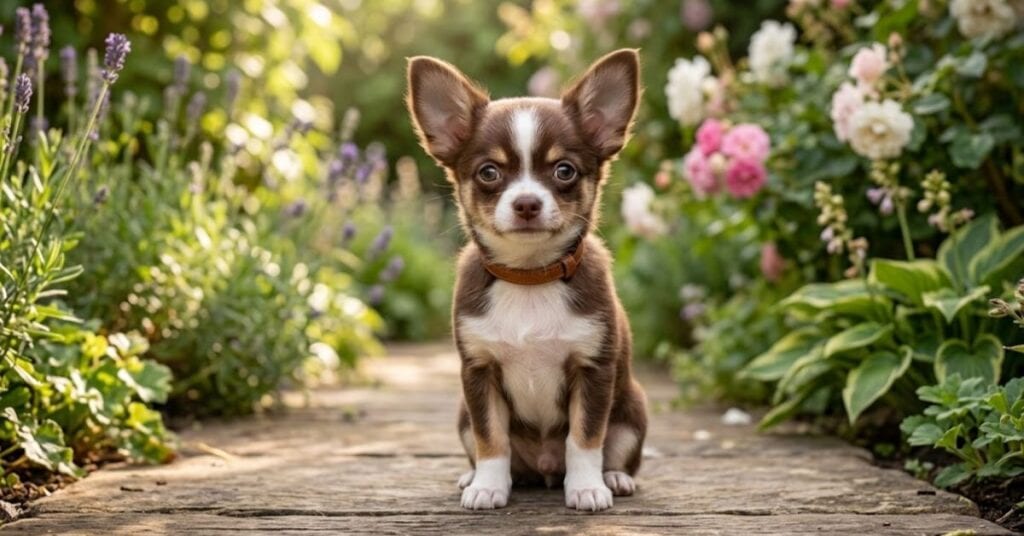
Choosing the right puppy matters far more than choosing the perfect shade of brown or the most symmetrical white markings.
Start by looking for responsible breeding practices. A good breeder should discuss the puppy’s health, parents, temperament, care, and veterinary records. Be cautious if someone pressures you to pay quickly because a certain color is “extremely rare.”
Meet the puppy when possible. Observe whether it appears alert and comfortable. Look at the general living environment. A clean, safe environment and appropriate social interaction matter.
Ask what food the puppy currently eats, what vaccinations or veterinary care it has received, and whether the breeder has health information about the parents.
Avoid judging health from one photograph. Bright editing and artificial lighting can change coat colors dramatically.
Before taking a puppy home, prepare food, bowls, a properly fitted harness, bedding, safe toys, grooming supplies, and a secure sleeping area. Puppy-proof the home by removing small objects, dangerous cords, and unsafe spaces where a tiny dog could become trapped.
Remember that the smallest puppy in a litter is not automatically the healthiest or cutest choice. “Teacup” and “micro” marketing terms can distract buyers from more important questions about health and responsible breeding.
Your best choice is a puppy with appropriate care, good veterinary support, and a suitable temperament for your home.
A healthy Brown and White Chihuahua should grow into a beloved family companion, not simply remain a fashionable color pattern for social media.
Common Mistakes Brown and White Chihuahua Owners Should Avoid
The first mistake is focusing too much on color. A beautiful Brown and White Chihuahua can still have poor breeding, inadequate socialization, or preventable health problems. Always place health and welfare first.
The second mistake is underestimating the dog’s training needs. Small dogs need boundaries and manners just as much as large dogs.
The third mistake is overfeeding. Extra weight places unnecessary stress on a tiny body. Measure meals and use treats carefully.
The fourth mistake is skipping dental care. Owners may notice dirty teeth or bad breath but wait too long to act. Build dental care into the normal routine.
The fifth mistake is bathing too frequently to keep white fur spotless. Spot-clean when possible and use appropriate dog-safe products.
The sixth mistake is ignoring tangles on long-coated dogs. Small mats can become painful and difficult to remove when neglected.
Finally, do not assume every online tip applies to your dog. If your Brown and White Chihuahua shows signs of illness, seek professional veterinary advice rather than relying only on social media or home remedies.
Frequently Asked Questions
Is a Brown and White Chihuahua a rare color?
A Brown and White Chihuahua may look unusual, but brown and white markings alone do not automatically make the dog rare. Chihuahuas come in many colors and patterns. Health, responsible breeding, temperament, and proper care matter more than a seller’s claim that a particular color is rare.
Does coat color affect a Brown and White Chihuahua’s personality?
No reliable evidence shows that a Chihuahua’s brown and white coat pattern determines personality. Temperament depends more on individual genetics, early experiences, socialization, training, and the dog’s environment. A friendly, confident dog needs good handling and positive training regardless of coat color.
How often should I groom a Brown and White Chihuahua?
Smooth-coated Chihuahuas usually need occasional or weekly brushing, while long-coated dogs need more frequent brushing to prevent tangles. Bathe your dog when needed rather than on an unnecessarily frequent schedule. Also check ears, nails, teeth, skin, and paws as part of regular grooming.
Can brown and white Chihuahua puppies change color?
Yes. A puppy’s coat can change somewhat as it grows and develops its adult coat. Brown shades may appear lighter or darker, and markings can look different as the body grows. Ask the breeder about the parents, but remember that genetics can still create variation.
Is a Brown and White Chihuahua healthy?
Coat color alone cannot tell you whether a Chihuahua is healthy. A healthy dog needs responsible breeding, balanced nutrition, dental care, preventive veterinary visits, proper exercise, and prompt attention to symptoms. Choose a puppy based on health and welfare rather than appearance alone.
Conclusion:
A Brown and White Chihuahua can make a wonderful companion for the right owner. Its beautiful coat pattern may be the first thing you notice, but successful ownership depends on much more than appearance.
Whether your Chihuahua has a smooth coat or a long coat, establish a regular grooming routine. Feed a complete and balanced diet in appropriate portions, provide fresh water, maintain dental care, and schedule routine veterinary care.
Training and socialization also play a major role in your dog’s quality of life. Treat your Chihuahua as a real dog with emotional, physical, and mental needs, not simply as a tiny pet that can be carried everywhere.
Choose positive training, safe exercise, gentle handling, and consistent routines. Watch for changes in appetite, energy, skin, coat, eyes, movement, or behavior, and seek veterinary advice when something seems wrong.
Most importantly, do not let the words “rare color” influence your decision more than health and responsible care. The best Brown and White Chihuahua is not necessarily the one with the most unusual markings. It is the dog that comes from responsible care and receives lifelong love, training, nutrition, and veterinary attention.
With the right daily routine, your Brown and White Chihuahua can enjoy a clean, healthy coat and a happy life as a confident, loving companion.
Multimedia Placement Suggestions
Featured Image: Place directly below the title. Show a beautiful, healthy Brown and White Chihuahua standing outdoors with its full coat pattern clearly visible.
Grooming Flowchart / Infographic: Place after the grooming section. Include brushing, bathing, ear checks, nail care, and dental care.
Comparison Graphic: Place after the appearance section. Compare Smooth Coat vs. Long Coat Brown and White Chihuahuas.
Before & After Image: Place in the grooming section. Show a professionally groomed long-coated Chihuahua before and after brushing.
YouTube Video/Thumbnail: Place before the FAQ section. Suggested topic: “How to Groom a Long-Haired Chihuahua at Home.”
Pinterest Image: Create a vertical pin featuring the title “Brown and White Chihuahua: Complete Color & Care Guide” with a clear image of the dog and 3–4 short benefit points.
External Links
For reliable information about Chihuahua breed traits, coat varieties, grooming, temperament, and training, refer to the American Kennel Club’s Chihuahua guide. It provides expert guidance that can help owners understand the breed’s basic care needs.
Dental health also plays an important role in a Chihuahua’s overall well-being. The American Veterinary Medical Association pet dental care resource offers helpful information about preventive dental care and explains why regular attention to your dog’s teeth is important.
The American Kennel Club’s Chihuahua guide explains the breed’s coat varieties, grooming needs, temperament, and training considerations.
For dental-care guidance, see the American Veterinary Medical Association pet dental care resource and discuss your individual dog’s needs with a veterinarian
Tags
Brown and White Chihuahua, Chihuahua Colors, Chihuahua Care, Chihuahua Grooming, Long-Haired Chihuahua, Smooth Coat Chihuahua, Chihuahua Health, Small Dog Breeds, Dog Coat Colors, Chihuahua Puppies
Social Media Caption
Meet the beautiful Brown and White Chihuahua! 🐶🤎🤍 Learn about coat colors, genetics, grooming, feeding, health, training, and daily care in our complete guide. #Chihuahua #BrownAndWhiteChihuahua #ChihuahuaCare #DogGrooming #SmallDogs #DogHealth #ChihuahuaNest