


Quick Answer
Is Sheba a good cat food? Sheba can be a good choice for many healthy cats, especially when you choose a recipe labeled complete and balanced for your cat’s life stage. Its wet food provides moisture, animal-based ingredients, and strong palatability. However, ingredient quality and nutritional suitability vary by recipe, so always check the individual label.
About the Author
Author: Gulnaz Malik
Role: Publisher & Pet Care Expert
Experience: 5+ Years in Dog Care & Dog Grooming
Content Review: Veterinary-reviewed content approach based on trusted canine and pet care resources and practical pet care experience.
Introduction
Is Sheba a good cat food? This is an important question because cats have very specific nutritional needs, and choosing food based only on advertising or a cat’s favorite flavor can lead to poor decisions.
Sheba is widely known for wet cat food served in trays, pouches, and other convenient portions. Many cats enjoy its soft texture, gravy, pâté, and meat or fish flavors. For owners of picky cats, this strong palatability can be a major benefit.
However, a food that tastes good is not automatically the best nutritional choice. Cats need adequate protein, essential amino acids such as taurine, vitamins, minerals, fats, and enough water. The best food also needs to match the cat’s age, health condition, activity level, and calorie needs.
This Sheba cat food review examines the factors that matter most. You will learn about ingredients, protein, moisture, complete nutrition, benefits, possible drawbacks, feeding practices, and safety checks. You will also learn how to read the label rather than assuming that every product from one brand serves the same purpose.
By the end, you should have a clear answer about whether Sheba is suitable for your cat and which questions to ask before making it a regular part of your cat’s diet.
Is Sheba a Good Cat Food for Everyday Feeding?
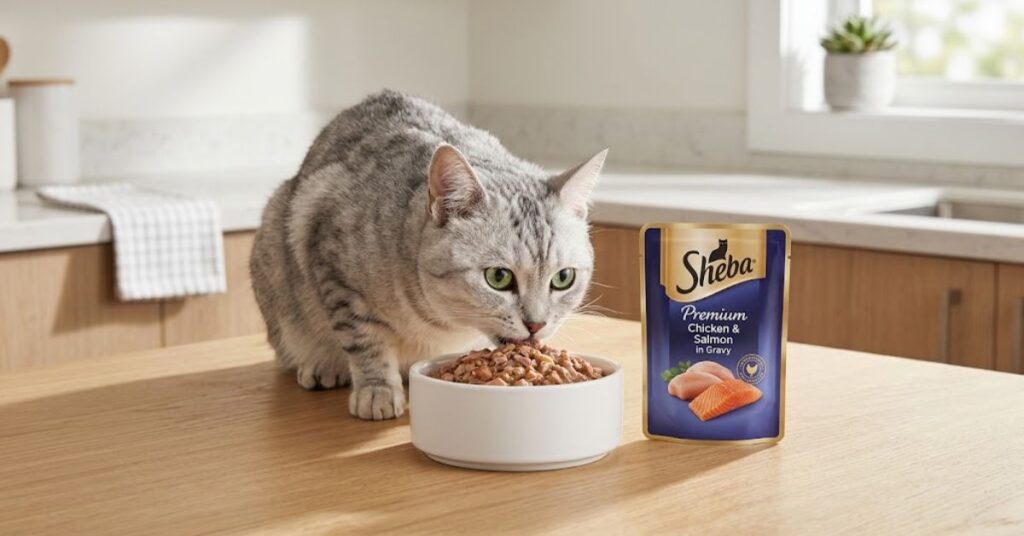
For many healthy adult cats, the answer can be yes, but only if you choose a Sheba formula formulated to provide complete and balanced nutrition. This distinction matters because not every food-like product is designed to serve as a cat’s sole daily diet.
A complete food provides the essential nutrients a cat needs in appropriate amounts for its intended life stage. A complementary product, treat, or topper may taste appealing but may not provide everything needed for long-term daily feeding.
Some Sheba wet food recipes are specifically sold as complete and balanced meals. These products may include animal ingredients along with added vitamins, minerals, and essential nutrients. Certain official Sheba recipes also identify adult maintenance as their intended use.
Wet food offers another important benefit: moisture. Cats naturally have a low thirst drive compared with many other animals. A wet diet can contribute significantly more water than dry kibble. This may help cats consume more total moisture, although every cat still needs constant access to fresh drinking water.
Sheba also offers different textures. Some cats prefer cuts in gravy, while others prefer pâté, flakes, soup-like textures, or softer foods. Texture matters because a nutritionally sound food has little value if a healthy cat consistently refuses to eat it.
That said, you should not judge the entire brand by one recipe. One formula may contain a different protein level, calorie level, ingredient list, or nutritional adequacy statement than another.
The Sheba Label Check
Before feeding a Sheba product as a main diet, check:
- Whether it says complete and balanced
- Which life stage it support
- Whether it is intended for kittens or adult cats
- The feeding instructions
- The calorie content, when available
- The ingredient list
- The guaranteed analysis
- The expiration or best-before date
- Storage instructions after opening
A simple rule works well: choose the exact product based on your cat’s needs, not simply because it has the Sheba name on the package.
For pet owners who already compare commercial foods carefully, our internal guides on Taste of the Wild dog food review and Kirkland dog food review show why checking individual formulas matters more than relying on brand reputation alone.
Sheba Cat Food Ingredients: What Is Inside?
The ingredients in Sheba cat food vary between recipes and markets. Therefore, no single ingredient list represents every Sheba product.
Many recipes contain animal-based ingredients such as chicken, tuna, salmon, trout, whitefish, meat, or animal derivatives. Cats are obligate carnivores, meaning they have nutritional requirements that make animal-derived nutrients especially important in their diets.
Some Sheba gravy products also contain water, thickening ingredients, flavor components, minerals, and other additives used to create texture, taste, and nutritional balance. Other formulas may include vegetables or different carbohydrate ingredients.
Ingredient lists can help you understand what is in a food, but they should not be the only way you judge quality. The order reflects ingredients by weight before processing, and moisture-heavy ingredients can affect how the list appears.
A better evaluation combines the ingredient list with the nutritional adequacy statement, intended life stage, manufacturer information, calorie content, and your cat’s individual response.
For example, seeing chicken near the top of an ingredient list does not automatically prove that a recipe is nutritionally complete. In the same way, seeing a long ingredient name does not automatically make a food unhealthy.
Look for a formula that provides nutrients appropriate for cats. Important nutrients include protein, taurine, essential fatty acids, vitamins, and minerals.
Important Nutrients to Look For
Animal Protein
Protein helps support muscles and many normal body functions. Cats require adequate dietary protein, and animal ingredients can provide important amino acids.
Taurine
Taurine is an essential amino acid for cats. A nutritionally complete cat food should provide the nutrients needed to support normal health.
Fats
Dietary fat supplies energy and essential fatty acids. However, the overall calorie intake still matters because too many calories can contribute to unhealthy weight gain.
Vitamins and Minerals
Cats need a balanced supply of vitamins and minerals. More is not always better. Proper balance matters.
The best approach is to evaluate the complete formula rather than searching for one “perfect” ingredient. This is also why a veterinary nutrition perspective can be more useful than internet trends about single ingredients.
Sheba Wet Cat Food and Hydration Benefits
One of the strongest advantages of Sheba is its focus on wet food. Wet cat food generally contains much more moisture than dry kibble, and this can increase the amount of water a cat receives through meals.
Many cats do not naturally drink large amounts of water. Their ancestors evolved from desert-dwelling animals and received much of their moisture from prey. Modern house cats still benefit from adequate daily hydration.
A wet meal does not guarantee that a cat will never develop urinary or kidney problems. Diet alone cannot prevent every health condition. Genetics, age, medical history, total water intake, stress, and other factors also matter.
Still, moisture can be an important practical benefit of wet food. A cat that eats several wet meals may receive more dietary water than a cat eating only dry kibble.
This makes Sheba especially appealing to owners whose cats prefer wet textures or show little interest in drinking from a bowl.
You can support hydration further by providing:
- Fresh water in several locations
- Clean water bowls
- A cat water fountain if your cat prefers moving water
- Wet food meals
- Appropriate veterinary care for urinary concerns
Do not assume that gravy automatically means a recipe is better than pâté. Both can work well if the formula is nutritionally appropriate and your cat tolerates it.
A cat with kidney disease, urinary crystals, diabetes, food allergies, or another diagnosed condition may need a more specialized feeding plan. In these situations, ask your veterinarian before changing the main diet.
Sheba Cat Food Nutrition Comparison
The following table gives a practical way to compare Sheba-style complete wet food with general dry food characteristics. Individual products vary, so always check the exact label.
| Feature | Complete Sheba Wet Formula | Typical Dry Cat Food |
| Moisture | Usually high | Usually much lower |
| Texture | Soft, gravy, pâté, cuts, or flakes | Dry kibble |
| Palatability | Often high for picky cats | Varies by recipe |
| Portion control | Easy with single servings | Requires measuring |
| Storage after opening | Needs refrigeration | Usually easier to store |
| Hydration contribution | Higher | Lower |
| Calorie density | Often lower per gram because of water | Usually higher per gram |
| Best use | Cats that enjoy wet meals | Cats needing dry-food convenience |
Comparing foods becomes more complicated when moisture levels differ. A dry food may appear to have more protein on the label because the food contains less water. This is why direct comparisons should consider dry matter when necessary.
For everyday owners, you do not need to calculate every nutrient by hand unless you are comparing diets closely. Start with the basics: confirm the food is complete and balanced for your cat’s life stage, follow feeding guidance, monitor body condition, and discuss special needs with a veterinarian.
If your cat eats both wet and dry food, count calories from both. Many owners accidentally overfeed by giving a full daily amount of kibble plus multiple wet meals.
Our ChihuahuaNest pet nutrition content also follows this practical principle: food quality matters, but correct portions and the individual pet’s needs matter too.
Benefits of Feeding Sheba to Cats
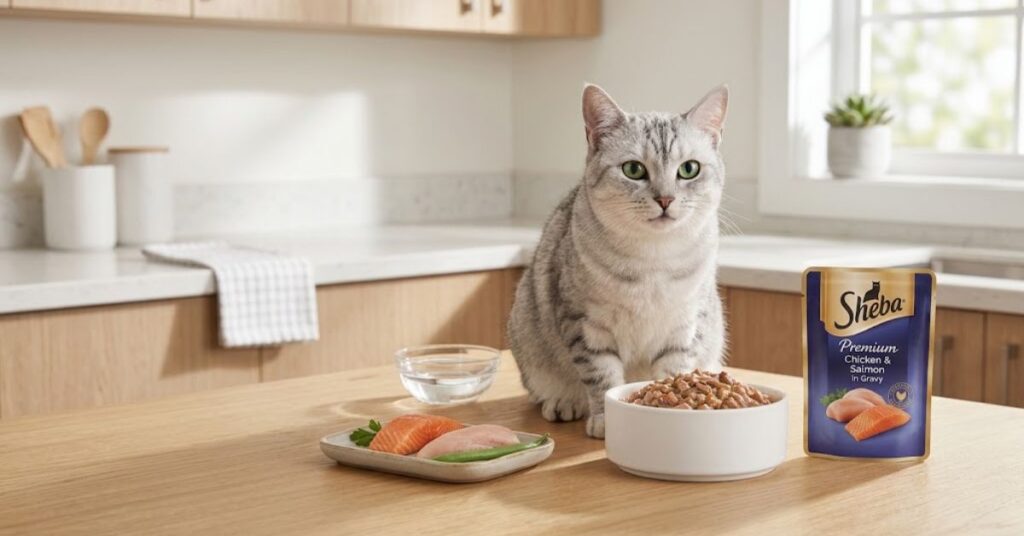
Sheba has several potential advantages for the right cat. The biggest benefit is usually palatability. Cats can be highly selective, and some refuse foods with certain textures or flavors.
A food that a cat willingly eats can make daily feeding less stressful. However, a sudden refusal to eat should never be dismissed as ordinary pickiness, especially if the cat normally eats well.
Convenient portions are another advantage. Single or divided servings can reduce measuring and may help owners serve fresh food more easily.
Wet food can also work well for cats with dental limitations that make crunchy kibble less appealing. However, wet food does not replace dental care. Cats still need regular oral examinations and appropriate dental care.
Main Benefits of Sheba Cat Food
- High moisture content in wet recipes
- Strong taste appeal for many cats
- Several textures and flavors
- Convenient serving sizes
- Animal-based ingredients in many recipes
- Complete-and-balanced options
- Useful for cats that dislike dry food
- Easy to mix into a controlled feeding routine
Sheba may also help owners rotate textures within a nutritionally appropriate diet. Some cats become bored with eating exactly the same texture every day, although frequent unnecessary food changes can upset sensitive stomachs.
When changing foods, move gradually whenever possible. Start by mixing a small amount of the new food with the old diet. Increase the new food slowly over several days while monitoring stool quality, appetite, and behavior.
For another example of evaluating pet products based on practical use rather than marketing alone, see our guide to the best dog clippers. The same principle applies: the right product depends on the individual animal and how the product actually meets its needs.
Possible Drawbacks of Sheba Cat Food
No commercial cat food is automatically perfect for every cat. Sheba also has possible drawbacks that owners should consider.
First, recipes vary. You should not assume that every Sheba product has identical nutritional value or serves the same feeding purpose. Read each package.
Second, wet food can cost more per calorie than some dry foods. Feeding an exclusively wet diet may become expensive for multi-cat households or large cats with higher calorie needs.
Third, opened wet food needs careful storage. Leaving food out for long periods can allow spoilage. Follow the manufacturer’s instructions, refrigerate leftovers when appropriate, and discard food that appears spoiled.
Some cats may also react poorly to a particular recipe. Vomiting, diarrhea, itching, or appetite changes can have many causes, including food intolerance, sudden diet changes, infection, parasites, stress, or medical disease.
Do not automatically blame the brand if a problem occurs. Instead, consider the full situation and speak with a veterinarian when symptoms continue or become severe.
Cats with medical needs may require specialized nutrition. For example, a cat with diagnosed kidney disease may need a veterinary feeding plan rather than simply switching to a different regular supermarket wet food.
Sheba May Not Be the Best Choice If Your Cat:
- Needs a prescription veterinary diet
- Has a confirmed food allergy to an ingredient in the recipe
- Requires a specific therapeutic nutritional plan
- Gains weight because portions are too large
- Refuses the particular formula
- Has ongoing vomiting or diarrhea that needs veterinary evaluation
The important point is simple: “good cat food” does not mean “perfect for every cat.”
How to Choose the Best Sheba Formula for Your Cat
Choosing the right Sheba cat food starts with your cat, not the flavor name on the package.
A kitten has different nutritional needs from an adult cat. Growing kittens need food formulated for growth, while healthy adult cats generally need maintenance nutrition.
Senior cats do not automatically need one specific “senior” food. Their needs depend on body condition, dental health, kidney function, activity, appetite, and diagnosed health problems.
Start by checking the nutritional adequacy statement and intended life stage. Then consider calories and feeding amounts.
The exact amount your cat needs depends on body weight, age, activity, whether the cat is neutered or spayed, and other factors. Follow the feeding guide as a starting point, then adjust based on body condition and veterinary advice.
Sheba Selection Checklist
Use this five-step framework before buying:
Step 1: Check the life stage.
Choose kitten food for kittens and an appropriate maintenance food for healthy adult cats.
Step 2: Confirm complete nutrition.
Look for a nutritional adequacy statement when choosing a food to serve as the main diet.
Step 3: Review the ingredients.
Check for ingredients your cat cannot tolerate.
Step 4: Check calories and portions.
Avoid feeding based only on begging or appetite.
Step 5: Monitor your cat.
Watch body condition, stool quality, appetite, coat condition, and energy.
Weekly Cat Food Monitoring Scale
| What to Check | Healthy Sign | Warning Sign |
| Appetite | Eats a normal amount | Sudden refusal or major increase |
| Stool | Generally formed and normal | Persistent diarrhea or constipation |
| Body condition | Stable healthy shape | Rapid weight loss or gain |
| Water intake | Normal for your cat | Sudden major change |
| Energy | Normal behavior | Unusual weakness or hiding |
| Coat | Clean and generally healthy-looking | Major change with other symptoms |
This checklist does not diagnose disease. It simply helps you notice changes early.
You can apply the same habit of regular monitoring to other areas of pet care. For example, our best dog nail clippers for small dogs guide explains how regular observation and preventive routines can help owners notice problems before they become more serious.
How Much Sheba Should You Feed Your Cat?
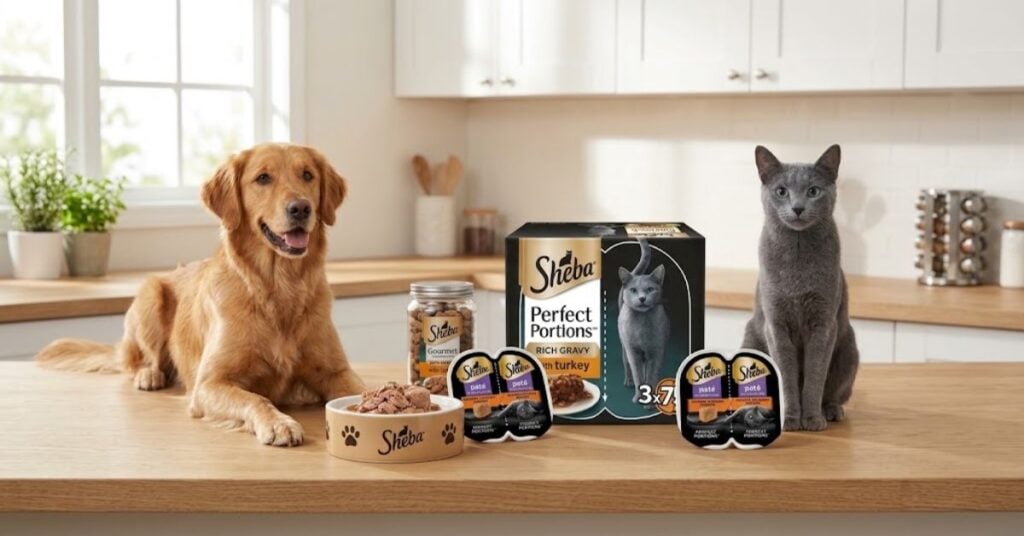
The correct amount depends on the specific Sheba recipe. Calories can differ between products, so do not use one universal number for every tray, pouch, or serving.
Start with the manufacturer’s feeding instructions for the exact formula. Then consider your cat’s body size and condition.
A very active cat may need more calories than a less active indoor cat of the same weight. A cat trying to lose weight needs a carefully controlled plan. Rapid or unplanned weight loss can be dangerous in cats, so contact a veterinarian if your cat suddenly loses weight or stops eating.
If you combine Sheba with dry food, reduce one when you add more of the other. Count the total daily calories.
A useful routine looks like this:
- Measure the daily dry food portion
- Divide wet food into planned meals
- Avoid unlimited calorie intake
- Keep treats limited
- Weigh your cat regularly when possible
- Adjust feeding based on body condition and veterinary guidance
Do not make sudden, dramatic feeding changes unless a veterinarian instructs you to do so.
Simple Daily Feeding Do’s and Don’ts
Do:
- Read the exact package instructions
- Choose the correct life-stage formula
- Provide fresh water every day
- Refrigerate leftovers when the label recommends it
- Monitor body condition
- Introduce new food gradually
Don’t:
- Assume every Sheba recipe serves the same purpose
- Double-feed wet and dry food without adjusting portions
- Ignore sudden appetite loss
- Leave opened food out beyond safe handling guidance
- Use regular food to treat a diagnosed medical disease without veterinary advice
- Keep feeding a formula that causes persistent problems without seeking help
Is Sheba Good for Picky Cats and Sensitive Stomachs?
Sheba can be especially useful for picky cats because its wet recipes offer strong aromas and appealing textures. Cats often respond to smell, temperature, texture, and flavor.
If your cat refuses food, try not to immediately offer many different products in one day. Frequent switching can make it difficult to identify what your cat tolerates and may create unnecessary digestive changes.
You can make a normal wet meal more appealing by serving it according to label guidance and ensuring it is fresh. Some cats prefer food that is not refrigerator-cold, but never overheat food or create hot spots.
For sensitive stomachs, the answer is less predictable. A food that works well for one cat may not work well for another.
If your cat has mild digestive upset after changing foods, a gradual transition may help. Persistent vomiting, persistent diarrhea, blood in stool, severe lethargy, or refusal to eat requires veterinary attention.
Food sensitivity also differs from a confirmed food allergy. Owners should not guess based only on internet lists. A veterinarian may recommend a structured diet trial when a true food reaction is suspected.
This is why we recommend looking beyond marketing words such as “premium,” “natural,” or “gourmet.” Your cat’s nutritional needs, tolerance, and the food’s complete nutritional purpose matter more.
Is Sheba Safe and What Should Cat Owners Check?
Safety begins with buying properly stored food from a reliable seller. Check the package for damage, swelling, leaks, unusual odors, or an expired date.
Do not feed a product with a damaged seal if the packaging suggests contamination may have occurred.
After opening wet food, follow storage directions carefully. Refrigerate leftovers if recommended, use them within the advised period, and keep feeding dishes clean.
Owners should also stay aware of official recalls and safety notices. If you believe your cat became sick after eating a food, save the package and lot information when possible, and contact your veterinarian.
The most important safety check is the nutritional adequacy statement. A product intended as the sole diet should clearly communicate whether it provides complete and balanced nutrition for the appropriate life stage.
This matters more than attractive packaging.
Final Verdict: Is Sheba a Good Cat Food?
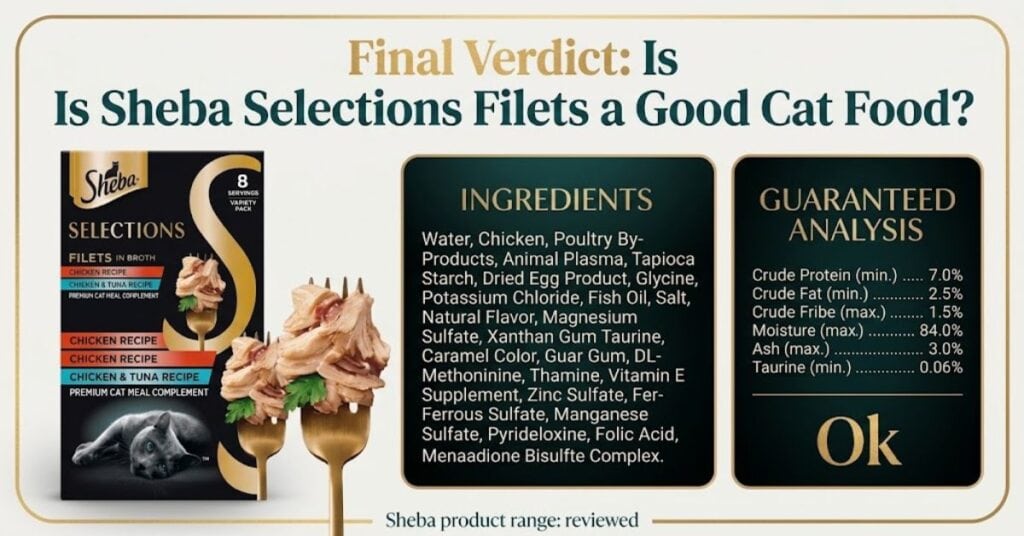
So, is Sheba a good cat food? Yes, Sheba can be a good food for many cats when you choose a complete and balanced formula that matches your cat’s life stage and individual needs.
Its major strengths include wet-food hydration, strong palatability, convenient portions, and a variety of flavors and textures. These features can make it a practical option for healthy cats, especially those that strongly prefer wet meals.
The main limitation is that owners should evaluate each recipe separately. Do not assume that every product serves as a complete everyday diet. Check the exact label, intended life stage, ingredients, and feeding guidance.
Our final rating is a good mainstream wet food option for many healthy cats, rather than a one-size-fits-all solution.
The best cat food is one that provides appropriate nutrition, suits your cat’s health and life stage, fits your budget, and supports a healthy body condition.
If your cat has kidney disease, urinary problems, diabetes, allergies, chronic digestive symptoms, or another medical condition, ask your veterinarian about the most suitable diet.
With careful label reading, proper portions, gradual transitions, and regular health monitoring, Sheba can fit successfully into many cats’ feeding routines.
Frequently Asked Questions
Is Sheba a good cat food to feed every day?
Yes, a Sheba recipe can be fed daily when the exact product is labeled complete and balanced for your cat’s life stage. Always check the package because recipes and nutritional information can differ between products.
Is Sheba better than dry cat food?
Neither is automatically better for every cat. Sheba wet food provides more moisture and may appeal to picky cats. Dry food can be more convenient. The best choice depends on nutritional completeness and your cat’s individual needs.
Does Sheba have enough protein for cats?
Protein levels vary by formula. Check the guaranteed analysis and nutritional adequacy statement on the exact product. A complete cat food formulated for the correct life stage should provide nutrients appropriate for its intended use.
Can kittens eat Sheba cat food?
Kittens should eat a formula designed for growth unless a veterinarian recommends otherwise. Do not assume an adult Sheba recipe meets a kitten’s nutritional needs. Always check the life-stage statement on the package.
Is Sheba good for picky cats?
Sheba can be a good option for picky cats because many cats enjoy its wet texture, aroma, gravy, and flavor choices. However, sudden food refusal can also signal illness, so persistent appetite changes need veterinary attention.
Multimedia Placement Suggestions
Featured Image: Place below the title. Show a healthy cat beside a Sheba wet food tray with the text: “Is Sheba a Good Cat Food?”
Nutrition Infographic: Place after the ingredients section. Compare protein, moisture, complete nutrition, calories, and life-stage suitability.
Comparison Graphic: Place after the nutrition comparison table. Show “Sheba Wet Food vs. Dry Cat Food.”
Safety Checklist Graphic: Place after the Sheba safety section. Include label checks, expiration date, packaging, storage, and nutritional adequacy.
YouTube Video/Thumbnail: Place before the FAQ section. Suggested topic: “How to Read a Cat Food Label Before You Buy.”
Pinterest Image: Create a vertical pin after publication with the headline: “Is Sheba a Good Cat Food? Honest Review for Cat Owners.”
Tags
Sheba Cat Food, Cat Food Reviews, Wet Cat Food, Cat Nutrition, Cat Food Ingredients, Healthy Cat Food, Picky Cats, Complete and Balanced Cat Food, Cat Feeding Guide, Pet Nutrition
Social Media Caption
Is Sheba a good cat food? 🐱 We reviewed its nutrition, ingredients, moisture benefits, possible drawbacks, and what cat owners should check before feeding it daily. Read the full honest guide on ChihuahuaNest! 🐾 #ShebaCatFood #CatFoodReview #CatNutrition #WetCatFood #CatCare #HealthyCats #PetCare