
Quick Answer
The best food for a Yorkie puppy is a small-breed, calorie-dense puppy formula with real meat as the first ingredient, DHA for brain development, and a balanced calcium-phosphorus ratio.
Because Yorkie puppies are prone to hypoglycemia, frequent small meals (3–4 times daily until 3 months) matter as much as the food itself.
Author
Gulnaz Malik, Publisher and Pet Care Expert.
Experience:
5+ Years in Dog Care & Dog Grooming
Content Review
Veterinary-reviewed content approach based on trusted canine care resources and practical pet care experience.
Introduction
Feeding a Yorkshire Terrier puppy correctly during the first year sets the foundation for a lifetime of good health.
Yorkie puppies are tiny, often under 2 pounds at 8 weeks, with fast metabolisms and small stomachs that make them uniquely vulnerable to hypoglycemia (low blood sugar), a condition that can become dangerous within hours if a puppy goes too long without eating.
Beyond meal frequency, the food itself matters. Yorkie puppies need calorie-dense, nutrient-rich formulas sized for tiny mouths, with the right balance of protein, fat, and minerals to support healthy bone growth without overloading their developing joints.
This guide breaks down exactly what to look for in a puppy food, how much and how often to feed, which brands are commonly recommended, and the feeding mistakes that most often lead to health problems in this breed.
Why Yorkie Puppies Have Unique Nutritional Needs

Yorkshire Terriers are one of the smallest recognized dog breeds, and toy breeds as a group burn through glucose reserves faster than larger dogs relative to their body size.
A Yorkie puppy’s liver hasn’t yet developed the capacity to regulate blood sugar as efficiently as an adult dog’s, which is why skipped meals are far riskier for them than for a Labrador puppy, for example.
What “Small-Breed Formula” Actually Means for a Yorkie Puppy
Small-breed puppy foods aren’t just smaller kibble; they’re formulated with higher calorie density per cup, since a Yorkie puppy physically cannot eat enough of a standard large-breed formula to meet its energy needs in one sitting.
Key Nutrients to Look For in a Yorkie Puppy
Protein Quality and Source
Look for a named animal protein (chicken, lamb, salmon) as the first ingredient rather than vague terms like “meat meal” or “animal by-product.” High-quality animal protein supports lean muscle development and coat health.
DHA for Brain and Eye Development Yorkie Puppy
DHA, typically sourced from fish oil, supports cognitive and visual development in growing puppies and is standard in most reputable puppy formulas.
Calcium-to-Phosphorus Ratio Yorkie Puppy
Small-breed puppies need a properly balanced calcium-phosphorus ratio (generally close to 1.2:1) to support healthy bone development.
Unlike large-breed puppies, excess calcium is less of a growth-plate concern for toy breeds, but wildly imbalanced ratios can still cause skeletal issues.
Kibble Size and Shape Yorkie Puppy
Because Yorkie puppies have small jaws and are prone to dental crowding as adults, kibble should be small enough to chew comfortably without swallowing whole, which can be a choking risk.
Feeding Schedule by Age
| Age | Meals Per Day | Notes |
| 6–8 weeks | 4–5 small meals | Highest hypoglycemia risk period |
| 2–3 months | 4 meals | Keep meals evenly spaced |
| 3–6 months | 3 meals | Begin transitioning portion sizes |
| 6–12 months | 2–3 meals | Gradually shift toward adult schedule |
| 12+ months | 2 meals | Transition to adult food around 10–12 months |
Why Frequent Meals Matter More Than Portion Size for Yorkie Puppy
For Yorkie puppies under 3 months, going more than 3–4 hours without food can trigger a hypoglycemic episode, marked by lethargy, trembling, or disorientation. Consistency in meal timing is just as important as what’s in the bowl.
Calorie and Portion Guidelines
| Puppy Weight | Approx. Daily Calories | Approx. Daily Food (dry kibble) |
| 1–2 lbs | 130–190 kcal | 1/4–1/3 cup |
| 2–4 lbs | 190–320 kcal | 1/3–1/2 cup |
| 4–6 lbs | 320–420 kcal | 1/2–2/3 cup |
| 6+ lbs (near adult) | 420–500 kcal | 2/3–3/4 cup |
Portion sizes vary by brand calorie density, so always check the feeding guide on the specific product label and adjust based on body condition rather than weight alone.
Top Recommended Puppy Food Brands
Veterinary and Breed-Specific Formulas
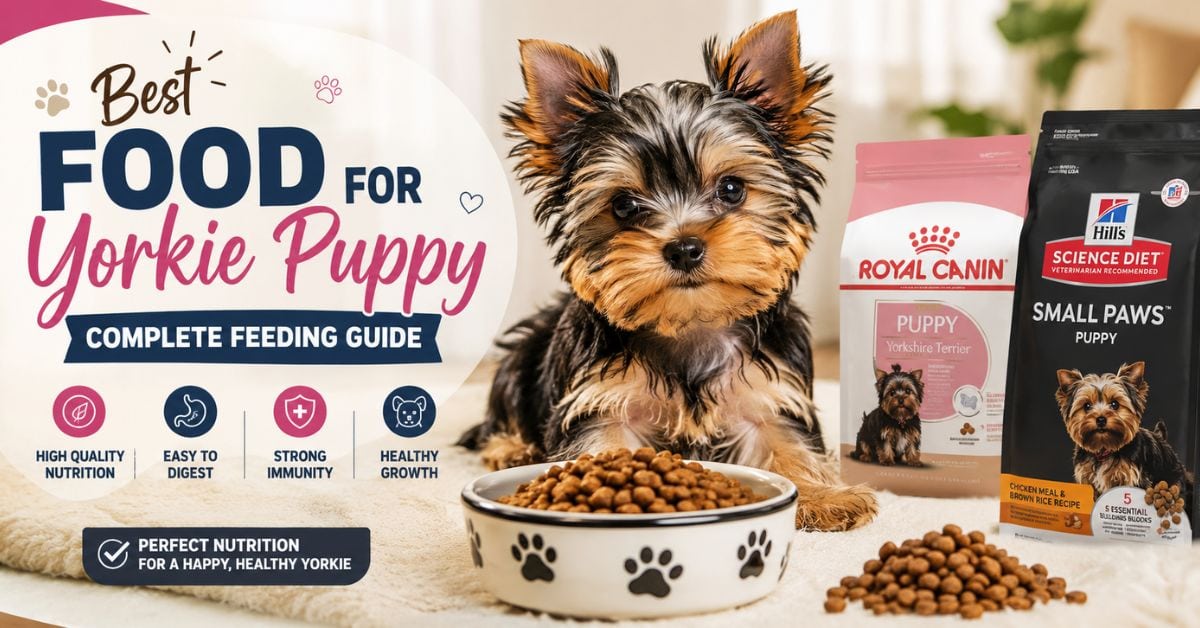
Royal Canin Yorkshire Terrier Puppy is formulated specifically for the breed’s jaw shape and calorie needs, with kibble designed to encourage chewing rather than gulping.
Widely Available Small-Breed Options
Hill’s Science Diet Small Paws Puppy, Purina Pro Plan Focus Small Breed Puppy, and Wellness Complete Health Small Breed Puppy are commonly recommended by veterinarians for their calorie density and quality protein sourcing.
Wet Food and Toppers
Wet food or a small amount of warm water mixed into kibble can help entice picky eaters and adds moisture, which some Yorkie puppies with dental crowding find easier to chew than dry kibble alone.
Foods and Ingredients to Avoid
Grain-Free Formulas
Grain-free diets have been linked in ongoing research to cases of dilated cardiomyopathy (DCM) in dogs; unless a veterinarian has diagnosed a specific grain allergy, a grain-inclusive formula is generally the safer default.
Large-Breed Puppy Formulas
Large-breed puppy foods are formulated with lower calorie density and different mineral ratios meant to slow bone growth in giant breeds, which is the opposite of what a Yorkie puppy needs.
Toxic Table Scraps
Chocolate, grapes, raisins, onions, garlic, and xylitol-sweetened foods are toxic to dogs and should never be offered, even in small amounts, given how little body weight a Yorkie puppy has to buffer toxic doses.
Feeding Checklist for Yorkie Puppy Owners

- Feed 4 small meals daily until 3 months old
- Choose a small-breed puppy formula with real meat listed first
- Keep kibble size small to reduce choking risk
- Monitor for signs of hypoglycemia: lethargy, trembling, weakness
- Avoid grain-free food unless vet-recommended
- Transition to adult food gradually around 10–12 months
- Always have fresh water available
- Track weight monthly at home or during vet visits
Do’s and Don’ts
Do:
- Stick to a consistent feeding schedule
- Choose calorie-dense, small-breed-specific formulas
- Introduce new foods gradually over 5–7 days
- Keep an emergency source of glucose (like honey) on hand per your vet’s guidance
Don’t:
- Free-feed or leave food out all day without monitoring intake
- Switch foods abruptly
- Overfeed treats; keep them under 10% of daily calories
- Assume a healthy-looking puppy can skip meals safely
Conclusion
Choosing the best food for a Yorkie puppy comes down to two things working together: a calorie-dense, small-breed-formulated diet, and a feeding schedule frequent enough to prevent hypoglycemia.
Brands like Royal Canin’s breed-specific formula, Hill’s Science Diet Small Paws, and Purina Pro Plan Focus Small Breed are solid starting points.
Still, the right choice ultimately depends on your individual puppy’s appetite, digestion, and your veterinarian’s guidance.
Getting nutrition right during these first months supports healthy growth, a strong coat, and fewer health complications down the road.
Frequently Asked Questions
What is the best food for a Yorkie puppy?
A small-breed puppy formula with real meat as the first ingredient, DHA for brain development, and calorie-dense nutrition is best. Breed-specific options like Royal Canin Yorkshire Terrier Puppy are popular choices.
How often should I feed my Yorkie puppy?
Puppies under 3 months should eat 4–5 small meals daily to prevent hypoglycemia. This gradually decreases to 2 meals a day by 12 months.
Can Yorkie puppies eat grain-free food?
Generally not recommended unless prescribed by a veterinarian, since grain-free diets have been linked to heart issues (DCM) in some dogs.
How much should a Yorkie puppy eat per day?
Depending on weight, most Yorkie puppies need 130–500 kcal daily, roughly 1/4 to 3/4 cup of dry kibble, adjusted based on the specific food’s calorie density.
When should I switch my Yorkie puppy to adult food?
Most Yorkie puppies can transition to adult food around 10–12 months, once growth has largely leveled off, with the transition done gradually over 5–7 days.
Multimedia Placement Suggestions
- Featured Image: Yorkie puppy eating from a small bowl
- Infographic: Feeding schedule by age
- Comparison Graphic: Small-breed vs. large-breed puppy kibble size
- Chart Visual: Daily calorie needs by weight
- Pinterest Image: Vertical image with text overlay “Best Food for Yorkie Puppy: Feeding Guide”
- YouTube Thumbnail: Puppy eating, bold text “Yorkie Puppy Feeding 101”
Internal Linking Suggestions
- Yorkie Puppy Growth and Weight Chart
- Hypoglycemia in Toy Breed Puppies: Signs and Prevention
- Small Dog Nutrition: Feeding Guide by Life Stage
- Yorkie Grooming Guide: Tools and Techniques
- How to Transition Your Puppy to Adult Dog Food
Trusted External References
American Kennel Club (AKC), American Veterinary Medical Association (AVMA), ASPCA, WSAVA, and the Merck Veterinary Manual were referenced for breed and nutrition accuracy.
Schema Markup Recommendations
- Article schema (headline, author, datePublished, publisher)
- FAQPage schema for the FAQ section
- HowTo schema optional for feeding schedule section
Social Media Caption
🍖 What’s really the BEST food for your Yorkie puppy? From calorie-dense formulas to hypoglycemia-safe feeding schedules, here’s everything you need to know 🐾 #YorkieePuppy #YorkshireTerrier #PuppyNutrition #SmallDogsOfInstagram #ChihuahuaNest #DogCareTips