


Quick Answer
A Chihuahua Lab Mix, often called a Labrahuahua, combines a Chihuahua with a Labrador Retriever. Because the parents differ greatly in size and build, puppies can vary widely in appearance, adult size, energy, and temperament.
Most need regular exercise, positive training, careful weight control, dental care, socialization, and routine veterinary checks.
Author Box
Author: Gulnaz Malik
Role: Publisher & Pet Care Expert
Experience: 5+ Years in Dog Care & Dog Grooming
Content Review: Veterinary-reviewed content approach based on trusted canine care resources and practical pet care experience.
Introduction
The Chihuahua Lab Mix is one of the more unusual designer-style dog mixes you may come across. Also called a Labrahuahua, this dog combines two very different parent breeds: the tiny Chihuahua and the athletic Labrador Retriever.
That difference creates a dog with plenty of personality but also plenty of variation. One Chihuahua Lab Mix may look more like a small Labrador, while another may show a stronger Chihuahua influence. Even puppies from the same litter can develop different body shapes, coat types, energy levels, and personalities.
The American Kennel Club describes Labrador Retrievers as friendly, outgoing, affectionate, and energetic, while Chihuahuas are small, alert, confident, and adaptable. Those contrasting traits help explain why this mix can be affectionate and playful while also being watchful and vocal.
Before choosing one, you need to understand more than its cute appearance. Size, exercise, feeding, training, socialization, grooming, health, and safety all matter.
This guide explains what you can realistically expect from a Chihuahua Lab Mix and how to create a practical care routine for this unusual cross.
What Is a Chihuahua Lab Mix?
A Chihuahua Lab Mix is a mixed-breed dog produced from Chihuahua and Labrador Retriever ancestry. The name Labrahuahua is commonly used for this combination, although it is not an AKC-recognized purebred breed with a single official breed standard.
The two parent breeds have very different histories and physical characteristics.
The Labrador Retriever is a medium-to-large sporting breed developed for retrieving game and working closely with people. Labs are known for their athletic build, dense coat, high energy, and generally social nature. The AKC lists the typical adult Labrador at about 21.5–24.5 inches tall and 55–80 pounds.
The Chihuahua sits at the opposite end of the size range. It is a toy breed known for its tiny body, alert expression, confident personality, and strong bond with its family. The AKC describes the Chihuahua as a small dog with a big personality.
Because the parents differ so dramatically, there is no single appearance or personality that every Chihuahua Lab Mix must have.
Chihuahua vs. Labrador Retriever
| Trait | Chihuahua | Labrador Retriever | Chihuahua Lab Mix |
| Breed type | Toy | Sporting | Mixed breed |
| Typical size | Very small | Medium-large | Highly variable |
| Energy | Moderate | High | Moderate to high |
| Coat | Smooth or long | Short, dense double coat | Short to medium is common |
| Personality | Alert, confident | Friendly, energetic | Can combine both |
| Training | Intelligent but independent | Eager to please | Usually benefits from positive training |
| Shedding | Low to moderate | Moderate to heavy | Varies |
| Social behavior | May be cautious | Usually outgoing | Individual variation is high |
The mix can inherit traits from either side in unexpected combinations.
For example, one dog may have the Labrador’s enthusiasm for retrieving toys but the Chihuahua’s tendency to bark at unfamiliar sounds. Another may be more relaxed and strongly attached to one family member.
That is why owners should evaluate the individual dog instead of assuming that every Labrahuahua will behave the same way.
A Chihuahua Lab Mix can also come from different generations of mixed breeding. The more complex the ancestry, the harder it becomes to predict adult appearance and behavior from the name alone.
Chihuahua Lab Mix Size and Appearance

The biggest question many people ask is, “How big will a Chihuahua Lab Mix get?”
There is no guaranteed adult size.
Published breed guides commonly report a broad range for this mix, reflecting the significant differences between the parent breeds. One established guide gives an approximate range of 25–50 pounds and 10–22 inches, while other sources report wider or smaller ranges depending on the parents and generation.
The puppy’s actual adult size depends on genetics, parent size, sex, generation, nutrition, and individual growth.
A Chihuahua Lab Mix may have a compact body with longer legs, a moderately broad chest, a Labrador-like tail, or more delicate Chihuahua-style features. Ears can also vary. Some dogs develop more upright ears, while others have partially folded or floppy ears.
The head may look more refined like a Chihuahua or broader like a Labrador.
Coat appearance can also differ.
A short-haired Chihuahua crossed with a Labrador may produce a short, smooth coat. A long-haired Chihuahua parent can introduce longer or slightly feathered hair. Coat density, shedding, and texture can therefore vary between individual dogs.
Color possibilities may include black, yellow, chocolate, cream, white, red, tan, or combinations of these shades, depending on the genes inherited from both parents.
Do not choose a puppy based only on its current appearance. A very small puppy may later develop a much larger frame.
Growth should be monitored by your veterinarian, particularly when the expected adult size is uncertain.
Another important consideration is the extreme size difference between the parent breeds. Responsible breeding requires careful attention to the health and welfare of both parents. Prospective owners should ask for clear information about the parents, health testing, breeding practices, and veterinary care rather than relying on marketing names.
If you are adopting an adult Chihuahua Lab Mix, you have an advantage: much of the dog’s adult size, structure, and personality can already be observed.
Chihuahua Lab Mix Temperament and Personality
The temperament of a Chihuahua Lab Mix can be one of its most appealing qualities. It may combine the Labrador’s social, playful nature with the Chihuahua’s confidence and strong attachment to its people.
However, mixed-breed temperament remains individual.
The Labrador Retriever is generally described as affectionate, outgoing, friendly, and energetic. Chihuahuas are often alert, confident, loyal, and self-reliant.
A Labrahuahua may therefore enjoy family activities while still acting as a little watchdog around the home.
Some dogs become very attached to their owners and want to stay close throughout the day. Others are more independent.
Barking can also become an issue. If the dog inherits the Chihuahua’s alert behavior, visitors, noises, other dogs, or activity outside the home may trigger vocal responses.
That does not mean every Chihuahua Lab Mix will be noisy. Early socialization and training can influence how the dog responds to unfamiliar situations.
A particularly important factor is the dog’s physical size.
A small Chihuahua-type dog can sometimes challenge a larger dog without understanding the potential danger. If a Labrahuahua inherits a larger body while retaining confident Chihuahua behavior, owners need to manage dog-to-dog interactions carefully.
Never assume that a friendly personality makes unsupervised play safe.
Children also need guidance. A Chihuahua Lab Mix that becomes medium-sized can be physically stronger than a Chihuahua, but the dog may still have a small-dog body structure that makes rough handling risky.
The best temperament is not simply “friendly.” A well-adjusted dog should be able to relax, recover from normal surprises, respond to its owner, and behave safely around appropriate people and animals.
AKC guidance on temperament emphasizes that individual behavior depends on more than breed labels, and training methods and motivation can influence how successfully a dog learns.
Chihuahua Lab Mix Exercise and Daily Activity
A Chihuahua Lab Mix usually needs more activity than a typical tiny companion dog if it inherits substantial Labrador energy.
At the same time, you should not automatically exercise every Labrahuahua like a full-size Labrador.
The right routine depends on adult size, age, fitness, health, weather, and individual energy.
A healthy adult may enjoy daily walks, interactive games, training sessions, scent activities, and controlled play. Fetch can be useful for dogs that enjoy retrieving, but owners should choose toys and distances appropriate for the dog’s size.
Mental stimulation matters just as much as physical exercise.
A dog can become bored even when it receives regular walks. Short training sessions, puzzle feeders, scent games, hide-and-seek, and supervised exploration can give the dog productive ways to use its brain.
A Practical Labrahuahua Activity Framework
- Morning: Short walk followed by breakfast.
- Midday: Five to ten minutes of training or a food puzzle.
- Afternoon: Play, sniffing, or another moderate activity.
- Evening: Walk or controlled interactive game.
- Before bed: Calm handling, chewing activity, or relaxation time.
Start gradually with young puppies.
Puppies should not be pushed into long, repetitive exercise simply because they appear energetic. Their developing bodies need appropriate activity and plenty of rest.
Older dogs may also require shorter walks and more recovery time.
Weather matters too. A dog with a smaller body may become cold more quickly, while a dog with a darker or dense coat may become uncomfortable during hot weather.
Watch the dog rather than following an arbitrary mileage target.
Signs that an activity session may be too demanding include excessive panting, lagging behind, reluctance to continue, unusual weakness, limping, or difficulty recovering afterward.
A healthy exercise routine should support fitness without leaving the dog exhausted.
Exercise also helps with weight management. The American Veterinary Medical Association notes that maintaining a healthy weight reduces the risk of disease and injury and recommends working with a veterinarian to tailor nutrition and activity to the individual pet.
Chihuahua Lab Mix Training and Socialization
Training can be a rewarding part of owning a Chihuahua Lab Mix because both parent breeds can form strong bonds with people.
The Labrador side may contribute an eager-to-please attitude, while the Chihuahua side can contribute independence and confidence.
That combination means some dogs learn commands very quickly but occasionally decide they have better plans.
Positive reinforcement is a practical approach.
Reward behaviors you want to see with praise, play, or appropriate food rewards. Avoid relying on fear, intimidation, hitting, or harsh physical corrections.
Early socialization is equally important.
A puppy should gradually experience appropriate people, household sounds, surfaces, environments, handling, and healthy dogs. The goal is not to force the puppy to greet everyone. The goal is to help the puppy learn that normal experiences can be safe.
House training should follow a predictable routine.
Take puppies outside regularly, especially after sleeping, eating, drinking, and playing. Reward successful elimination immediately.
Leash training should also begin early. A Chihuahua Lab Mix that grows into a medium-sized dog needs reliable leash manners because pulling becomes much harder to manage as body size increases.
Teach basic skills such as:
- Name response
- Sit
- Down
- Stay
- Come
- Leave it
- Drop it
- Loose-leash walking
- Calm settling
Barking deserves special attention.
If the dog barks at every visitor and immediately receives attention, the behavior can become stronger. Instead, teach an alternative response such as looking at you, moving to a mat, or remaining quietly beside you.
Never punish fear signals without understanding the trigger.
If your dog growls, snaps, lunges, or shows intense fear, create distance and seek help from a qualified positive-reinforcement trainer or veterinary behavior professional.
The aim of training is not to suppress communication. It is to teach the dog safer ways to respond.
Chihuahua Lab Mix Grooming and Daily Care
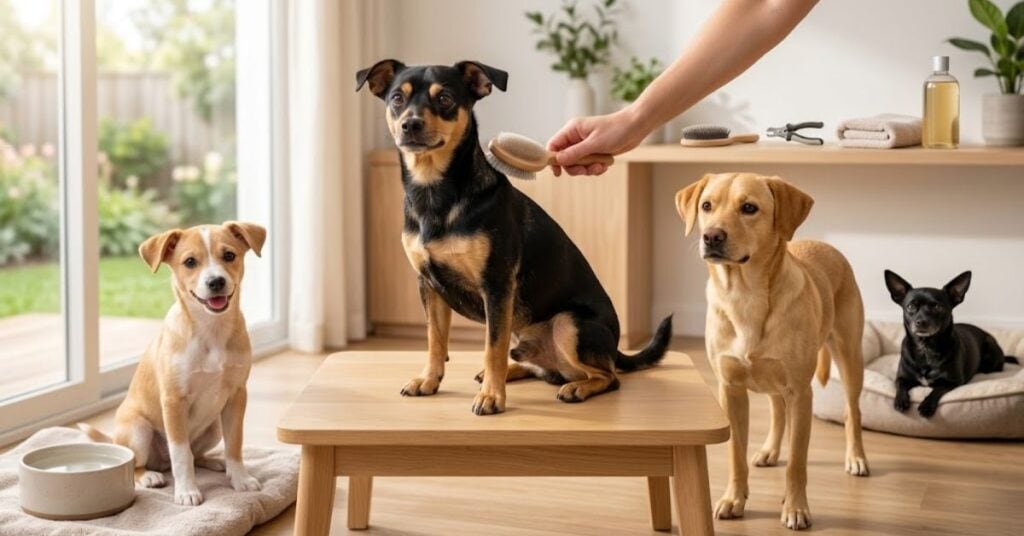
Grooming needs depend heavily on the coat inherited from the parents.
A short-coated Chihuahua Lab Mix may need only regular brushing to remove loose hair and distribute natural oils. A dog with a longer or denser coat may need more frequent brushing to prevent tangles.
Labradors have dense double coats and can shed significantly. Chihuahua coats can be smooth or long. Therefore, the Labradoodle’s shedding level cannot be guaranteed from its name.
Brush the dog according to its coat condition rather than following a rigid schedule.
During heavy shedding periods, more frequent brushing may be useful.
Bathing should happen when the coat becomes dirty or develops an odor, unless a veterinarian recommends a different routine for a skin condition.
Use products made specifically for dogs.
Dental care deserves consistent attention. Small-dog ancestry can make oral hygiene particularly important, especially if the dog has crowded teeth.
Brush the teeth with dog-safe toothpaste and introduce dental care gradually.
Nails should also be checked regularly.
Long nails can affect foot placement and make walking uncomfortable.
Ears should receive routine visual checks. Strong odor, discharge, redness, swelling, or persistent scratching should prompt veterinary advice.
Daily and Weekly Care Checklist
- ☐ Check appetite and water intake.
- ☐ Observe energy and movement.
- ☐ Brush the coat as needed.
- ☐ Check paws after outdoor activity.
- ☐ Check teeth and gums.
- ☐ Watch for unusual ear odor or discharge.
- ☐ Keep nails at an appropriate length.
- ☐ Wash bedding regularly.
- ☐ Keep parasite prevention current as advised by your veterinarian.
- ☐ Record unusual changes in behavior or health.
Grooming is also a useful bonding opportunity.
Start slowly if the dog dislikes brushing or nail handling. Reward calm behavior and stop before the dog becomes overwhelmed.
Never turn grooming into a wrestling match. If professional grooming becomes necessary, choose a groomer who understands small dogs and uses calm handling.
Chihuahua Lab Mix Food, Nutrition, and Healthy Weight
Feeding a Chihuahua Lab Mix requires attention to its actual adult size and body condition.
Do not estimate food portions simply because the dog has a Labrador parent. Likewise, do not automatically feed a larger Labrahuahua ru lt lk mxvx a tiny Chihuahua.
Use a complete and balanced diet appropriate for the dog’s life stage and health needs.
Puppies require growth-supporting nutrition, while adults need food that maintains healthy body condition without unnecessary calories.
Treats count too.
Training rewards, table scraps, chews, food toppers, and snacks can add a substantial number of calories to a small or medium-sized dog’s daily intake.
The AVMA advises that treats should be controlled as part of total calorie intake and recommends discussing individual feeding needs with a veterinarian.
| Care Area | What to Monitor | Practical Action |
| Main food | Appetite and body condition | Measure portions consistently |
| Treats | Extra daily calories | Keep rewards controlled |
| Water | Normal drinking | Provide fresh water |
| Body condition | Ribs, waist, abdominal shape | Ask your vet to assess |
| Activity | Energy and stamina | Adjust exercise gradually |
| Weight | Upward or downward trend | Track regularly |
| Puppy growth | Development and body size | Use veterinary growth monitoring |
Do not assume a food label’s suggested portion perfectly matches every dog. Activity, age, metabolism, neuter status, medical conditions, and body condition can change nutritional requirements.
Weight deserves particular attention in this mix.
If a Labrahuahua inherits a Labrador-like appetite, overeating can become easy. Excess weight increases stress on joints and may contribute to health problems.
A simple monitoring system can help.
Labrahuahua Body-Condition Check
Green: You can feel the ribs without pressing hard, the waist is visible from above, and the abdomen rises toward the rear.
Yellow: The ribs are harder to feel, the waist is less visible, or weight has increased noticeably.
Red: Ribs are difficult to feel, the waist has disappeared, or your veterinarian identifies excess body fat.
This is an owner observation framework, not a replacement for veterinary body-condition scoring.
If weight changes quickly or you are unsure about the dog’s condition, arrange a veterinary assessment.
A healthy weight is more useful than trying to reach an arbitrary number.
Chihuahua Lab Mix Health Problems and Veterinary Care
A Chihuahua Lab Mix can inherit health risks associated with either parent breed. Being a mixed breed does not guarantee protection from inherited conditions.
Potential concerns depend on the individual dog’s genetics, size, anatomy, age, and lifestyle.
The Labrador side can be associated with orthopedic problems such as hip and elbow dysplasia, while Chihuahua ancestry can be associated with issues such as patellar luxation and dental disease.
Veterinary sources and breed-specific health guidance should be used to evaluate the individual dog rather than assuming every Labrahuahua will develop a particular condition.
One practical concern is weight.
If the dog becomes overweight, extra body mass can increase physical stress and make movement more difficult. The AVMA notes that healthy weight management can reduce the risk of disease and injury.
Dental care is another important prevention step, particularly when the dog’s mouth structure resembles its small-breed parent.
Owners should schedule routine veterinary examinations and maintain preventive care recommended for their area.
Watch for changes such as:
- Persistent coughing
- Difficulty breathing
- Limping
- Sudden weakness
- Repeated vomiting
- Persistent diarrhea
- Loss of appetite
- Sudden weight change
- Increased thirst or urination
- Pain when moving
- Severe itching
- Major behavior changes
These signs do not identify a specific disease by themselves.
Do not use an online breed article to diagnose your dog. A veterinarian can perform a physical examination and recommend appropriate testing when needed.
Genetic health information is also valuable when obtaining a puppy.
Ask about the health history of both parents and request documentation for relevant screening where available.
For an adopted adult dog, ask the rescue or shelter about previous veterinary records, vaccination history, known health problems, and behavior observations.
Prevention is usually easier than responding to advanced disease.
A consistent combination of veterinary care, balanced nutrition, dental hygiene, appropriate exercise, parasite prevention, weight monitoring, and safe handling gives a Chihuahua Lab Mix a stronger foundation for long-term health.
Is a Chihuahua Lab Mix Right for You?
A Chihuahua Lab Mix may suit an owner who wants an affectionate, active companion and is comfortable with some uncertainty about adult size and temperament.
The mix can be playful, intelligent, loyal, social, alert, and highly attached to its family.
However, it is not a predictable “small Labrador.”
Some individuals may remain relatively compact, while others can become much larger. Energy requirements can also vary substantially.
This matters when choosing a home.
An owner living in an apartment can potentially manage a Labrahuahua successfully, but only if the dog receives adequate daily activity, training, mental stimulation, and calm behavior practice.
A home with a secure yard can provide useful exercise space, but a yard does not replace walks or interaction.
Families with children should focus on the individual dog’s temperament and the child’s ability to respect the dog.
Homes with other pets should introduce animals slowly and supervise interactions.
A particularly important factor is time.
This mix may become strongly bonded to its people. A dog that spends long periods alone without preparation may develop boredom, barking, destructive behavior, or separation-related problems.
Before getting one, ask yourself:
- Can I provide daily exercise?
- Can I train consistently?
- Can I manage an uncertain adult size?
- Can I afford routine veterinary care?
- Can I maintain dental and grooming routines?
- Can I supervise interactions with larger dogs?
- Can I provide appropriate socialization?
- Can I manage food portions and weight?
- Can I give the dog enough companionship?
If the answer to these questions is yes, the Chihuahua Lab Mix can become a rewarding companion.
The key is to choose based on the individual dog rather than the novelty of the cross.
Chihuahua Lab Mix Care Framework for Everyday Life
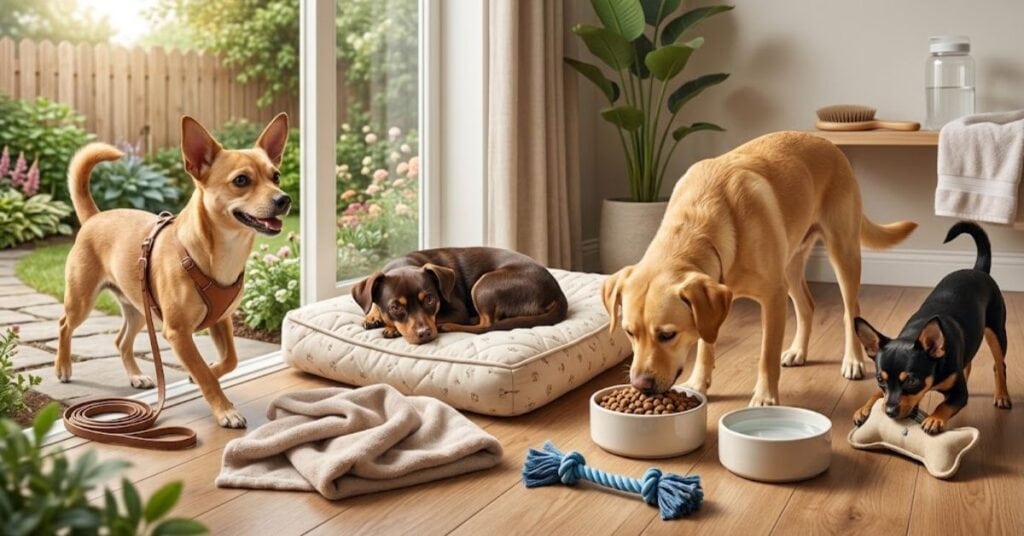
The easiest way to manage this unusual mix is to create a repeatable routine.
Morning Routine
Start with a bathroom break and a quick physical observation.
Look at the dog’s eyes, coat, movement, appetite, and energy.
Provide the scheduled meal and fresh water.
Follow breakfast with a walk, sniffing session, or age-appropriate play.
Midday Routine
Give the dog mental stimulation.
A food puzzle, short obedience session, scent game, or interactive toy can help prevent boredom.
If the dog spends time alone, gradually build independence rather than suddenly leaving it alone for many hours.
Evening Routine
Provide another activity session suited to the dog’s age and physical condition.
Practice one or two training skills.
Give the dog quiet family time afterward.
Check teeth, paws, and coat when appropriate.
Weekly Health Monitoring
| Green | Yellow | Red | |
| Appetite | Normal | Eating less | Refuses food |
| Energy | Normal | Quieter than usual | Very weak |
| Walking | Normal | Mild stiffness | Cannot walk normally |
| Breathing | Normal | Unusual after activity | Labored breathing |
| Weight | Stable | Noticeable change | Rapid change |
| Teeth | Normal routine | Odor/plaqueArea | Pain or bleeding |
| Skin | Healthy | Mild irritation | Severe redness/wounds |
| Behavior | Typical | Small change | Sudden major change |
This framework is designed to help owners notice changes early. It is not a diagnostic system.
If the dog enters the red category for breathing, collapse, severe weakness, serious injury, or another emergency sign, seek veterinary care promptly.
The greatest benefit of routine monitoring is familiarity.
When you know how your dog normally eats, sleeps, walks, plays, and behaves, unusual changes become easier to recognize.
Frequently Asked Questions
How big does a Chihuahua Lab Mix get?
Adult size varies considerably because Labrador Retrievers and Chihuahuas differ greatly in size. Published guides commonly place many Labrahuahuas somewhere in the small-to-medium range, but individual dogs can fall outside that range. Parent size, genetics, generation, sex, and nutrition all influence adult size.
What is a Chihuahua Lab Mix called?
A Chihuahua Lab Mix is commonly called a Labrahuahua. You may also see names such as Chihuahua Labrador Mix or Lab-Chi. These names describe the same general cross, but they do not establish a standardized adult size, appearance, or temperament.
Is a Chihuahua Lab Mix easy to train?
Many Chihuahua Lab Mixes can learn well with positive reinforcement. Labrador ancestry may contribute eagerness to please, while Chihuahua ancestry can contribute independence. Short, consistent training sessions, rewards, early socialization, and clear household rules can make training easier.
How much exercise does a Chihuahua Lab Mix need?
Exercise needs vary according to the dog’s adult size, age, health, and energy level. A healthy adult may enjoy daily walks, interactive play, scent games, and short training sessions. Start puppies gradually and reduce activity for dogs showing fatigue, pain, or unusual breathing.
Are Chihuahua Lab Mixes good family dogs?
They can be affectionate family companions, but suitability depends on the individual dog’s temperament and the household. Families should supervise children, manage interactions with larger dogs, provide daily activity, and maintain training and veterinary care. The dog’s actual personality matters more than the mixed-breed label alone.
Conclusion
The Chihuahua Lab Mix, or Labrahuahua, is an unusual combination of two very different dogs. The Chihuahua brings a tiny frame, confidence, alertness, and strong attachment to its people, while the Labrador Retriever contributes athleticism, friendliness, energy, and a strong desire to interact.
Because these traits can combine in different ways, no owner should expect every Labrahuahua to look or behave the same.
Adult size can vary widely. Coat texture and shedding can differ. Energy levels can range from moderate to quite active. Temperament may lean toward the Labrador’s outgoing personality, the Chihuahua’s watchful nature, or a mixture of both.
Good care starts with flexibility.
Feed according to the dog’s actual nutritional needs rather than its breed label. Monitor body condition instead of focusing only on a number. Provide regular exercise without overdoing it. Use positive training and early socialization. Maintain dental, coat, nail, and ear care. Most importantly, schedule routine veterinary examinations and respond promptly to unusual health changes.
A Chihuahua Lab Mix can be a loving and entertaining companion when its individual needs are understood.
The best approach is to appreciate the mix for what it actually is: a unique dog whose genetics, environment, training, and daily care all shape the adult you eventually live with.
Multimedia Placement Suggestions
- Featured Image: Place directly below the title. Show a beautiful adult Chihuahua Lab Mix outdoors with realistic Labrador and Chihuahua features.
- Appearance & Size Graphic: Place after the “Size and Appearance” section. Use 3–4 dogs with visibly different Labrahuahua builds.
- Care Infographic: Place after the daily-care framework, showing food, exercise, grooming, training, and veterinary care.
- Health Monitoring Graphic: Place beside the Green/Yellow/Red monitoring table.
- YouTube Video/Thumbnail: Place after the training section with a practical Chihuahua Lab Mix training theme.
- Pinterest Image: Use a vertical 1000 × 1500 design showing a Chihuahua Lab Mix with clear safe margins and no text over the dog’s face.
Tags
Chihuahua Lab Mix, Labrahuahua, Chihuahua Labrador Mix, Chihuahua Mix, Labrador Mix, Labrahuahua Care, Chihuahua Mix Dogs, Designer Dogs, Mixed Breed Dogs, Chihuahua Health
Social Media Caption
Meet the Chihuahua Lab Mix, also known as the Labrahuahua! 🐶 This unique mix combines the bold personality of a Chihuahua with the playful, energetic nature of a Labrador Retriever. Learn about size, temperament, training, nutrition, grooming, exercise, and health in our complete guide.
#ChihuahuaLabMix #Labrahuahua #ChihuahuaMix #LabradorMix #DogCare #DogHealth #DogTraining #ChihuahuaNest