

Quick Answer
Chihuahua rescue and transport involves finding Chihuahuas in need, arranging veterinary care, placing them in safe foster homes, and moving them to suitable permanent families.
Responsible rescue groups check each dog’s health and behavior, screen potential adopters, and use secure carriers or suitable restraints during transportation.
Author Information
Author: Gulnaz Malik
Position: Publisher & Pet Care Expert
Experience: 5+ years in dog care and grooming.
Editorial Approach: Practical dog-care information based on established animal welfare guidance, veterinary resources, and responsible pet ownership principles.
Introduction
Chihuahua Rescue and Transport plays an important role in helping abandoned, neglected, lost, and homeless Chihuahuas find safe places to live. Although these dogs are small, they still face serious risks when they lose their homes or receive poor care. Some end up in shelters, while others need emergency medical attention, temporary foster homes, or transportation to a safer location.
Rescuing a Chihuahua involves much more than picking up a dog and taking it home. The process requires careful handling, health checks, suitable shelter, behavioral support, and responsible adoption planning. Transportation also needs special attention because a frightened or injured Chihuahua can become stressed during a journey.
Whether you want to adopt a rescued Chihuahua, support a rescue group, become a foster parent, or help transport dogs, understanding the process can make a real difference.
This guide explains how Chihuahua rescue works, where to find trustworthy organizations, what happens before adoption, how to transport a rescued dog safely, and how to help it adjust to a new family.
What Is Chihuahua Rescue and Transport?
Chihuahua rescue and transport refers to the organized process of helping Chihuahuas leave unsafe or unsuitable situations and reach appropriate care. Rescue groups may take dogs from shelters, owner surrenders, neglect cases, or other situations where animals need assistance.
The goal is not simply to move a dog from one location to another. A responsible rescue process considers the dog’s physical health, emotional condition, safety, and long-term home environment.
Some organizations operate through foster families instead of traditional shelters. Volunteers provide temporary homes while rescue coordinators arrange veterinary treatment, adoption applications, and transportation.
One example is Chihuahua Rescue & Transport (CRT), a nonprofit organization in the United States that helps Chihuahuas and Chihuahua mixes through volunteer-based rescue, foster care, and adoption programs. Its activities cover several US regions, so its adoption services should not be confused with local rescue availability in other countries.
Rescue work commonly includes:
- Identifying Chihuahuas that need immediate assistance.
- Checking for identification and possible owners.
- Arranging veterinary examinations.
- Providing food, shelter, and temporary care.
- Evaluating behavior and individual needs.
- Finding suitable foster or permanent homes.
- Organizing safe transportation.
- Supporting adopters after placement.
A rescued Chihuahua may be a puppy, adult, or senior dog. Some arrive healthy but frightened, while others need treatment for dental disease, skin problems, injuries, or poor nutrition. The Best Teacup Chihuahua for Your Home
The most important principle is to treat every dog as an individual. A Chihuahua’s age, medical history, temperament, and previous experiences should guide its care and placement.
Why Do Chihuahuas Need Rescue and Rehoming?
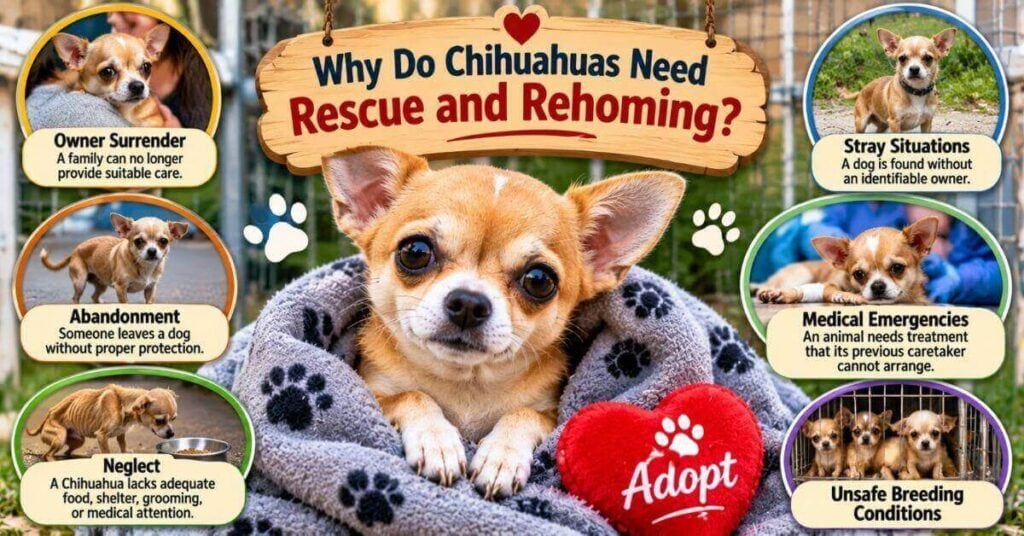
Chihuahuas can become homeless for many reasons. Some owners face financial difficulties, housing changes, illness, or family circumstances that prevent them from providing proper care. Others abandon their dogs or fail to protect them from neglect.
Small dogs can also become lost because they escape through open gates, slip out of collars, or become frightened in unfamiliar places.
Some common reasons Chihuahuas enter rescue programs include:
- Owner surrender: A family can no longer provide suitable care.
- Abandonment: Someone leaves a dog without proper protection.
- Neglect: A Chihuahua lacks adequate food, shelter, grooming, or medical attention.
- Stray situations: A dog is found without an identifiable owner.
- Medical emergencies: An animal needs treatment that its previous caretaker cannot arrange.
- Unsafe breeding conditions: Dogs need help leaving overcrowded or unsuitable breeding environments.
- Shelter overcrowding: A rescue group may help move a Chihuahua into foster care to create space.
A Chihuahua’s small body creates additional safety concerns. Falls, rough handling, attacks by larger animals, and exposure to extreme weather can cause serious harm.
Some rescued dogs also struggle emotionally. A Chihuahua that has experienced abandonment may hide, bark excessively, avoid handling, or become nervous around unfamiliar people.
These behaviors do not automatically make a dog aggressive or unsuitable for adoption. They may reflect fear, stress, or a lack of positive experiences.
Understanding the breed’s needs can help potential adopters prepare. Read our Chihuahua characteristics to learn more about its temperament, training, safety, and everyday requirements.
Rescue is important because every dog deserves appropriate care, protection, and a chance to live in a safe environment.
Chihuahua Rescue and Adoption Process
How Does the Chihuahua Rescue and Adoption Process Work?
A responsible Chihuahua rescue program follows several steps before placing a dog in a permanent home. The exact process varies between organizations, but most reputable groups focus on health, safety, and compatibility.
1.Initial Assessment for Chihuahua Rescue and Transport
The rescue team first establishes where the dog came from and whether it has an owner. If the dog is found wandering, volunteers should follow local procedures for reporting a found animal and checking identification. The organization then assesses immediate needs. An injured or seriously ill Chihuahua may require urgent veterinary treatment before entering a foster home.
2. Chihuahua Rescue and Transport: Veterinary Examination
A veterinarian evaluates the dog’s general condition and recommends appropriate care.
Depending on the individual dog, this may include:
- Physical examination.
- Vaccination planning.
- Parasite screening and treatment.
- Flea and tick prevention.
- Dental assessment.
- Blood tests when indicated.
- Treatment for injuries or existing conditions.
- Microchip scanning and identification.
Spaying or neutering may also form part of the rescue program, depending on the dog’s age and health.
3. Chihuahua Rescue and Transport: Foster Care and Recovery
Once the dog is stable enough, a rescue organization may place it with a foster family. The foster caregiver provides food, clean bedding, supervision, exercise, and emotional support. They can also observe how the Chihuahua behaves around visitors, other animals, household sounds, and everyday activities.
4. Adoption applications and screening
Potential adopters may need to complete an application, provide references, discuss their household, and explain their experience with dogs. Some organizations also arrange home visits or meetings with the dog.
5. Adoption approval and transfer
After selecting a suitable home, the rescue explains the adoption agreement, fees, medical history, and any ongoing care requirements. The adopter should receive available veterinary records, medication instructions, feeding information, and identification details.
6. Post-adoption support
A responsible organization may offer advice after adoption and explain what to do if unexpected health or behavior problems arise. The ASPCA explains that adoption procedures and fees differ between organizations. Its official pet adoption guidance also discusses finding animals, preparing a home, veterinary care, and fostering.
Choosing a Trustworthy Chihuahua Rescue
Finding the right rescue organization is one of the most important parts of Chihuahua adoption. A genuine rescue should put the dog’s welfare before quick placements or unnecessary payments.
Start by searching for established animal shelters, registered charities, breed-specific rescue groups, and reputable foster-based organizations. ASPCA – Animal Relocation for Adoption
Do not assume that every website or social media account advertising rescued Chihuahuas is legitimate. Verify the organization before sending money or sharing personal information.
Look for these positive signs:
- The organization provides clear contact information.
- Its rescue and adoption procedures are explained.
- It shares available medical and behavioral information.
- Volunteers can explain the dog’s background.
- Adoption agreements are provided in writing.
- Fees are explained before payment.
- The group asks questions about your home and experience.
- It offers guidance after adoption.
- It does not pressure you into an immediate decision.
Be cautious if someone refuses to provide basic information, demands payment through suspicious methods, or will not arrange a reasonable opportunity to verify the dog.
Ask the organization:
- Where was the Chihuahua rescued from?
- Has a veterinarian examined the dog?
- Which vaccinations has it received?
- Is it taking medication?
- Does it have known medical conditions?
- How does it behave around children and other pets?
- Is it comfortable being handled?
- What food is it currently eating?
- What support is available after adoption?
An honest rescue organization should explain what it knows and openly discuss what remains unknown.
Not every rescued Chihuahua has a complete history. A stray dog may arrive without previous medical records or reliable information about its behavior. Responsible organizations should communicate these limitations rather than inventing a background.
Chihuahua Foster Care & Recovery
Foster care gives a rescued Chihuahua a temporary home while the organization arranges treatment and permanent placement. It can be especially helpful for dogs that feel frightened in busy shelter environments.
A foster home should provide a quiet sleeping area, clean water, suitable food, safe exercise, and gentle handling.
The first few days should focus on comfort and observation rather than demanding training sessions.
Some rescued Chihuahuas may need special medical attention. Common concerns include dental disease, skin infections, parasites, poor body condition, untreated injuries, and age-related problems.
Puppies and very small dogs may also need careful feeding plans. A veterinarian should guide the routine when low blood sugar, weakness, or poor appetite is a concern.
A simple foster-care framework:
| Care Area | What the Foster Parent Should Do | What to Monitor |
| Nutrition | Provide measured, appropriate meals | Appetite and weight |
| Hydration | Keep fresh water available | Drinking habits |
| Health | Follow veterinary instructions | Pain, illness, and recovery |
| Grooming | Brush gently and maintain hygiene | Skin, coat, and nails |
| Behavior | Use patient, positive handling | Fear, confidence, and stress |
| Exercise | Provide suitable short activities | Energy and comfort |
| Rest | Offer a quiet sleeping area | Sleep and relaxation |
Keep the dog separated from unfamiliar pets at first. Introduce animals gradually and supervise every interaction.
Avoid forcing a frightened Chihuahua to accept hugs, handling, or visitors. Let the dog approach when it feels comfortable.
Foster caregivers should also keep written notes about food intake, toilet habits, medication, behavior, and unusual symptoms. These details help the rescue organization and future adopter understand the dog’s needs.
A successful foster placement does not require the dog to become perfectly trained. Its main purpose is to provide safety, recovery, and a better understanding of the dog’s personality.
How to Transport a Rescued Chihuahua Safely

Safe transportation is a major part of Chihuahua rescue. A dog may need to travel from a shelter to a veterinary clinic, a foster home, or its permanent family. Because Chihuahuas are small and can become frightened easily, they need secure handling throughout the journey.
Choosing the Right Carrier and Restraint
Choose a well-ventilated carrier that gives the dog enough room to stand, turn around, and lie down comfortably. Make sure it is firmly fastened to prevent movement when the vehicle brakes suddenly. A suitable crash-tested pet restraint may also be an option when used according to its instructions.
Never allow a rescued Chihuahua to sit loose in the vehicle, ride on the driver’s lap, or travel with its head outside an open window.
Pre-Travel Checklist for Chihuahua Rescue and Transport
Before leaving:
- Confirm the destination and travel arrangements.
- Assess your dog’s overall health and make sure it is fit for the journey.
- Use a secure, correctly sized carrier.
- Add a familiar blanket if available.
- Pack fresh water and a suitable bowl.
- Bring food and medication.
- Carry veterinary records and emergency contacts.
- Attach identification to the dog using a properly fitted collar or harness when appropriate.
- Keep a leash available for safe stops.
Safe Driving and On-the-Road Care
The American Veterinary Medical recommends securing dogs during car journeys, avoiding loose travel, and taking precautions against overheating and other travel risks. For longer journeys, plan safe breaks for water and toilet needs. Keep the Chihuahua securely restrained before opening any vehicle door.
Never keep the dog unattended inside a parked vehicle. Temperatures can become dangerous even when the weather outside feels mild. Do not give sedatives or human medicines to make a dog travel quietly. Ask a veterinarian about motion sickness, travel anxiety, or any medication concerns.
Air Travel and Special Medical Considerations
Air travel and international transport require additional planning. Check airline policies, destination entry rules, vaccination requirements, microchip standards, and veterinary health certificate requirements before booking.
A Chihuahua with breathing problems, recent surgery, serious illness, or an injury may need a different transport arrangement. The veterinarian should decide whether travel is appropriate.
Preparing Your Home for a Rescued Chihuahua
Before bringing a rescued Chihuahua home, prepare a quiet and secure space where it can rest without constant disturbance.
A new environment may feel overwhelming, particularly for a dog that has recently experienced abandonment or multiple changes of home.
Start with the basics:
- A comfortable dog bed.
- Food and water bowls.
- The food currently used by the rescue.
- A properly fitted harness and leash.
- A secure carrier.
- Safe toys.
- Dog-safe grooming products.
- Cleaning supplies.
- A quiet resting area.
- An identification tag.
Check your home for hazards. Secure electrical wires, remove small objects that could be swallowed, block unsafe gaps, and prevent access to high furniture where a tiny dog could fall.
If you already have pets, keep the new Chihuahua in a separate area initially. Allow them to become familiar with each other’s scent before arranging calm, supervised meetings.
Do not expect immediate friendship. Some dogs need days or weeks to feel comfortable around new animals.
Keep the first few days simple. Avoid large gatherings, loud music, frequent visitors, and unnecessary outings.
Continue the rescue’s existing feeding routine initially. If you plan to change food, discuss the transition with your veterinarian and make changes gradually when appropriate.
A predictable routine helps the dog understand when it will eat, rest, play, and go outside.
Helping Your Chihuahua Adjust to a New Home
Adoption is the beginning of a new relationship. Even a friendly Chihuahua may need time to trust unfamiliar people and learn household routines.
Some rescued dogs settle quickly, while others hide, bark, avoid contact, or struggle with separation. These reactions should be handled patiently.
Give the dog a quiet place where nobody forces interaction. Let the dog come to you when it feels ready.
Use positive reinforcement to reward calm behavior. Small treats, gentle praise, and short training sessions can help build confidence. Chihuahua Rescue & Transport
House training may also require patience. A Chihuahua that previously lived outdoors or in an overcrowded environment may not understand your household toilet routine.
Take the dog to an appropriate toilet area after waking, eating, playing, and resting. Reward success instead of punishing accidents.
Watch for changes in appetite, drinking, energy, stool, and behavior. Arrange a veterinary examination soon after adoption and follow the recommended vaccination, parasite prevention, and treatment plan.
A simple first-month adjustment plan:
| Period | Main Goal | Helpful Actions |
| First 3 days | Safety and rest | Quiet space, regular meals, gentle interaction |
| First week | Establish routine | Vet visit, toilet schedule, calm bonding |
| Second week | Build confidence | Short training, supervised exploration |
| Third week | Encourage independence | Gentle alone-time practice, enrichment |
| Fourth week | Strengthen habits | Consistent routines and gradual socialization |
This is a suggested routine, not a strict time limit. A fearful or medically recovering Chihuahua may need more time.
Avoid judging progress by how quickly the dog becomes affectionate. Feeling safe is more important than performing tricks or accepting handling.
How to Support Chihuahua Rescue Without Adopting
Not everyone can adopt a dog, but there are several meaningful ways to support Chihuahua rescue organizations.
Foster a Chihuahua: Temporary care can help a rescue accept another dog that needs assistance.
Volunteer your time: Organizations may need help with transport, cleaning, feeding, administration, adoption events, or communication.
Donate responsibly: Financial contributions can help pay for veterinary examinations, medication, food, and emergency treatment. Always verify the organization before donating.
Provide supplies: Ask the rescue whether it needs food, bedding, carriers, cleaning products, or other essential items.
Help with transportation: Experienced and approved volunteers may assist with journeys between shelters, veterinary clinics, and foster homes.
Share verified adoption listings: Responsible sharing can help a suitable family discover a dog that needs a permanent home.
Support education: Encourage responsible ownership, identification, sterilization where appropriate, and early veterinary care.
If you cannot adopt, fostering or volunteering can still improve the lives of dogs waiting for homes.
Chihuahua Rescue and Transport Safety Checklist
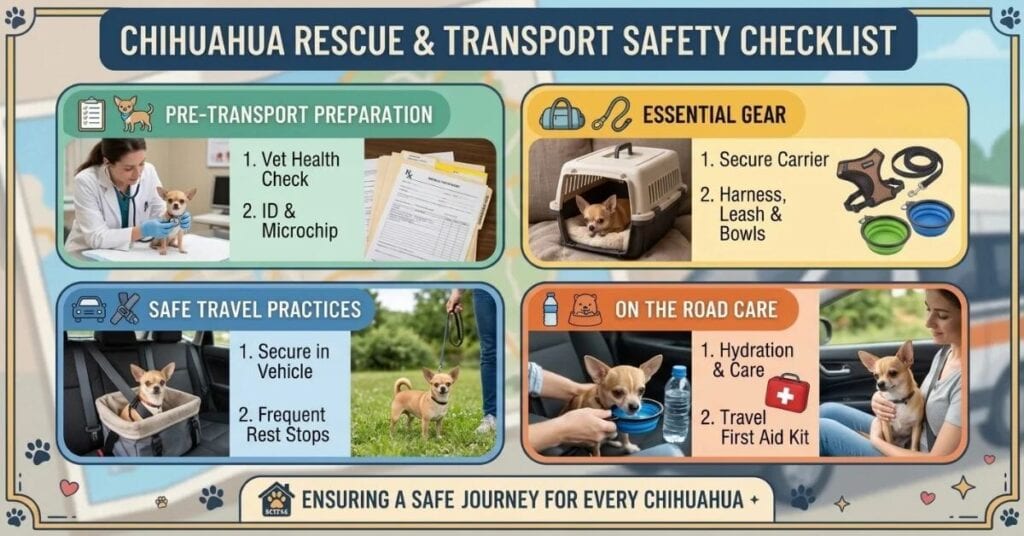
Use this checklist before accepting, moving, fostering, or adopting a rescued Chihuahua.
Rescue Preparation
- Confirm the dog needs assistance.
- Check for an owner or identification where possible.
- Contact an appropriate rescue group or animal welfare service.
- Arrange veterinary help if the dog is injured or unwell.
- Prepare a safe temporary location.
Before Transportation
- Confirm the dog’s destination.
- Check whether it is medically fit to travel.
- Prepare a secure, ventilated carrier.
- Pack water, food, medication, and records.
- Prepare a safe travel route.
- Arrange suitable breaks for longer journeys.
Adoption preparation
- Review available medical records.
- Discuss behavior and known triggers.
- Understand adoption fees and agreements.
- Prepare a safe home environment.
- Arrange a veterinary appointment.
- Confirm identification and microchip details.
- Learn the dog’s current feeding routine.
After Adoption
- Provide a quiet resting area.
- Maintain predictable daily routines.
- Introduce pets gradually.
- Use positive reinforcement.
- Monitor health and behavior.
- Seek veterinary advice when concerns arise.
A checklist cannot replace professional veterinary advice or responsible rescue procedures, but it can help prevent important steps from being overlooked.
Conclusion
Chihuahua Rescue and Transport gives vulnerable dogs an opportunity to leave unsafe situations and find loving, secure homes. However, successful rescue involves much more than moving a Chihuahua from one place to another. Every dog needs appropriate health care, safe handling, suitable temporary shelter, and a carefully planned adoption process.
Before adopting, research the rescue organization, ask about the dog’s medical and behavioral history, and make sure your household can meet its needs. If you are helping with transportation, use a secure carrier, plan the journey carefully, and follow veterinary advice.
Remember that rescued Chihuahuas may need extra time to trust people and adjust to unfamiliar surroundings. Patience, gentle training, predictable routines, and proper medical care can help them feel secure.
You do not have to adopt a Chihuahua to make a difference. Fostering, volunteering, donating, and supporting responsible rescue work are all valuable ways to help.
Every Chihuahua deserves kindness, protection, and a chance to enjoy a happy life. A little time, responsible planning, and compassion can help make that possible.
Frequently Asked Questions
1. What is Chihuahua Rescue and Transport?
It helps homeless or abandoned Chihuahuas find safe foster homes and loving families.
2. How can I adopt a rescued Chihuahua?
Contact a trusted rescue organization, complete its application, and follow its adoption process.
3. Do rescued Chihuahuas need special care?
Some need veterinary treatment, proper nutrition, patience, and help adjusting to a new home.
4. How do you transport a Chihuahua safely?
Use a secure, well-ventilated pet carrier and keep it properly secured during travel.
5. Can I help Chihuahua rescues without adopting?
Yes. You can volunteer, foster, donate supplies, or help with safe dog transportation.