

Introduction
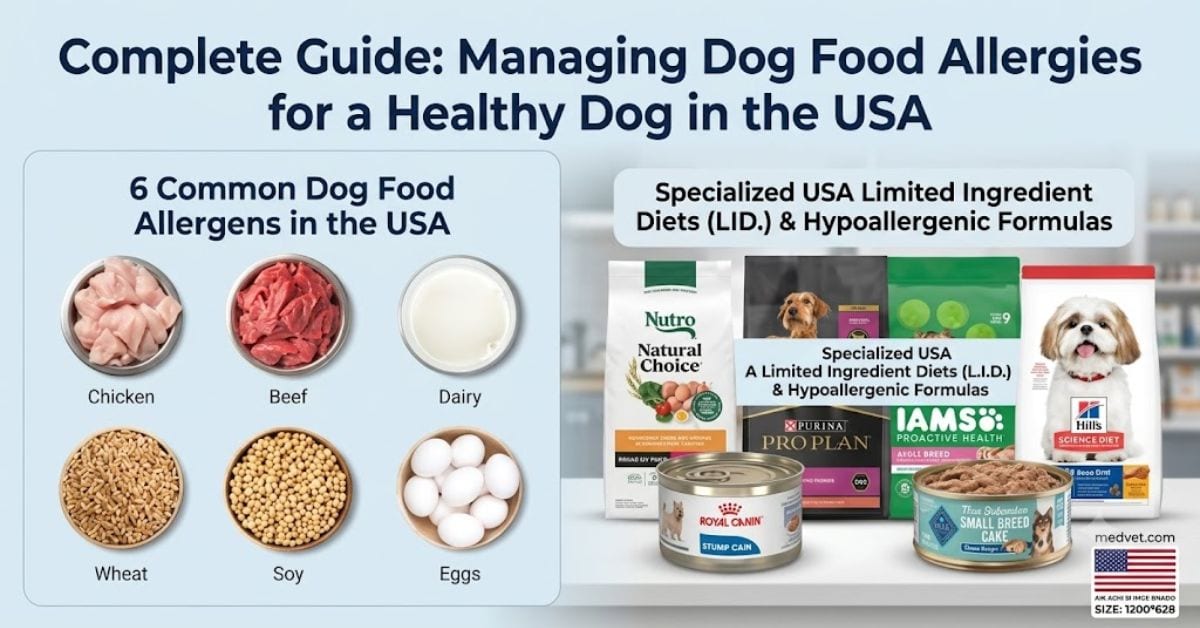
Many dog owners search for the best dog food for food allergies because food allergies can cause itching, skin irritation, ear infections, and digestive problems. The right diet can help reduce symptoms, improve comfort, and support your dog’s overall health.
Choosing the right dog food for food allergies can improve your dog’s quality of life. The right diet can reduce itching, support healthy digestion, improve skin condition, and help your dog feel comfortable every day.
Food allergies develop when a dog’s immune system reacts to specific ingredients. The body treats these ingredients as harmful substances and creates an allergic response. Over time, the symptoms may become worse if the dog continues to eat the problem ingredient.
Many dogs react to common proteins such as chicken, beef, dairy, or eggs. Some dogs also react to grains and other ingredients. Finding the exact cause requires patience and careful observation.
This guide explains everything dog owners need to know about dog food for food allergies. You will learn how food allergies develop, how to recognize symptoms, which ingredients to avoid, and how to choose the best food for your dog.
Dog Food for Food Allergies and Understanding Food Allergies in Dogs

Food allergies affect dogs of all breeds and ages. Some dogs develop allergies when they are young, while others show symptoms later in life. The immune system plays a major role in these reactions.
When a dog eats a food ingredient that triggers an allergy, the immune system responds aggressively. Instead of accepting the ingredient as normal food, the body treats it like a threat.
This reaction causes inflammation and various symptoms throughout the body, which is why many owners turn to minimally processed diets like those covered in our Dr. Marty dog food review to help reduce this internal inflammatory response.
Many owners confuse food allergies with food intolerances. Although the symptoms may look similar, they are different conditions. A food allergy involves the immune system. A food intolerance usually affects digestion without triggering an immune response.
Choosing the correct dog food for food allergies starts with understanding the cause of the problem. Most allergic reactions come from proteins. Dogs can become allergic to foods they have eaten for years. Continuous exposure sometimes increases sensitivity.
Food allergies often create long-term discomfort. Dogs may scratch constantly, lick their paws, or develop recurring ear infections. Some dogs also experience diarrhea, vomiting, or excessive gas.
Veterinarians often recommend an elimination diet to identify the problem ingredient. During this process, the dog eats a limited number of ingredients for several weeks. Owners then reintroduce ingredients one at a time to identify the trigger.
Early diagnosis helps prevent ongoing discomfort. Once owners identify the allergen, they can select a suitable food that avoids the trigger ingredient. This change often leads to significant improvements in the dog’s health and behavior.
Common Causes of Food Allergies
- Beef
- Chicken
- Dairy products
- Eggs
- Wheat
- Soy
- Corn
- Artificial additives
Signs of Food Allergies
- Constant itching
- Red skin
- Ear infections
- Paw licking
- Hair loss
- Diarrhea
- Vomiting
Dog Food for Food Allergies Symptoms Every Owner Should Know
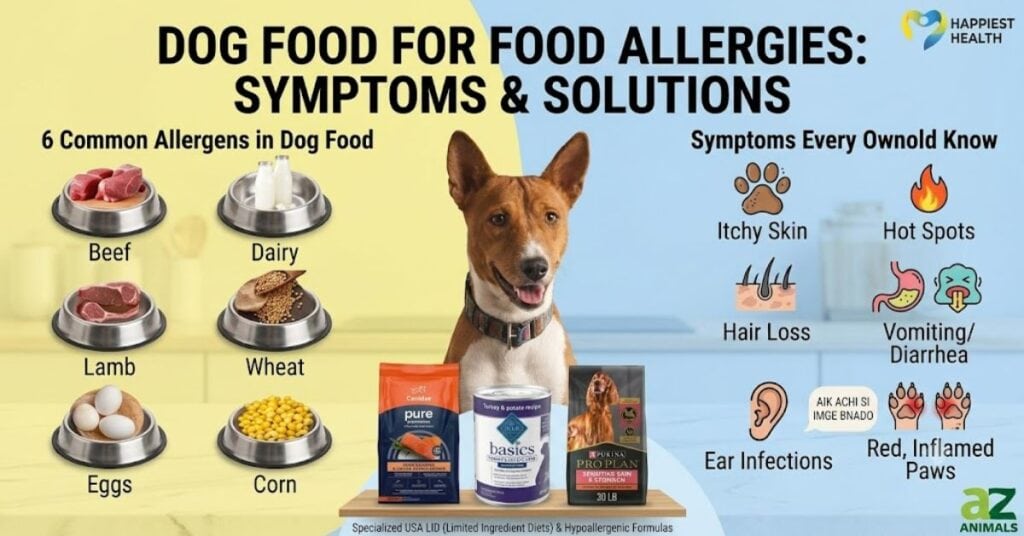
Recognizing symptoms helps owners take action before the condition becomes severe. Food allergies often appear gradually. Many owners overlook the early warning signs because they resemble other health issues, similar to the sensitivity symptoms outlined in our best dog food for Yorkies guide, where itchy skin, ear infections, and digestive upset are red flags.
Skin problems remain one of the most common symptoms. Dogs may scratch their ears, neck, belly, and paws throughout the day. This constant scratching can damage the skin and create secondary infections.
Ear infections also occur frequently. Dogs with food allergies often develop recurring ear problems that return even after treatment. Owners may notice redness, odor, or excessive wax buildup.
Digestive symptoms can also signal a food allergy. Some dogs experience loose stools, diarrhea, vomiting, bloating, or frequent gas. These symptoms may appear immediately after eating or develop over time.
Behavioral changes sometimes occur as well. Dogs that feel uncomfortable may become restless, irritable, or less active. Chronic itching and digestive discomfort can affect mood and energy levels.
A proper dog food for food allergies can reduce these symptoms significantly. Many owners notice improvements within several weeks after changing diets. However, complete recovery often requires strict ingredient control.
If symptoms persist despite dietary changes, owners should consult a veterinarian. Environmental allergies, parasites, and skin infections can create similar symptoms.
Skin Symptoms
- Excessive scratching
- Redness
- Dry skin
- Hot spots
- Hair loss
Digestive Symptoms
- Diarrhea
- Vomiting
- Gas
- Stomach discomfort
- Loose stools
Ear Symptoms
- Frequent infections
- Red ears
- Bad odor
- Head shaking
Dog Food for Food Allergies and Common Ingredients to Avoid

Many commercial dog foods contain ingredients that commonly trigger allergic reactions. Understanding these ingredients helps owners make better feeding decisions.
Proteins cause most food allergies in dogs. Beef and chicken rank among the most common triggers. Many pet foods contain these proteins because manufacturers use them widely.
Dairy products also create problems for some dogs. Milk proteins can trigger immune responses and digestive issues. Dogs with dairy allergies may experience itching and stomach upset.
Wheat and soy appear in many budget-friendly dog foods. Some dogs tolerate these ingredients well, while others react negatively. Owners should monitor their dogs carefully when feeding foods that contain these ingredients, as highlighted in our Cesar dog food review, where these fillers are commonly linked to sensitivities in dogs with weaker digestion.
Artificial colors, preservatives, and flavor enhancers may also contribute to allergic reactions. Although they do not affect every dog, sensitive dogs often benefit from foods with natural ingredients.
Reading ingredient labels plays a major role in selecting the right dog food for food allergies. Owners should examine every ingredient carefully and avoid products that contain known triggers.
Many premium allergy-friendly foods focus on simple ingredient lists. These diets reduce the chance of accidental exposure and make it easier to identify potential allergens.
Ingredients Often Linked to Allergies
- Beef
- Chicken
- Dairy
- Wheat
- Soy
- Eggs
- Corn
Ingredients Worth Considering
- Salmon
- Duck
- Venison
- Lamb
- Sweet potatoes
- Peas
- Pumpkin
Dog Food for Food Allergies Types and Special Diet Options
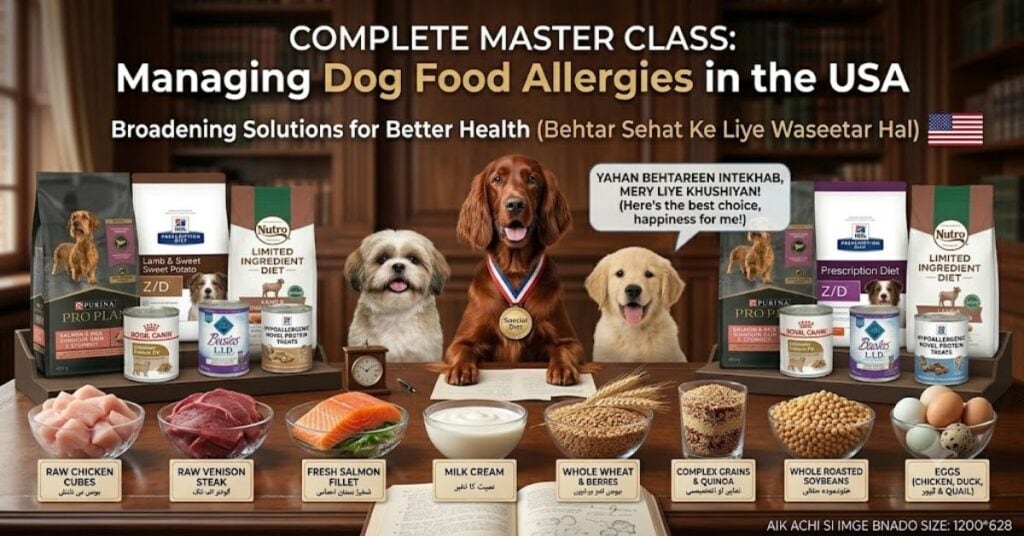
Different dietary approaches help dogs with food allergies. Veterinarians often recommend specific diet types based on the dog’s symptoms and medical history.
Limited-ingredient diets contain fewer ingredients than traditional dog foods. These diets help reduce exposure to potential allergens. They also simplify the process of identifying food triggers.
Novel-protein diets use protein sources that dogs rarely consume. Examples include duck, venison, rabbit, and kangaroo. Since the dog has limited exposure to these proteins, the immune system may tolerate them better.
Hydrolyzed-protein diets represent another option. Manufacturers break protein molecules into very small pieces. The immune system often fails to recognize these fragments as allergens.
Grain-free diets help some dogs, although grain allergies remain less common than protein allergies. Owners should not assume grains cause the problem without proper testing.
guidance improve success rates.
The best dog food for food allergies depends on the individual dog. What works well for one dog may not work for another. Careful observation and veterinary guidance improve success rates, which is why novel-protein options featured in our Fromm dog food review are often recommended as a starting point for dogs that haven’t responded well to standard formulas.
Many owners achieve positive results through trial and error. Patience remains essential because dietary improvements often take several weeks to become noticeable.
Limited Ingredient Diet Benefits
- Fewer allergens
- Easier ingredient tracking
- Better symptom monitoring
Novel Protein Sources
- Duck
- Venison
- Rabbit
- Kangaroo
- Salmon
Hydrolyzed Protein Benefits
- Reduced immune response
- Veterinary support
- Effective elimination diets
Dog Food for Food Allergies Comparison Table
| Diet Type | Main Benefit | Best For |
| Limited Ingredient Diet | Fewer ingredients | Mild allergies |
| Novel Protein Diet | New protein source | Protein allergies |
| Hydrolyzed Protein Diet | Broken-down proteins | Severe allergies |
| Grain-Free Diet | Removes grains | Grain-sensitive dogs |
| Prescription Diet | Veterinary support | Complex cases |
Dog Food for Food Allergies and Choosing the Right Food

Choosing the correct food requires careful planning. Owners should focus on ingredient quality, nutritional balance, and allergy safety.
The ingredient list should remain short and clear. Avoid foods with unnecessary fillers and artificial additives. High-quality ingredients support better digestion and overall health.
Protein selection matters greatly. Owners should choose proteins that their dogs tolerate well. Novel proteins often provide excellent results for dogs with confirmed allergies.
Nutritional balance remains important even when managing allergies. Dogs still need healthy proteins, fats, vitamins, and minerals. A balanced diet supports healthy skin, coat quality, and immune function.
Consulting a veterinarian helps owners make informed decisions. Professional guidance can reduce guesswork and improve long-term results.
Tips for Choosing Food
- Read labels carefully
- Avoid known allergens
- Select quality ingredients
- Monitor symptoms
- Follow veterinary advice
Dog Food for Food Allergies: Feeding Tips for Long-Term Success

Managing food allergies requires consistency. Even small amounts of trigger ingredients can cause symptoms to return.
Owners should avoid feeding table scraps. Human foods often contain hidden allergens that interfere with allergy management. Family members should understand the importance of dietary control.
Treat selection also matters. Many treats contain common allergens. Owners should choose treats that match the dog’s allergy-friendly diet.
Regular monitoring helps identify problems early. Keeping a food diary allows owners to track symptoms and evaluate dietary changes.
Hydration supports overall health. Fresh water should remain available at all times. Proper hydration supports digestion and skin health.
A consistent feeding routine helps dogs adapt to new diets. Gradual transitions reduce digestive upset and improve acceptance of new foods.
Feeding Best Practices
- Maintain consistency
- Avoid table scraps
- Use allergy-friendly treats
- Track symptoms
- Provide fresh water
Conclusion
Finding the right dog food for food allergies can transform a dog’s health and comfort. Food allergies often cause itching, digestive issues, ear infections, and skin problems. Fortunately, proper nutrition can reduce these symptoms significantly.
Owners should identify allergy triggers, read ingredient labels carefully, and choose diets that support their dogs’ specific needs. Limited-ingredient diets, novel-protein diets, and hydrolyzed-protein diets all offer valuable solutions.
Patience remains important during the process. Dietary changes often take time to produce visible results. With proper management, dogs with food allergies can enjoy healthy, comfortable, and active lives.
FAQs
1. What is the best dog food for food allergies?
The best dog food for food allergies depends on your dog’s trigger ingredients. Many dogs benefit from limited-ingredient, novel-protein, or hydrolyzed-protein diets.
2. How do I know if my dog has food allergies?
Common signs include itching, ear infections, paw licking, vomiting, diarrhea, and skin irritation.
3. Can chicken cause food allergies in dogs?
Yes. Chicken ranks among the most common food allergens in dogs.
4. How long does it take for allergy symptoms to improve?
Many dogs show improvement within 6 to 12 weeks after starting a proper elimination or allergy-friendly diet.
5. Are grain-free diets good for dogs with food allergies?
Some dogs benefit from grain-free diets, but protein allergies occur more often than grain allergies.
6. Can puppies develop food allergies?
Yes. Puppies can develop food allergies, although symptoms may appear at any age.
7. Should I consult a veterinarian before changing dog food?
Yes. A veterinarian can help identify triggers and recommend the most suitable dog food for food allergies.