


Quick Answer
The best food for Chihuahua dogs is a complete and balanced diet designed for their age, size, and activity level.
Small-breed dog food with appropriate kibble size, quality protein, healthy fats, vitamins, and minerals can support healthy growth, digestion, strong muscles, and a shiny coat.
Author Information
Author: Gulnaz Malik
Role: Publisher & Pet Care Expert
Experience: 5+ years in dog care and grooming.
Editorial Approach: Research-based pet care information using trusted canine nutrition resources and practical guidance. This article has not been represented as individually veterinary-reviewed.
Introduction
Choosing the best food for Chihuahua dogs can feel confusing because these little companions have different nutritional needs at different stages of life. Their tiny bodies need carefully measured meals, balanced nutrients, and food that they can comfortably chew and digest.
Chihuahuas are among the smallest dog breeds, but they have plenty of energy and personality. Their small stomachs mean that meal size and feeding frequency deserve attention. Puppies also need regular meals to support growth and reduce the risk of low blood sugar.
Feeding your Chihuahua the wrong type or amount of food can contribute to weight problems, digestive discomfort, poor coat condition, and nutritional deficiencies. On the other hand, a suitable diet helps maintain healthy muscles, bones, teeth, and energy levels.
You do not need to buy the most expensive dog food to keep your Chihuahua healthy. What matters most is nutritional quality, proper portions, and choosing a formula that matches your dog’s life stage.
This guide explains how to select suitable food, compare dry and wet options, understand nutritional requirements, and create a practical feeding routine for your Chihuahua.
What Makes the Best Food for Chihuahua Dogs?
The best food for Chihuahua dogs provides complete nutrition without requiring them to eat large portions. Because Chihuahuas have small bodies, their meals should deliver enough energy and essential nutrients in a manageable amount.
A small-breed formula is often a practical starting point. These diets usually contain smaller kibble pieces and calorie levels designed for smaller dogs. However, the label and nutritional adequacy matter more than attractive packaging or breed-specific marketing.
When comparing dog food, consider these important factors:
- Quality protein: Chicken, turkey, beef, fish, and other suitable animal proteins provide amino acids that help maintain muscles and body tissues.
- Healthy fats: Dietary fats provide concentrated energy and support normal skin and coat health.
- Carbohydrates: Rice, oats, and other digestible carbohydrate sources can provide energy.
- Fiber: Appropriate fiber levels support normal digestion and stool quality.
- Vitamins and minerals: Calcium, phosphorus, zinc, vitamin A, and vitamin E support bones, skin, immune function, and other body processes.
- Omega-3 fatty acids: These fats help maintain healthy skin and support normal body functions.
Do not judge food quality by the first ingredient alone. A product can list chicken first and still have an unsuitable nutritional profile.
Instead, check whether the manufacturer provides a complete nutritional analysis and whether the food meets recognized standards for your dog’s life stage.
Another useful consideration is the manufacturer’s nutritional expertise, quality-control practices, and research. The WSAVA Global Nutrition Guidelines offer guidance on evaluating pet food companies and their products.
A simple rule is to choose food that meets your Chihuahua’s nutritional needs rather than relying on claims such as premium, natural, or holistic.
Best Food for Chihuahua Puppies, Adults, and Seniors

A Chihuahua’s nutritional requirements change as it grows older. Feeding the same formula throughout life may not provide the right balance of calories and nutrients.
Chihuahua puppies
Puppies need food designed for growth. Their bodies develop quickly, so they require suitable amounts of protein, fat, calcium, phosphorus, and other essential nutrients.
Choose a small-breed puppy formula with tiny kibble pieces. The food should carry a nutritional adequacy statement for growth or all life stages.
Young Chihuahuas can be vulnerable to hypoglycemia, especially when they are very small, stressed, unwell, or not eating properly. Regular meals help owners monitor their appetite and energy.
Adult Chihuahuas
Adult dogs need balanced maintenance food that supports healthy muscles, bones, skin, and everyday activity.
A small-breed adult formula is a convenient option. Choose a recipe that provides suitable calories without encouraging unnecessary weight gain.
Adult Chihuahuas should receive measured meals rather than unlimited access to food throughout the day.
Senior Chihuahuas
Senior Chihuahuas may be less active and more prone to putting on extra weight. Some also develop dental problems, reduced appetite, or medical conditions that affect their nutritional needs.
Senior formulas may help owners manage calories and provide appropriate nutrients. However, age alone does not mean every senior dog needs a special diet.
Your veterinarian can help determine whether your older Chihuahua needs a standard adult formula, a senior product, or a prescription diet.
| Life stage | Suitable food | Feeding considerations |
| Puppy | Small-breed puppy food | Regular, smaller meals |
| Adult | Complete small-breed adult food | Measured daily portions |
| Senior | Suitable adult or senior formula | Monitor weight and muscle condition |
Important: Most Chihuahuas transition to adult food around 9–12 months, but check the food’s life-stage instructions and discuss the timing with your veterinarian.
3. Best Dry Food vs. Wet Food for Chihuahuas
Both dry and wet dog food can provide balanced nutrition. The right choice depends on your Chihuahua’s chewing ability, appetite, hydration, health, and personal preferences.
Dry dog food
Dry kibble is convenient, easy to measure, and simple to store. Small-sized pieces are often easier for Chihuahuas to pick up and chew. Some specially designed dental diets can also help reduce plaque.
Wet dog food
Wet food contains more moisture and often has a stronger smell. Its softer texture may suit Chihuahuas with dental discomfort or dogs that struggle with dry kibble.
Mixed feeding
Combining dry and wet food can offer variety. Both foods must be nutritionally suitable, and their combined calories should stay within your dog’s daily allowance.
| Feature | Dry food | Wet food |
| Moisture | Low | High |
| Texture | Crunchy | Soft |
| Storage | Convenient | Refrigerate after opening as directed |
| Portion control | Easy to measure | Requires careful measuring |
| Dental care | Some special diets help | Does not replace dental cleaning |
| Best suited for | Dogs comfortable chewing | Dogs preferring softer meals |
Neither type is automatically healthier. Wet food can offer the same nutritional benefits as dry food when both provide all the essential nutrients dogs need.
Chihuahuas also need regular tooth brushing. Do not assume that ordinary crunchy kibble prevents dental disease.
Recommended Dog Food Options for Chihuahuas
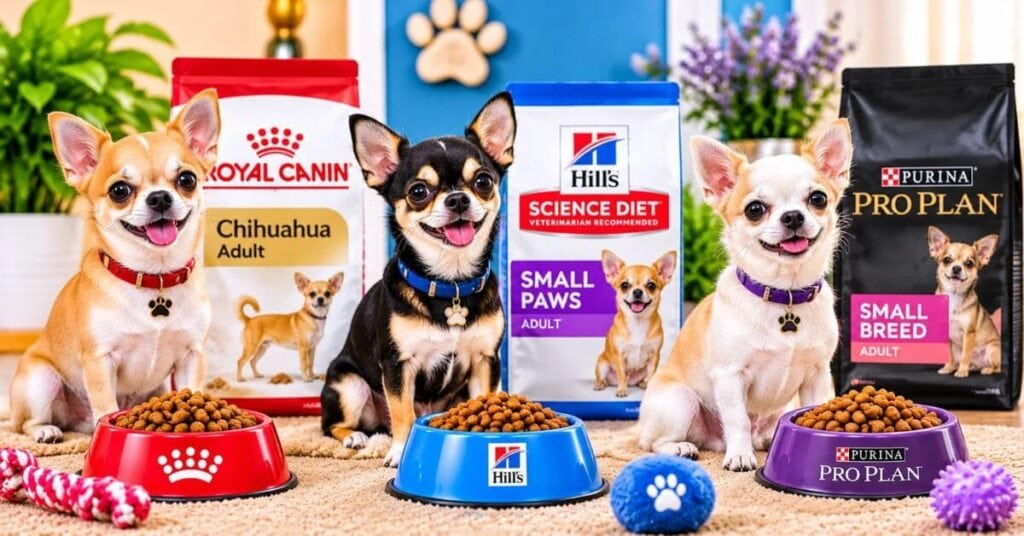
When researching dog food brands, focus on their specific recipes rather than assuming every product from one manufacturer offers the same nutritional quality.
The following are useful options to investigate. Their suitability depends on your dog’s age, health, food tolerance, and the current product label.
Royal Canin Chihuahua Adult
This breed-specific formula is designed for adult Chihuahuas. Its small kibble shape and size aim to make eating easier for dogs with tiny jaws.
It may be worth considering for adult Chihuahuas that enjoy dry food. Review the feeding guidelines and nutrient details on the packaging before buying the product.
Hill’s Science Diet Small Paws
Hill’s offers small-breed formulas for different life stages. These products provide another option for owners looking for appropriately sized kibble and complete nutrition.
Choose the correct puppy or adult formula instead of selecting a product based only on its brand name.
Purina Pro Plan Small Breed
Purina Pro Plan has small-breed recipes, including products for puppies and adult dogs. Some formulas also target specific nutritional needs, such as sensitive digestion.
Always check the exact recipe because ingredients and nutritional profiles vary.
Other Top Brands for Best Food for Chihuahua
- Eukanuba Small Breed: Offers formulas for different life stages.
- Fromm Small Breed: Another option to compare for ingredient composition and nutritional suitability.
- Other complete small-breed diets: Consider products from manufacturers that provide reliable nutritional information and quality-control details.
You can explore ChihuahuaNest’s existing Fromm Dog Food Reviews to learn more about its different product lines.
For another brand comparison, read the Black Gold Dog Food Review.
These reviews can help you investigate individual recipes, but neither brand should be considered automatically superior for every Chihuahua.
My recommendation: Start with a complete small-breed formula appropriate for your dog’s age. Compare the nutritional adequacy statement, calories, kibble size, and manufacturer information before making your decision.
How Much Food Does a Chihuahua Need Daily?
The correct amount of food depends on your Chihuahua’s weight, age, activity level, metabolism, and health. Feeding instructions printed on dog food packaging provide a starting point, not an exact prescription for every dog.
A Chihuahua that spends most of the day resting may need fewer calories than an active dog of the same weight. Puppies also need a different feeding plan from adults.
For example, an adult Chihuahua weighing 2–3 kg may need roughly 150–250 calories daily, but this is only a broad starting estimate. The actual requirement can fall outside this range.
Your veterinarian can calculate a more suitable calorie target using your dog’s ideal weight and body condition.
Suggested feeding routine
| Dog’s age | Meals per day | Main feeding goal |
| Young puppy | 4–6 | Support growth and regular energy intake |
| Older puppy | 3–4 | Maintain steady growth |
| Healthy adult | 2–3 | Maintain healthy weight |
| Senior | 2–3 | Support body condition and health |
These are general routines, not strict rules. Very young or medically vulnerable puppies may need a more frequent feeding schedule.
How to measure food correctly
- Check the calorie content on the packaging.
- Read the recommended portion for your dog’s weight.
- Weigh dry food with a kitchen scale to ensure accurate portions.
- Divide the daily amount into appropriate meals.
- Include treats and food toppers in the daily calorie total.
- Monitor your dog’s weight and body shape regularly.
Avoid filling your Chihuahua’s bowl whenever it looks empty. Some dogs quickly learn to ask for extra food even when they have already eaten enough.
A healthy Chihuahua should have a visible waist when viewed from above. You should also be able to feel the ribs without pressing hard, although they should not stick out prominently.
Best Food for Chihuahua: Ingredients & Mistakes
A balanced Chihuahua diet should provide all essential nutrients without relying on unnecessary supplements or large quantities of treats.
Healthy ingredients to look for
- Chicken and turkey provide animal protein.
- Salmon provides protein and omega-3 fatty acids.
- Eggs provide protein and other nutrients.
- Rice and oats provide digestible carbohydrates.
- Pumpkins can provide dietary fiber.
- Carrots offer fiber and useful micronutrients.
- Fish oil can provide EPA and DHA when appropriately included in the diet.
These ingredients can be part of suitable dog food or occasional treats. However, adding several foods to an already complete diet does not automatically make it healthier.
Foods Chihuahuas should never eat
Some everyday foods can seriously harm dogs, even in small amounts.
- Chocolate
- Grapes and raisins
- Onions and garlic
- Xylitol-containing products
- Alcohol
- Caffeinated drinks
- Macadamia nuts
Cooked bones can also splinter and cause choking or internal injuries.
If your Chihuahua eats a potentially toxic food, contact a veterinarian or animal poison service immediately. Seek veterinary help immediately rather than waiting for signs of illness.
Common feeding mistakes
- Feeding adult food to growing puppies.
- Giving too many treats between meals.
- Changing food suddenly.
- Offering excessive table scraps.
- Ignoring calorie information.
- Choosing food based only on advertising.
- Adding supplements without veterinary advice.
One particularly serious mistake is overfeeding. Even a small amount of extra food can contribute to weight gain in a tiny dog.
Another problem is preparing homemade meals without a balanced recipe. Meat, rice, and vegetables alone do not provide every nutrient a Chihuahua needs.
If you prefer home-cooked meals, ask a veterinary nutritionist to formulate a complete recipe.
Choosing the Best Food for Chihuahua Picky Eaters
Some Chihuahuas refuse unfamiliar food, prefer certain textures, or eat less when their surroundings change. Others develop digestive problems after eating unsuitable food.
Before changing your dog’s diet, identify the reason behind the problem.
For picky eaters
Try these practical steps:
- Serve food at consistent times.
- Keep the feeding area quiet.
- Offer small, measured portions.
- Choose a kibble that is easy to chew.
- Consider a suitable wet food if your dog prefers soft textures.
- Avoid constantly changing flavors.
You can add a small amount of complete wet food to dry kibble, provided you adjust the total calories.
Do not reward food refusal by repeatedly offering richer treats. This can make some dogs even more selective.
For sensitive stomachs
Watch for recurring diarrhea, vomiting, gas, or changes in appetite. These symptoms can result from dietary intolerance, sudden food changes, parasites, infection, or other medical problems.
A sensitive-stomach formula may help some dogs, but it will not treat every digestive condition.
If symptoms continue, arrange a veterinary examination. A veterinarian may recommend a controlled diet trial or a specific therapeutic food.
How to switch dog food safely
A gradual transition gives your Chihuahua time to adjust to the new diet.
Seven-day food transition plan
- Days 1–2
75% old food + 25% new food. - Days 3–4
50% old food + 50% new food. - Days 5–6
25% old food + 75% new food. - Day 7 onward
100% new food, if your dog tolerates the change.
Some dogs need a slower transition. Follow your veterinarian’s instructions if your Chihuahua has a medical condition or develops digestive symptoms.
Daily Feeding Guide: Best Food for Chihuahua
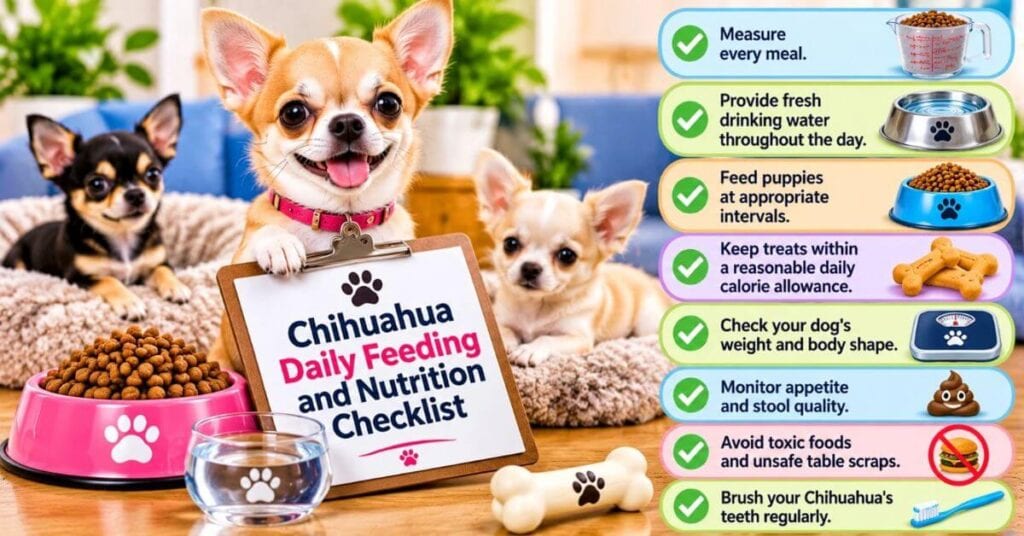
Use this simple checklist to maintain a consistent feeding routine.
- Select a nutritious diet that meets your dog’s needs at every stage of life
- Measure every meal.
- Provide fresh drinking water throughout the day.
- Feed puppies at appropriate intervals.
- Limit treats to a small portion of your Chihuahua’s daily calorie intake.
- Check your dog’s weight and body shape.
- Monitor appetite and stool quality.
- Avoid toxic foods and unsafe table scraps.
- Brush your Chihuahua’s teeth regularly.
- Arrange routine veterinary checkups.
For more food comparisons and nutrition-related articles, visit Dog Food Reviews.
This is a useful place to explore individual dog food products, but always check whether a particular recipe meets your Chihuahua’s needs.
Conclusion
Choosing the best food for Chihuahua dogs is about providing balanced nutrition in portions that suit their small bodies. A suitable diet should contain appropriate protein, healthy fats, carbohydrates, vitamins, and minerals. It should also match your dog’s age, weight, activity level, and health condition.
Small-breed puppy food supports growing Chihuahuas, while adult formulas help maintain healthy body weight and everyday energy. Senior dogs may need dietary adjustments depending on their activity and medical needs.
Dry food, wet food, and mixed feeding can all work when the products provide complete nutrition. The most important step is checking the nutritional information rather than relying on advertising or expensive ingredients.
Measure meals carefully, limit treats, provide fresh water, and introduce new food gradually. Pay attention to changes in appetite, digestion, and body condition.
If your Chihuahua regularly refuses food, loses weight, vomits, or develops diarrhea, seek veterinary advice instead of repeatedly changing its diet.
Remember, every Chihuahua is different. The right feeding plan is one that keeps your little companion healthy, comfortable, active, and at a suitable weight. Consistent nutrition and regular veterinary care can help your Chihuahua enjoy a healthier life.
Frequently Asked Questions
1. What is the best food for a Chihuahua?
Small-breed dog food with balanced nutrients and quality protein is a good choice.
2. Can Chihuahuas eat dry food?
Many Chihuahuas do well with kibble designed for small dog breeds.
3. How many meals should a Chihuahua have each day?
Adult Chihuahuas usually need two or three meals daily.
4. Is wet food good for Chihuahuas?
Yes, complete wet food can provide balanced nutrition and extra moisture.
5. What foods should Chihuahuas avoid?
Keep chocolate, grapes, raisins, onions, garlic, and xylitol-containing products away from your Chihuahua.