

Quick Answer
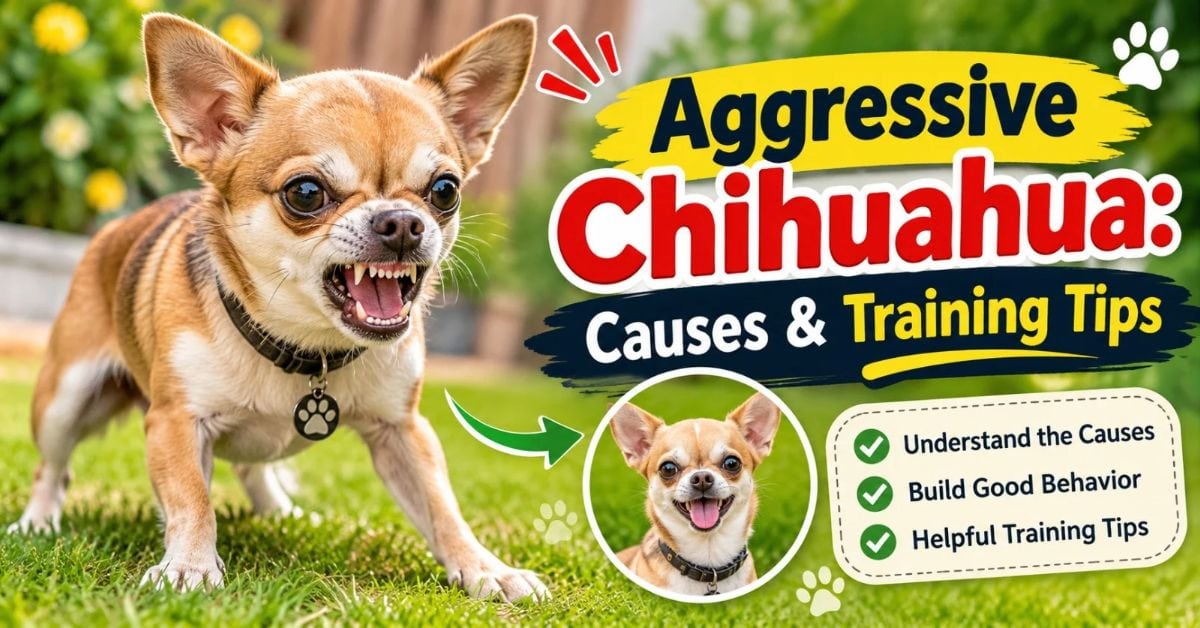
An aggressive Chihuahua may bark, growl, snap, or bite because of fear, anxiety, poor socialization, territorial behavior, resource guarding, or pain.
This behavior does not mean every Chihuahua has an aggressive personality.
With proper veterinary care, positive reinforcement, safe handling, and consistent training, many Chihuahuas can learn calmer ways to respond to people and other dogs.
Author Information
Author: Gulnaz Malik
Role: Publisher & Pet Care Expert
Experience: 5+ Years in Dog Care & Dog Grooming
Content approach: Veterinary-informed guidance based on trusted canine behavior resources and practical dog-care knowledge.
Introduction
Living with an aggressive Chihuahua can be stressful, especially when your little dog barks at visitors, growls at family members, or tries to bite other dogs. Although Chihuahuas are among the smallest dog breeds, their reactions can create real challenges for owners.
An aggressive Chihuahua does not always want to attack someone. In many cases, the dog feels frightened, uncomfortable, threatened, or unable to escape a situation. Some Chihuahuas also develop possessive behavior around food, toys, sleeping areas, or their favorite people.
Understanding the reason behind this behavior is the first step toward improving it. Simply scolding a Chihuahua for growling may hide an important warning sign without changing the emotion causing the reaction.
The good news is that owners can often improve unwanted behavior through careful observation, positive reinforcement, appropriate socialization, and professional guidance when needed.
This guide explains why Chihuahuas become aggressive, how to recognize early warning signs, how to manage biting and barking, and which training methods can help your dog feel safer and behave more calmly.
1. Why Does a Chihuahua Become Aggressive?
A Chihuahua can become aggressive for several reasons. The most important thing is to understand what happens immediately before the dog reacts. A Chihuahua that growls when someone approaches its food may have a different problem from one that barks at every stranger.
Aggression often responds to an uncomfortable situation rather than signaling a naturally bad temperament.
Fear is a major reason why some dogs develop aggressive behavior.
A Chihuahua may feel unsafe around unfamiliar people, larger dogs, loud noises, or sudden movements. When the dog cannot move away, it may bark, growl, snap, or bite to make the perceived threat disappear.
Poor early socialization can also contribute to this behavior. Puppies that have limited positive experiences with different people, sounds, places, and friendly dogs may struggle when they encounter unfamiliar situations as adults.
Other possible causes include:
- Territorial behavior: Your Chihuahua may bark or growl when visitors enter the home or approach its favorite resting place.
- Resource guarding: The dog may protect food bowls, toys, treats, beds, or favorite objects.
- Past negative experiences: Rough handling, frightening encounters, or previous abuse can make a dog defensive.
- Lack of training: Inconsistent rules may allow unwanted reactions to become repeated habits.
- Pain or illness: Dental problems, joint pain, ear infections, and other health concerns can make a normally friendly dog uncomfortable.
- Frustration: A Chihuahua may react when a leash, barrier, or physical restraint prevents it from reaching something.
Genetics and individual temperament can also influence how a dog responds to stress. However, breed alone cannot explain why a particular Chihuahua behaves aggressively.
The ASPCA guide to dog aggression explains that aggression can have several motivations, including fear, frustration, redirected reactions, and pain.
Important: If your Chihuahua suddenly becomes aggressive, arrange a veterinary examination before assuming the problem is purely behavioral.
Common Signs of an Aggressive Chihuahua
Recognizing aggressive behavior early can help you prevent a situation from becoming dangerous. Many dogs show signs of discomfort before they attempt to bite.
A Chihuahua may first turn its head away, move backward, lick its lips, or become unusually stiff. If the person or animal continues approaching, the dog may escalate its response.
Some warning signs are easy to misunderstand. For example, a wagging tail does not always mean a dog feels friendly. You should consider the dog’s entire body posture, facial expression, and surroundings.
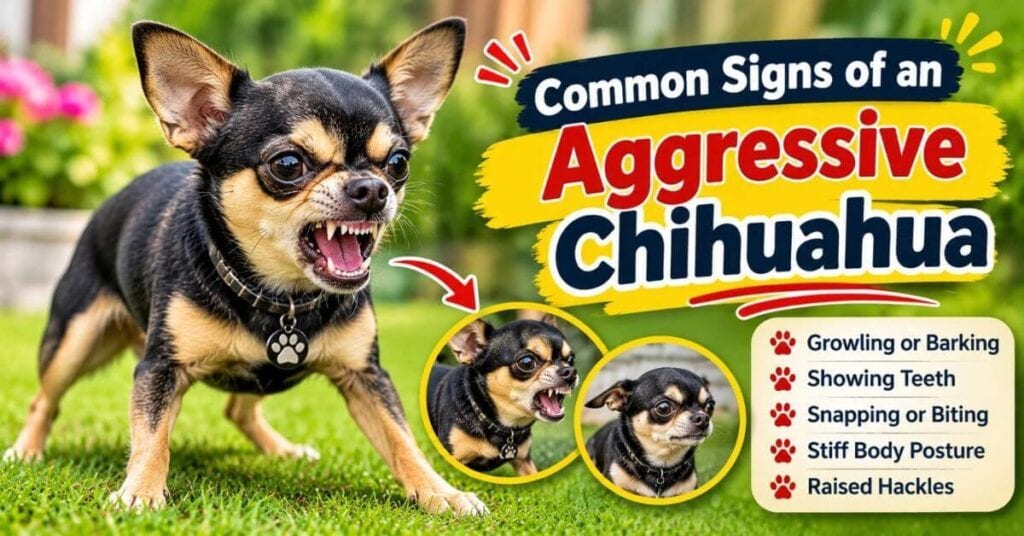
Common signs include:
- Repeated barking at unfamiliar people or animals.
- Growling when someone approaches its food or resting area.
- Showing teeth during uncomfortable interactions.
- Snapping when someone tries to pick it up.
- Lunging toward other dogs during walks.
- Stiffening its body when approached.
- Hiding, trembling, or trying to escape.
- Biting when someone touches a sensitive body area.
- Guarding a favorite person from other family members.
A Chihuahua may also react differently depending on the situation. Some dogs behave calmly with familiar family members but become defensive around visitors.
Others may tolerate people inside the home but react strongly when they meet unfamiliar dogs outdoors.
Do not wait until your Chihuahua bites before taking its behavior seriously. Growling and snapping are important warning signals that deserve attention.
A useful distinction: Barking, growling, and lunging do not automatically mean a dog intends to bite. These actions can indicate fear, excitement, frustration, or discomfort. The surrounding body language helps explain the reaction.
Different Types of Chihuahua Aggression
Not every aggressive Chihuahua behaves in the same way. Identifying the type of behavior helps owners understand the possible trigger and choose a safer training approach.
Fear-based aggression occurs when a Chihuahua feels threatened. The dog may bark, growl, or snap at strangers, unfamiliar animals, or people who approach too quickly. Some fearful dogs try to escape first but become defensive when they feel trapped.
Territorial aggression happens when a Chihuahua reacts to people or animals entering an area it considers its territory. Doorways, windows, furniture, and the owner’s lap can become places where this behavior appears.
Possessive aggression involves protecting something valuable. Your dog may growl when you approach its food, treats, toys, or favorite sleeping spot. Taking these objects away by force can make the situation worse.
Protective behavior may appear when a Chihuahua reacts to someone approaching its favorite person. Although owners sometimes find this behavior cute, it can become unsafe when the dog tries to control who can approach or interact with a family member.
Pain-related aggression may develop when a dog experiences discomfort. A Chihuahua that suddenly snaps during brushing, lifting, or touching may need a medical examination.
Dog-directed aggression occurs when a Chihuahua reacts aggressively toward other dogs. Fear, limited social experience, frustration, or previous unpleasant encounters may contribute to this response.
The same dog can show more than one type of aggression. For example, a Chihuahua may guard its owner and also react fearfully to unfamiliar dogs.
For this reason, avoid giving your dog a behavioral label without understanding its individual triggers. A veterinarian or qualified veterinary behavior professional can help assess the underlying cause.
How to Stop Chihuahua Aggression With Positive Training
Training an aggressive Chihuahua requires patience, consistency, and realistic expectations. The goal is not to frighten the dog into silence. Instead, you want to help it feel safer and learn a calmer response.
Start by identifying situations that trigger the behavior. If your Chihuahua growls whenever a stranger approaches, create enough distance to prevent the reaction. Do not force the dog to interact. Chihuahua Characteristics
Reward-based training can help your dog develop positive associations with situations that previously caused stress.
Step-by-Step Chihuahua Aggression Training
Step 1: Identify the trigger
Observe when your Chihuahua becomes aggressive. Record whether the reaction happens around strangers, food, toys, other dogs, children, or physical handling.
Step 2: Create a safe distance
Keep your dog far enough away from the trigger that it can remain calm. If it starts barking, lunging, or refusing treats, the situation may be too difficult.
Step 3: Reward calm behavior
When your Chihuahua notices a trigger without reacting, offer a small treat and calm praise. This teaches the dog that seeing something unfamiliar can lead to a positive experience.
Step 4: Practice basic commands
Teach simple cues such as:
- Sit
- Stay
- Come
- Leave it
- Look at me
- Go to your bed
Practice these commands in quiet surroundings before using them around distractions.
Step 5: Increase difficulty gradually
Once your dog remains comfortable at a certain distance, make small adjustments. Do not rush toward close contact with strangers or other dogs.
Step 6: Stay consistent
All family members should use consistent rules when training the dog. Mixed messages can make it harder for a Chihuahua to understand which behaviors earn rewards.
The American Kennel Club also recommends reward-based behavior modification and careful management for reactive dogs. Its guide to dog reactivity and aggression explains the importance of understanding triggers and recognizing body language.
Aggressive Chihuahua: Strangers, Kids & Dogs
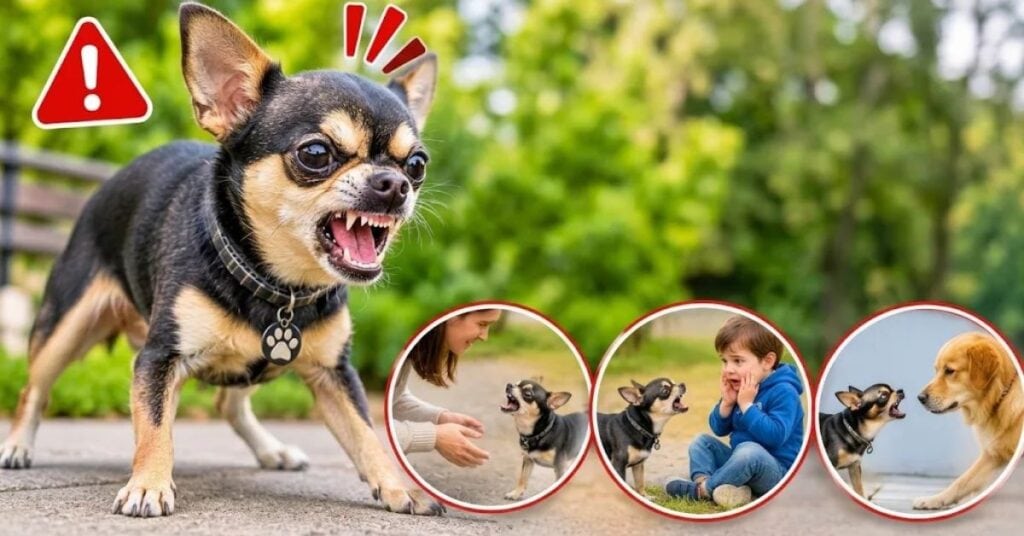
Some Chihuahuas behave differently depending on who approaches them. A dog may be affectionate with its owner but uncomfortable around visitors, children, or unfamiliar animals.
This behavior requires careful management because a Chihuahua’s small size does not prevent it from causing painful bites.
Around strangers: Do not allow visitors to reach toward your Chihuahua immediately. Ask them to ignore the dog at first and give it enough space to observe them. If the dog remains relaxed, you can reward calm behavior.
Never force your Chihuahua to sit on someone’s lap or accept petting.
Around children: Supervision is essential. Young children may move suddenly, shout, pull ears, or accidentally hurt a small dog. These actions can frighten a Chihuahua and trigger defensive biting.
Teach children to:
- Approach calmly.
- Avoid pulling the dog’s tail or ears.
- Never disturb the dog while eating.
- Leave the dog alone when sleeping.
- Avoid chasing or cornering it.
- Ask an adult before touching the dog.
Do not leave young children alone with a Chihuahua, even if the dog usually behaves well.
Around other dogs: Introduce unfamiliar dogs slowly and at a comfortable distance. Choose a quiet outdoor area and use a secure harness and leash. Avoid crowded dog parks if your Chihuahua already reacts strongly to other animals.
Never force two dogs to greet each other face-to-face. Allow them to observe one another without pressure.
| Situation | Possible Trigger | Safer Management |
| Visitors enter the home | Territorial behavior or fear | Use a separate quiet area initially |
| Someone approaches food | Resource guarding | Provide a peaceful feeding space |
| Children reach toward the dog | Fear or discomfort | Teach gentle handling and supervise |
| Another dog approaches | Anxiety or frustration | Maintain distance and reward calmness |
| Someone lifts the dog | Discomfort or pain | Allow voluntary contact and check for pain |
Remember that socialization does not mean making your Chihuahua meet every person or dog. It means helping your pet feel comfortable around different experiences without overwhelming it.
Medical Problems That Can Make a Chihuahua Aggressive
A sudden change in behavior deserves special attention. If your previously friendly Chihuahua starts growling, snapping, or avoiding touch, physical discomfort may be involved.
Small dogs can experience several health problems that affect their comfort and behavior.
Dental disease: Chihuahuas can develop dental problems because their small mouths often have crowded teeth. Gum inflammation, loose teeth, and oral infections may cause pain during eating or handling.
Joint and mobility problems: Patellar luxation, arthritis, and other orthopedic conditions can make lifting or touching uncomfortable.
Ear infections: An irritated or painful ear may cause a Chihuahua to snap when someone touches its head.
Skin irritation: Allergies, infections, and persistent itching can make brushing or petting unpleasant.
Neurological conditions: Certain disorders affecting the nervous system can influence behavior and may require veterinary investigation.
Vision or hearing changes: A dog that cannot see or hear approaching people clearly may become startled and defensive. Chihuahua Bite Force
Watch for additional signs such as:
- Reduced appetite.
- Reluctance to jump or climb.
- Limping or stiffness.
- Head shaking.
- Excessive scratching.
- Sudden hiding.
- Sensitivity when touched.
- Changes in sleeping habits.
A veterinarian can examine your Chihuahua, review its medical history, and recommend tests when needed.
Do not give human painkillers or other medication without veterinary instructions. Certain medications made for humans can seriously harm dogs.
If your Chihuahua has bitten someone, has repeated bite incidents, or shows severe unpredictable aggression, seek professional help promptly. A veterinary behaviorist can assess medical and behavioral factors and develop an individual treatment plan.
Daily Care Routine for a Chihuahua
A predictable daily routine can help reduce stress and make training easier. Chihuahuas need physical activity, mental stimulation, rest, and positive social experiences.
You do not need complicated equipment. Even minor adjustments to your dog’s daily schedule can lead to positive results.
Morning: Start with a short, relaxed walk. Choose a quiet route where your Chihuahua can explore without meeting too many unfamiliar dogs. Give your dog treats and praise when it walks calmly and responds to you.
Afternoon: Provide mental activities such as food puzzles, simple scent games, and short obedience sessions. These activities give your dog an appropriate way to use its energy.
Evening: Practice gentle handling or a short training exercise if your dog feels comfortable. Avoid introducing difficult new situations when your Chihuahua is tired or stressed.
Night: Give your dog a comfortable resting area where family members and other pets will not disturb it.
Weekly Chihuahua Behavior Monitoring Framework
Use this simple tracking system to understand whether your training plan is helping.
| Day | What to Monitor | Positive Progress |
| Monday | Barking at visitors | Recovers more quickly |
| Tuesday | Reaction to other dogs | Watches calmly from a distance |
| Wednesday | Food and toy guarding | Remains relaxed with safe management |
| Thursday | Handling and grooming | Accepts gentle contact |
| Friday | Basic obedience | Responds to familiar cues |
| Saturday | Outdoor behavior | Walks with fewer reactions |
| Sunday | Overall stress | Rests comfortably and recovers after triggers |
This is a monitoring tool, not a clinical aggression score. Record setbacks as well as improvements. Progress is not always steady, and a difficult day does not mean your dog has failed.
Aggressive Chihuahua Care Checklist
- Identify situations that trigger aggressive reactions.
- Arrange a veterinary examination if behavior changes suddenly.
- Keep children and visitors at a safe distance when needed.
- Provide a quiet place for rest.
- Use a secure, comfortable harness.
- Reward calm behavior with appropriate treats.
- Avoid forced greetings with unfamiliar dogs.
- Never punish growling or snapping.
- Keep a record of aggressive incidents.
- Seek qualified professional support when necessary.
A consistent routine gives your Chihuahua clear expectations and helps you recognize which situations need extra care.
Common Mistakes
Even caring dog owners can accidentally reinforce aggressive behavior. Some mistakes happen because people misunderstand why their Chihuahua reacts defensively.
Avoid these common problems when managing an aggressive Chihuahua.
1. Treating growling as bad behavior
Growling is a warning that your dog feels uncomfortable. Punishing it may suppress the warning without addressing the underlying fear or discomfort. Instead, identify what caused the reaction and create space.
2. Encouraging aggressive behavior because it looks cute
Some owners laugh when their Chihuahua barks at visitors or tries to chase larger dogs. Although the behavior may look entertaining, encouraging it can allow unwanted reactions to become stronger habits.
3. Carrying the dog away from every situation
Picking up a frightened Chihuahua may sometimes be necessary for immediate safety. However, always removing the dog without addressing its fear can prevent it from learning to cope with manageable situations.
Use distance, barriers, and gradual training rather than relying on constant carrying.
4. Forcing interactions with other dogs
Never push your Chihuahua toward unfamiliar animals to make it socialize. Forced contact can increase fear and create negative associations.
5. Using harsh training equipment
Choke chains, shock collars, and physical corrections can increase anxiety and defensive responses. Choose reward-based training instead.
6. Ignoring sudden personality changes
A dog that suddenly becomes aggressive may be experiencing pain or illness. Arrange a veterinary examination rather than assuming it has become stubborn.
7. Expecting instant results
Behavior modification takes time. Some dogs improve within weeks, while others need several months of structured support. The timeline depends on the dog’s history, health, triggers, and severity of aggression.
When Should You Contact a Professional?
Seek veterinary and behavioral support if your Chihuahua:
- Has bitten a person or another animal.
- Repeatedly snaps at family members.
- Guards food or toys intensely.
- Shows unpredictable aggressive reactions.
- Cannot remain calm around common triggers.
- Becomes increasingly fearful or defensive.
A qualified veterinary behaviorist can help assess the problem and recommend an appropriate treatment plan. In serious cases, medication may support behavior modification when a veterinarian considers it necessary.
The most important lesson is to treat aggression as a behavior problem that needs understanding, not as a personality flaw.
Aggressive Chihuahua: Calm & Confident Tips

Preventing aggressive behavior is easier when you build confidence and healthy habits from an early age. However, adult Chihuahuas can also benefit from careful behavior training.
Start with positive experiences. Allow your puppy to explore different environments, meet suitable people, hear everyday sounds, and observe friendly dogs without pressure.
For adult dogs, introduce unfamiliar experiences at a pace they can handle. A Chihuahua that has experienced fear or trauma may need more time to develop trust.
Here are some practical ways to support emotional well-being:
- Provide daily exercise: Short walks and indoor games help meet physical needs.
- Offer mental stimulation: Food puzzles and scent games encourage healthy problem-solving.
- Maintain a predictable routine: Regular meals, walks, and rest periods can reduce uncertainty.
- Respect personal space: Allow your Chihuahua to move away when it feels uncomfortable.
- Reward confidence: Praise calm exploration and relaxed behavior.
- Practice gentle handling: Make brushing, nail care, and veterinary preparation positive experiences.
- Encourage independence: Teach your dog to relax comfortably without constant attention.
- Monitor body language: Notice stress signals before they develop into barking or biting.
If your Chihuahua already has a history of biting, do not use ordinary socialization activities as a substitute for a professional behavior plan.
Owners should also remember that every Chihuahua has an individual personality. Some enjoy meeting new people, while others prefer a quieter lifestyle with familiar companions.
The goal is not to turn every Chihuahua into an outgoing social dog. It is to help your pet feel secure, behave safely, and enjoy everyday life without unnecessary stress.
A calm Chihuahua is not necessarily a silent dog. It is a dog that can handle everyday experiences without repeatedly feeling the need to defend itself.
Frequently Asked Questions
1. Are Chihuahuas naturally aggressive?
No. Chihuahuas are not naturally aggressive. Fear, poor socialization, and past experiences can cause defensive behavior.
2. Why does my Chihuahua suddenly become aggressive?
Sudden aggression may result from pain, illness, fear, or stress. A veterinary check can help identify the cause.
3. How do I stop my Chihuahua from biting?
Avoid triggers, reward calm behavior, and use positive training. Seek professional help if biting continues.
4. Why is my Chihuahua aggressive toward other dogs?
Fear, frustration, or limited socialization may cause aggression. Keep a safe distance and introduce dogs gradually.
5. Can an aggressive Chihuahua become friendly?
Yes. Consistent training, patience, and proper care can help many Chihuahuas become calmer and more confident.
Conclusion
Living with an aggressive Chihuahua can be challenging, but unwanted behavior does not mean your little companion is naturally bad or impossible to train. Fear, anxiety, territorial behavior, resource guarding, poor socialization, and medical discomfort can all contribute to aggressive reactions.
The best approach starts with understanding the reason behind the behavior. Observe your Chihuahua’s body language, identify its triggers, and avoid situations that could lead to biting. Arrange a veterinary examination if aggression appears suddenly or handling becomes uncomfortable.
Use positive reinforcement to reward calm responses and introduce new experiences gradually. Give your dog a quiet resting space, maintain a predictable routine, and teach family members how to handle a small dog safely.
Never rely on hitting, shouting, or frightening equipment to control aggression. These methods can increase fear and make behavior problems harder to manage.
Most importantly, remember that progress takes patience. Some Chihuahuas need more time and professional support than others. With responsible care, consistent training, and the right guidance, you can help your Chihuahua feel safer and build a more peaceful relationship with your family.
A confident, well-supported Chihuahua does not need to act aggressively to feel protected.