

Quick Answer
Chihuahua health issues commonly include dental disease, retained baby teeth, kneecap problems, heart disease, eye conditions, and breathing disorders.
Some puppies may also develop low blood sugar or neurological problems.
Regular veterinary checkups, proper nutrition, dental hygiene, weight management, and injury prevention help reduce health risks and support a longer, healthier life.
Author Box
Author: Gulnaz Malik
Role: Publisher & Pet Care Expert
Experience: 5+ Years in Dog Care & Dog Grooming
Content Review: Research-based content prepared using trusted veterinary resources and practical pet-care knowledge. Veterinary diagnosis and individual treatment recommendations should come from a qualified veterinarian.
Introduction
Chihuahua health issues are something every Chihuahua owner should understand before bringing this tiny companion home. Chihuahuas are famous for their bold personalities, expressive eyes, and small bodies. However, their size and certain inherited traits can make them more vulnerable to specific health problems.
Many Chihuahua owners notice unusual symptoms but do not know whether they are normal or signs of illness. A Chihuahua may suddenly start limping, develop bad breath, cough frequently, or lose interest in food. These changes can sometimes point to an underlying medical condition.
The good news is that many common Chihuahua health problems can be managed successfully when owners recognize the warning signs early.
However, not every Chihuahua will develop these conditions. Genetics, age, nutrition, activity, environment, and preventive veterinary care all influence a dog’s health.
In this guide, you will discover the most common Chihuahua health issues, their symptoms, possible causes, treatment options, and prevention tips. You will also learn how to monitor your Chihuahua at home and when to seek emergency veterinary care.
The goal is simple: help your little companion enjoy a comfortable, active, and healthy life.
Understanding Common Chihuahua Health Issues

Chihuahuas are generally long-lived dogs, but their small body size comes with some special health concerns.
Their tiny jaws can cause crowded teeth. Their delicate legs may develop kneecap problems, while some dogs can experience heart, eye, respiratory, or neurological conditions.
A large UK veterinary study examined 11,647 Chihuahuas and identified periodontal disease, obesity, retained baby teeth, anal sac problems, and aggression among the commonly recorded conditions.
Periodontal disease affected 13.5% of the sampled dogs, while dental disease overall affected 19%. These figures describe that study population, not every Chihuahua worldwide.
Understanding the difference between a breed predisposition and a guaranteed illness is important. A predisposition means a dog may have a higher risk. It does not mean the condition will definitely develop.
The two Chihuahua coat varieties, Smooth Coat and Long Coat, share the same basic breed-related health concerns. A longer coat does not protect a Chihuahua from dental disease, heart problems, or joint conditions.
Age also matters. Puppies need special attention because of their small size and developing bodies. Adult dogs benefit from weight control, dental care, and regular health checks. Senior Chihuahuas may need closer monitoring for heart disease, joint discomfort, and vision changes.
| Life Stage | Important Health Concerns | Recommended Care |
| Puppies | Low blood sugar, retained baby teeth, injuries | Frequent age-appropriate feeding, safe handling, puppy examinations |
| Adults | Dental disease, kneecap problems, obesity | Dental hygiene, exercise, weight checks |
| Seniors | Heart disease, vision changes, joint pain | Regular veterinary examinations and health monitoring |
| All ages | Parasites, injuries, infections | Preventive veterinary care and a safe environment |
A useful starting point is learning your dog’s normal behavior. Pay attention to appetite, energy, walking, breathing, sleeping habits, and bathroom patterns.
Sudden changes deserve attention, even when they seem minor.
Chihuahua Dental Problems and Gum Disease
Dental disease is one of the most important Chihuahua health issues because these dogs have very small mouths.
Their jaws must accommodate a full set of teeth in a limited space. This can lead to crowded teeth, plaque buildup, trapped food, gum inflammation, and periodontal disease.
Some Chihuahua puppies also retain their baby teeth. This happens when a puppy tooth remains in place even after the adult tooth starts growing.
Retained baby teeth can create overcrowding and make cleaning more difficult.
Common symptoms of Chihuahua dental problems include:
- Bad breath that does not improve.
- Red, swollen, or bleeding gums.
- Yellow or brown tartar on teeth.
- Drooling more than usual.
- Difficulty chewing food.
- Dropping food while eating.
- Pawing at the mouth.
- Loose or damaged teeth.
Dental disease can cause ongoing pain. Advanced periodontal disease can damage the tissues and bone supporting the teeth.
Owners sometimes assume that bad breath is normal in small dogs. It is not something you should ignore.
How to protect your Chihuahua’s teeth
Brush your dog’s teeth regularly with a toothbrush and toothpaste designed for dogs. Never use human toothpaste because some ingredients can harm pets.
Introduce brushing gradually. Start by allowing your Chihuahua to smell the toothbrush and taste a small amount of dog-safe toothpaste. Reward calm behavior and slowly increase brushing time.
Choose suitable dental chews and toys. Their size and hardness should match your dog’s mouth. Avoid extremely hard objects that may crack teeth.
Your veterinarian should examine the mouth regularly. Professional dental cleaning may become necessary when plaque and tartar build up.
If baby teeth remain after adult teeth start erupting, ask your veterinarian whether removal is needed. Do not try to pull them out yourself.
The American Kennel Club’s Chihuahua breed guide also highlights the importance of dental care and recommends regular brushing.
Dental prevention is much easier than treating advanced gum disease. A few minutes of consistent care can make a meaningful difference to your Chihuahua’s comfort.
Patellar Luxation: Chihuahua Knee and Joint Problems
Patellar luxation is a common orthopedic concern in small dog breeds, including Chihuahuas.
It occurs when the kneecap, also called the patella, moves out of its normal position in the groove of the thigh bone.
The kneecap may slip temporarily and return to its normal position. In more severe cases, it may remain displaced and cause ongoing pain or difficulty walking.
Some Chihuahuas develop this condition because of inherited differences in leg structure. Injuries can also contribute to kneecap problems.
Signs of patellar luxation
Watch for these changes:
- Suddenly lifting one back leg.
- Skipping while walking or running.
- Walking on three legs for a short time.
- Limping after exercise.
- Reluctance to jump or climb.
- Stiffness after resting.
- Difficulty walking normally.
A Chihuahua may appear completely normal between episodes. That does not mean the problem has disappeared.
Veterinarians check the knee joint to see whether the kneecap moves out of its normal position. They may recommend X-rays or other tests to understand the severity and check for additional joint damage.
Can patellar luxation be treated?
Treatment depends on the condition’s severity and the dog’s comfort.
Mild cases may only require monitoring, maintaining a healthy weight, and adjusting activity.
More serious cases may need pain management, rehabilitation, or surgery. Your veterinarian will decide which approach is suitable.
How to protect your Chihuahua’s joints
- Keep your dog at a healthy weight.
- Provide regular, controlled exercise.
- Avoid repeated high jumps from furniture.
- Use pet steps or ramps where appropriate.
- Keep floors from becoming slippery.
- Avoid forcing exercise when your dog shows pain.
Do not massage or manipulate a painful knee without veterinary guidance.
A skipping walk doesn’t always mean patellar luxation. Muscle injuries, paw problems, and other orthopedic conditions can create similar signs.
Arrange an examination when your Chihuahua develops repeated limping or unusual movement.
Early assessment can help protect mobility and reduce the risk of long-term discomfort.
Chihuahua Heart Disease and Breathing Problems

Heart disease is another important concern, particularly as Chihuahuas grow older.
One condition veterinarians monitor in this breed is degenerative mitral valve disease.
The mitral valve helps regulate blood flow between the heart’s two left chambers. When the valve becomes damaged or starts leaking, blood can flow backward.
Over time, this can make the heart work harder and may eventually lead to congestive heart failure.
Some Chihuahuas can also have congenital heart conditions, such as patent ductus arteriosus.
Warning signs of heart problems
- Coughing, especially during rest or sleep.
- Reduced interest in exercise.
- Unusual tiredness.
- Faster breathing while resting.
- Weakness or fainting.
- Reduced stamina.
- Difficulty breathing.
Not every cough indicates heart disease. Respiratory infections, airway conditions, and other problems can cause similar symptoms.
A veterinarian may listen to your dog’s heart and lungs, check breathing, and recommend tests such as chest X-rays or an echocardiogram.
Tracheal collapse
The trachea, or windpipe, carries air between the throat and lungs.
In dogs with tracheal collapse, weakened cartilage allows parts of the windpipe to narrow. This can interfere with normal airflow.
A dry, harsh, goose-honk-like cough is a common warning sign.
Other symptoms may include gagging, noisy breathing, coughing after excitement, and difficulty breathing.
Use a properly fitted harness instead of attaching a leash directly to your Chihuahua’s neck. This reduces pressure on the throat, although it cannot guarantee prevention of tracheal disease.
Keep your dog away from cigarette smoke and other airway irritants. Maintain a healthy weight and avoid excessive excitement when it triggers coughing.
Important: Difficult breathing, blue or pale gums, collapse, or severe weakness requires emergency veterinary attention. Do not wait to see whether these signs improve on their own.
Chihuahua Puppy Health Issues
Chihuahua puppies need special attention because their tiny bodies have limited energy reserves.
One important concern is hypoglycemia, which means low blood sugar.
Very small puppies can become vulnerable when they do not eat enough, become stressed, experience illness, or have another condition affecting their energy balance.
Low blood sugar can interfere with normal brain and muscle function.
Symptoms of hypoglycemia may include:
- Sudden weakness.
- Unusual sleepiness.
- Shaking or trembling.
- Poor coordination.
- Difficulty standing.
- Disorientation.
- Seizures.
- Collapse.
These symptoms can also occur with other serious illnesses.
If you suspect hypoglycemia, contact a veterinarian immediately. A puppy that cannot swallow normally, is unconscious, or is having seizures should never have food or liquid forced into its mouth.
Do not rely on home remedies instead of emergency veterinary treatment.
Feeding and puppy care
Follow a feeding schedule recommended for your puppy’s age, weight, and condition.
Very young or exceptionally small puppies may need more frequent meals than adult dogs. Avoid long gaps between meals unless your veterinarian gives different instructions.
Provide complete and balanced puppy food. Fresh water should always be available.
Keep your puppy warm and protect it from rough play, falls, and accidental injury
- Seizures.
- Unusual head size or shape.
- Poor coordination.
- Difficulty walking.
- Disorientation.
- Abnormal behavior.
- Vision changes.
Not every Chihuahua with an open fontanel has hydrocephalus.
A veterinarian may recommend a neurological examination and diagnostic imaging when symptoms suggest a problem.
Never press or apply pressure to a soft area on a puppy’s skull.
Owners considering exceptionally small dogs should understand that extreme small size can bring additional health and injury risks. Our Teacup Chihuahua health guide explains some of these concerns.
Chihuahua Eye, Skin, Weight, and Other Health Problems
Chihuahuas have large, expressive eyes. Their eye shape and prominent appearance make eye injuries and irritation important concerns.
Eye conditions may include corneal ulcers, inflammation, cataracts, and other disorders.
Signs of eye problems
- Redness.
- Excessive tearing.
- Squinting.
- Cloudiness.
- Discharge.
- Pawing at the eyes.
- Sensitivity to light.
- Keeping one eye closed.
A corneal ulcer is a wound on the clear outer surface of the eye. It can be painful and may worsen without treatment.
If your Chihuahua suddenly develops eye pain, cloudiness, or persistent squinting, arrange prompt veterinary care. Do not use human eye drops unless a veterinarian specifically recommends them.
Skin and allergy problems
Chihuahuas can develop skin irritation, flea infestations, food reactions, and environmental allergies.
Possible symptoms include itching, redness, hair loss, repeated licking, and skin infections.
Inspect your dog’s fur and skin regularly while grooming to spot any unusual changes early. Long Coat Chihuahuas may need extra attention because their fur can hide small skin changes.
Our Fluffy Chihuahua grooming guide explains how regular coat checks can help owners notice changes early.
How to Prevent Common Chihuahua Health Issues
You cannot prevent every inherited or age-related condition. However, good daily care can reduce many avoidable risks and help identify problems before they become severe.
The best prevention plan combines veterinary examinations, nutrition, exercise, dental hygiene, and a safe home environment.
Build a regular veterinary routine.
Schedule wellness examinations according to your veterinarian’s advice.
During these visits, discuss your Chihuahua’s:
- Heart and breathing.
- Teeth and gums.
- Knees and movement.
- Eyes and ears.
- Skin and coat.
- Weight and body condition.
- Vaccination and parasite prevention.
Follow a balanced feeding plan.
Select dog food that provides all the essential nutrients your Chihuahua needs to stay healthy.
Puppies need puppy-appropriate nutrition. Adult dogs need controlled portions, while senior dogs may require dietary adjustments depending on their health.
Avoid changing food suddenly unless your veterinarian advises it.
Maintain dental hygiene
Brush regularly with dog-safe toothpaste.
Check the mouth for unusual odor, swelling, tartar, and retained baby teeth.
Professional dental care remains important even when you brush at home.
Weekly Chihuahua Health Monitoring Checklist
- Check appetite and water intake.
- Observe walking and movement.
- Look at the teeth and gums.
- Check eyes for redness or discharge.
- Inspect ears for odor or irritation.
- Examine skin for lumps, sores, and parasites.
- Monitor body weight and shape.
- Notice coughing or breathing changes.
This checklist does not diagnose illness. It helps you recognize changes and share useful information during veterinary visits.
When Chihuahua Health Issues Need Emergency Care
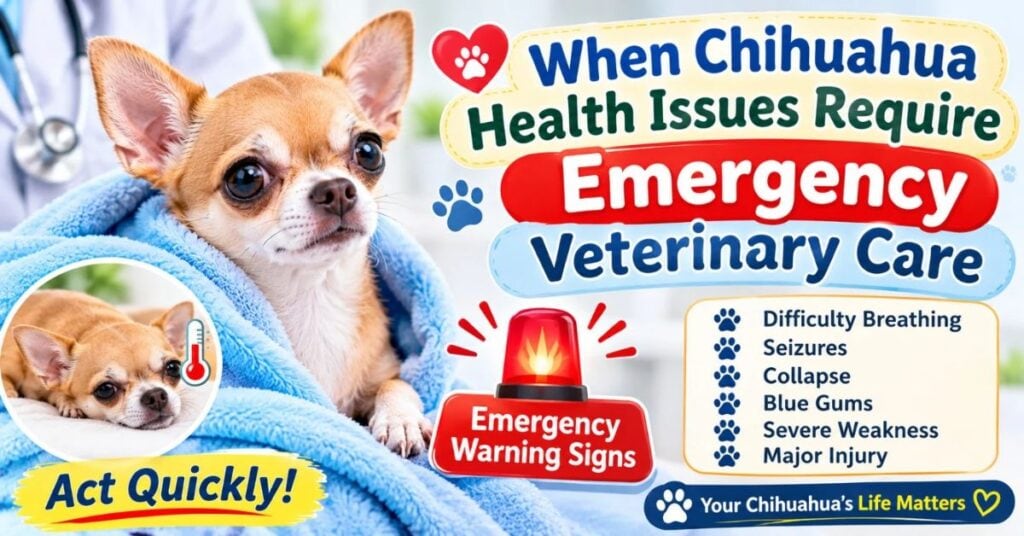
Some health problems need immediate attention. Waiting too long can put your Chihuahua’s life at risk.
Because Chihuahuas are small, serious illnesses and injuries can sometimes affect them quickly.
Emergency warning signs
Contact an emergency veterinary clinic immediately if your Chihuahua experiences:
- Difficult or labored breathing.
- Collapse or loss of consciousness.
- Seizures.
- Blue, grey, or very pale gums.
- Severe weakness.
- Major bleeding or serious injury.
- Inability to stand.
- Suspected poisoning.
- Severe abdominal pain.
- Repeated vomiting with marked weakness.
Other symptoms may not require an emergency hospital visit but still deserve prompt veterinary attention.
These include persistent coughing, repeated limping, bad breath with mouth pain, appetite changes, eye irritation, unusual weight loss, and changes in drinking or urination.
How to prepare for a veterinary visit
Write down when the symptoms started and how often they happen.
Record any changes in food, medication, activity, or behavior.
If your Chihuahua has an unusual cough or walking pattern, a short video can help your veterinarian understand what happens at home.
Chihuahua Symptom Monitoring and Action Chart
Use this chart to understand when a symptom needs attention.
| Symptom | Possible Concern | Recommended Action |
| Bad breath | Dental disease | Book dental examination |
| Back-leg skipping | Patellar luxation | Arrange vet check |
| Persistent coughing | Airway or heart problem | Contact veterinarian |
| Weakness in puppy | Hypoglycemia or illness | Seek urgent care |
| Red or painful eyes | Eye injury or infection | Prompt vet examination |
| Excessive itching | Allergy or parasites | Arrange skin examination |
| Sudden collapse | Serious medical emergency | Emergency veterinary care |
| Difficult breathing | Respiratory or cardiac emergency | Go to emergency clinic |
Remember that symptoms can have several causes. Only a veterinarian can identify the actual condition.
Frequently Asked Questions
1. What are common Chihuahua health issues?
Dental disease, heart problems, knee issues, eye conditions, and obesity are common.
2. Are Chihuahuas prone to heart problems?
Yes. They can develop heart disease, including mitral valve disease.
3. Why does my Chihuahua shake?
Cold, fear, excitement, low blood sugar, or illness can cause shaking.
4. How can I keep my Chihuahua healthy?
Provide balanced food, daily exercise, dental care, and regular vet checkups.
5. How long do Chihuahuas live?
Most Chihuahuas live around 14–16 years with proper care.
Conclusion
Chihuahua health issues may seem worrying, but understanding the common conditions can help you become a more confident and responsible dog owner.
Dental disease, patellar luxation, heart conditions, breathing problems, eye disorders, and puppy health concerns deserve particular attention. These problems do not affect every Chihuahua, but recognizing their warning signs can make a major difference.
Prevention should always be part of your dog’s daily routine. Maintain good dental hygiene, provide balanced nutrition, control body weight, encourage safe exercise, and arrange regular veterinary examinations.
Pay attention to small changes in behavior, appetite, walking, breathing, and energy. A symptom that looks minor today may need professional attention if it continues or becomes worse.
Most importantly, never attempt to diagnose or treat a serious medical condition using internet advice alone. Your veterinarian can recommend the right examinations and treatment for your individual dog.
Chihuahuas may be tiny, but they deserve thoughtful care and protection. With responsible ownership, early health monitoring, and plenty of love, you can help your little companion enjoy a comfortable and active life for many years.
8. Tags
- Chihuahua Health
- Chihuahua Health Issues
- Chihuahua Care
- Chihuahua Diseases
- Chihuahua Dental Care
- Chihuahua Nutrition
- Chihuahua Puppy Health
- Small Dog Health
- Dog Health Problems
- Chihuahua Wellness