


Quick Answer
A French Bulldog Yorkie mix is a rare designer dog combining a Frenchie’s stocky build with a Yorkie’s terrier energy. Expect an 8–15 lb dog with a short-to-medium coat, playful personality, and possible breathing or spinal issues inherited from both parent breeds.
Author
Gulnaz Malik, Publisher & Pet Care Expert, 5+ Years in Dog Care & Dog Grooming Content Review: Veterinary-reviewed content approach based on trusted canine care resources and practical pet care experience.
Introduction
The French Bulldog Yorkie mix is one of the more unusual designer dog crosses gaining attention among small-breed lovers.
This hybrid pairs the French Bulldog’s compact, muscular frame with the Yorkshire Terrier’s spirited, feisty attitude, resulting in a companion that’s equal parts comedian and lapdog.
Because both parent breeds carry distinct health and structural traits, this mix needs an owner who understands what to expect before bringing one home.
This guide covers everything a prospective or current owner needs: temperament, appearance, health risks, grooming routine, feeding needs, training tips, and common mistakes new owners make.
Whether you already have a French Bulldog Yorkie mix or you’re researching before adopting one, you’ll find practical, experience-based guidance here, not generic filler.
By the end, you’ll know exactly how to keep this unique hybrid healthy, happy, and well-adjusted in your home.
What Is a French Bulldog Yorkie Mix?

A French Bulldog Yorkie mix, sometimes nicknamed a “Frorkie” or “French Yorkie,” is a crossbreed between a purebred French Bulldog and a purebred Yorkshire Terrier.
This is considered a rare designer mix because of the significant size difference between the two parent breeds. Frenchies typically weigh 16–28 lbs, while Yorkies weigh just 4–7 lbs.
Because of this size gap, responsible breeders almost always use a male Yorkie and a female French Bulldog, or rely on artificial insemination, to avoid injury during natural mating.
Reputable breeders prioritize the health and safety of the mother dog above convenience or profit.
If you’re comparing designer mixes before deciding, our guide to the Chipoo (Chihuahua Poodle mix) covers another popular small hybrid worth considering.
Puppies from this cross can vary widely in appearance and temperament since both breeds contribute distinct genetics.
Some puppies favor the Frenchie’s stocky, brachycephalic (flat-faced) structure, while others lean toward the Yorkie’s finer bone structure and longer coat. This unpredictability is a defining trait of first-generation (F1) designer mixes.
Prospective owners should always ask breeders for health clearances on both parent dogs, including hip, spine, and airway evaluations.
Adopting from a shelter or breed-specific rescue is also worth considering, since designer mixes frequently end up in rescue care when owners underestimate their needs.
Physical Appearance and Size: French Bulldog Yorkie Mix
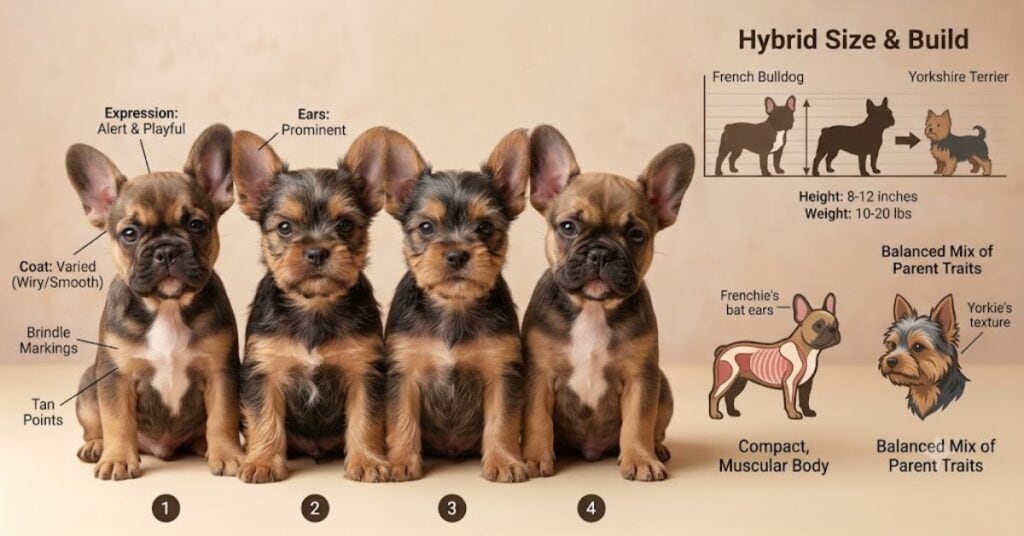
The French Bulldog Yorkie mix typically weighs 8–15 lbs and stands 8–12 inches tall at the shoulder, though individual puppies can fall outside this range depending on which parent’s genes dominate.
Coat texture also varies: some puppies inherit the Frenchie’s short, smooth coat, while others develop the Yorkie’s silkier, medium-length fur.
Common coat colors include black, fawn, brindle, tan, and black-and-tan combinations. Eye color is usually dark brown, and ears may stand erect like a Frenchie’s or fold slightly like a Yorkie’s.
Facial structure is one of the most unpredictable traits in this mix. Some puppies inherit a moderately flattened muzzle, which can carry breathing risks similar to purebred Frenchies.
Others have a longer snout closer to the Yorkie side, which typically means fewer respiratory complications.
Because muzzle length directly affects health risk, owners should observe breathing patterns closely from puppyhood, especially during exercise or hot weather.
Tail shape also varies; a short, screw-like Frenchie tail or a longer Yorkie-style tail are both possible outcomes in the same litter.
French Bulldog Yorkie Mix Temperament and Personality

This mix inherits a lively, affectionate, and sometimes stubborn personality from both parent breeds.
French Bulldogs are known for being laid-back and comedic, while Yorkies bring a bold, alert, terrier-driven energy.
The result is a dog that’s playful and loyal but may also be vocal and territorial if not properly socialized.
Early socialization is critical. Exposing puppies to different people, pets, sounds, and environments between 8 and 16 weeks helps prevent excessive barking or nervousness later in life.
Without this, the Yorkie side’s protective instincts can lead to reactive behavior around strangers or other dogs.
This hybrid tends to bond closely with one or two family members, making it a great fit for singles, couples, or smaller households.
It generally does well with children when raised alongside them, though its small size means rough handling should always be supervised.
Separation anxiety is a common concern in this mix, inherited from the Yorkie’s tendency to form intense attachments.
Crate training and gradual alone-time conditioning from puppyhood help reduce anxious behaviors like destructive chewing or excessive barking when left alone.
Owners raising Yorkie-mix puppies will find similar early-socialization strategies in our Yorkie puppies guide.
Health Concerns and Genetic Risks
Because this mix combines a brachycephalic breed with a toy breed, it can inherit health issues from both sides. Understanding these risks helps owners catch problems early and budget for veterinary care.
From the French Bulldog side:
- Brachycephalic Obstructive Airway Syndrome (BOAS), causing labored breathing, snoring, and heat intolerance
- Skin fold dermatitis, especially in facial wrinkles
- Spinal issues, including intervertebral disc disease (IVDD)
- Sensitivity to anesthesia during surgery or dental work
From the Yorkshire Terrier side:
- Luxating patella (kneecap dislocation)
- Collapsing trachea, worsened by leash pulling
- Dental overcrowding due to a small jaw
- Hypoglycemia (low blood sugar) in puppies
Routine veterinary checkups, ideally twice yearly for this mix, allow early detection of these conditions.
According to the American Veterinary Medical Association, brachycephalic-related breathing issues often go unnoticed by owners because they mistake labored breathing for normal snoring, so vet screening matters more than casual observation.
Weight management is especially important, since excess weight worsens both airway and joint problems.
Keeping this mix lean reduces strain on the trachea, spine, and knees simultaneously. For a look at another Yorkie hybrid with its own health profile, see our Black Yorkie Poo guide.
Grooming and Coat Care
Grooming needs depend heavily on which parent’s coat dominates. Short-coated individuals need only weekly brushing and occasional baths, while those with a Yorkie-type coat require more frequent brushing to prevent matting.
Weekly grooming routine:
- Brush 2–3 times weekly (daily if coat is longer or silkier)
- Check and clean facial wrinkles daily to prevent skin fold infections
- Trim nails every 3–4 weeks
- Clean ears weekly to prevent wax buildup and infection
- Brush teeth 3–4 times weekly to manage dental overcrowding
Bathing should happen every 3–4 weeks using a gentle, dog-specific shampoo. Over-bathing can strip natural oils and irritate sensitive skin, which this mix may be prone to given the Frenchie’s skin-fold tendencies.
Professional grooming every 6–8 weeks is recommended for longer-coated individuals to manage trims and prevent matting around the ears, paws, and tail.
If your dog leans toward a fluffier double coat, our Pomshi (Shiranian) grooming tips offer useful extra guidance.
Feeding and Nutrition

This mix requires a high-quality small-breed dog food formulated for toy or compact breeds, typically feeding 3/4 to 1 cup daily split into two meals.
Exact portions depend on age, weight, and activity level, so consulting a veterinarian for a personalized feeding plan is recommended.
Feeding priorities:
- Choose kibble sized for small mouths to reduce choking risk
- Look for formulas with controlled fat content to prevent obesity, which worsens breathing and joint issues
- Avoid free-feeding; scheduled meals help prevent hypoglycemia episodes in smaller individuals
- Limit table scraps, which can trigger digestive upset in sensitive stomachs
Puppies inheriting the Yorkie’s small size are especially prone to hypoglycemia, so frequent small meals (3–4 times daily) are important until they reach adult size, typically around 9–12 months.
Fresh water should always be available, and treats should make up no more than 10% of daily caloric intake to avoid unnecessary weight gain.
Training and Exercise Needs
This hybrid is intelligent but can be stubborn, inheriting independent streaks from both breeds.
Positive reinforcement training using treats, praise, and consistency works far better than harsh correction methods, which can damage trust and increase anxiety.
Training tips:
- Start basic obedience (sit, stay, recall) as early as 8 weeks
- Keep training sessions short, 5–10 minutes, since attention spans are limited
- Use high-value treats given the mix’s food motivation
- Socialize consistently through puppyhood to reduce reactive barking
Exercise needs are moderate. Due to potential brachycephalic airway limitations, avoid strenuous exercise in hot or humid weather, and always monitor breathing during walks or play.
Two short walks daily (15–20 minutes each) plus indoor play typically meets this mix’s exercise requirements without overexertion.
Harnesses are strongly preferred over collars for walking, since collar pressure can worsen tracheal collapse risk inherited from the Yorkie side.
Owners considering another small, spirited breed mix can also check ourJack Russell Terrier Chihuahua mix guide for comparable training approaches.
Common Mistakes New Owners Make
Many new owners underestimate the health complexity of this mix simply because of its small, cute appearance. Avoiding these common mistakes helps ensure a longer, healthier life for the dog.
- Ignoring breathing changes: Snoring or wheezing is often dismissed as normal when it may signal BOAS-related distress.
- Over-exercising in heat: Brachycephalic-influenced dogs overheat quickly; summer walks should happen early morning or evening.
- Skipping dental care: Small jaws mean overcrowded teeth, making daily brushing essential, not optional.
- Using a collar instead of a harness: This increases tracheal collapse risk over time.
- Free-f
- feeding: This raises obesity risk, which compounds nearly every health issue this mix faces.
Avoiding these mistakes from day one sets the foundation for a healthier, more comfortable life for your dog.
French Bulldog Yorkie Mix Care Checklist
- [ ] Twice-yearly veterinary checkups, including airway and spine evaluation
- [ ] Daily facial wrinkle cleaning (if Frenchie traits dominate)
- [ ] Brushing 2–3 times weekly minimum
- [ ] Harness use for all walks
- [ ] Weight monitoring to stay lean
- [ ] Dental brushing 3–4 times weekly
- [ ] Scheduled meals, not free-feeding
- [ ] Early socialization during puppyhood
- [ ] Cool, shaded exercise during hot weather
Do’s and Don’ts
| Do | Don’t |
| Use a harness instead of a collar | Pull on a collar during walks |
| Schedule regular vet airway checks | Ignore snoring or labored breathing |
| Feed measured, scheduled meals | Free-feed or overfeed treats |
| Socialize early and consistently | Isolate the puppy during key development weeks |
| Brush teeth several times weekly | Skip dental care due to small size |
Comparison Table: French Bulldog vs. Yorkshire Terrier Traits
| Trait | French Bulldog | Yorkshire Terrier |
| Weight | 16–28 lbs | 4–7 lbs |
| Coat | Short, smooth | Silky, medium-length |
| Common Health Risk | BOAS (breathing) | Tracheal collapse, luxating patella |
| Temperament | Laid-back, affectionate | Bold, alert, terrier-driven |
| Exercise Needs | Low to moderate | Moderate |
Multimedia Placement Suggestions
- Featured Image: Adult French Bulldog Yorkie mix in natural lighting, full-body shot (alt text: “French Bulldog Yorkie mix adult dog standing outdoors”)
- Infographic: Health risk comparison from both parent breeds
- Grooming Flowchart: Weekly grooming routine steps
- Before & After Image: Puppy to adult coat and size transformation
- Pinterest Image: Vertical graphic with breed facts and quick answer
- YouTube Thumbnail: Puppy playing, text overlay “French Bulldog Yorkie Mix 101”
Internal Linking Suggestions
- Internal Linking Suggestions
- Chihuahua Poodle Mix (Chipoo) Complete Guide
- Pomeranian Shih Tzu Mix (Pomshi/Shiranian) Guide
- Full Grown Yorkie Poo Complete Guide
- Yorkie Poo Puppies Complete Guide
- Jack Russell Terrier Chihuahua Mix Guide
Trusted External Reference
For more on brachycephalic breathing conditions, see the American Veterinary Medical Association’s overview of BOAS.
Frequently Asked Questions
Is a French Bulldog Yorkie mix a healthy dog?
This mix can be healthy with proper care, but it inherits risk factors from both parent breeds, including breathing issues and joint problems. Regular vet checkups and weight management significantly reduce these risks.
How big does a French Bulldog Yorkie mix get?
Most adults weigh between 8–15 lbs and stand 8–12 inches tall. Exact size depends on which parent breed’s genetics are more dominant in the individual puppy.
Do French Bulldog Yorkie mixes shed a lot?
Shedding is typically low to moderate, depending on coat type inherited. Short-coated individuals shed minimally, while longer-coated ones need more frequent brushing but still shed less than double-coated breeds.
Are French Bulldog Yorkie mixes good with kids?
Yes, generally, especially when raised alongside children from puppyhood. Due to their small size, supervision during play is recommended to prevent accidental injury.
How much exercise does this mix need?
About 30–40 minutes of daily activity split into two walks, avoiding hot or humid conditions due to potential breathing sensitivity inherited from the French Bulldog side.
Conclusion
The French Bulldog Yorkie mix is a charming, affectionate companion for owners ready to manage the health considerations that come with combining a brachycephalic breed and a toy breed.
With consistent grooming, measured feeding, harness-based walking, and regular veterinary monitoring, this hybrid can thrive as a loyal, entertaining family member.
Prospective owners should prioritize health testing when choosing a breeder, or consider adoption through a rescue.
Whether you already share your home with this mix or you’re still deciding, understanding its unique needs upfront is the best way to ensure a long, happy life together.
With the right care routine, the French Bulldog Yorkie mix can be a wonderfully devoted addition to any small-breed-loving household.
Schema Markup Recommendations
- Article Schema: headline, author (Gulnaz Malik), datePublished, image
- FAQPage Schema: for the 5 FAQ entries above
- BreadcrumbList Schema: Home > Breeds > Designer Mixes > French Bulldog Yorkie Mix
Social Media Caption
🐾 Meet the French Bulldog Yorkie mix, a bold, affectionate hybrid packed into a tiny frame! From grooming tips to health risks, we cover it all. 💕 Tap the link for the full guide!
#FrenchBulldogYorkieMix #DesignerDogs #FrenchieMix #YorkieMix #SmallDogBreeds #ChihuahuaNest #DogCareTips